
The very first house on Earth
Why is it so important to perform Hajj?
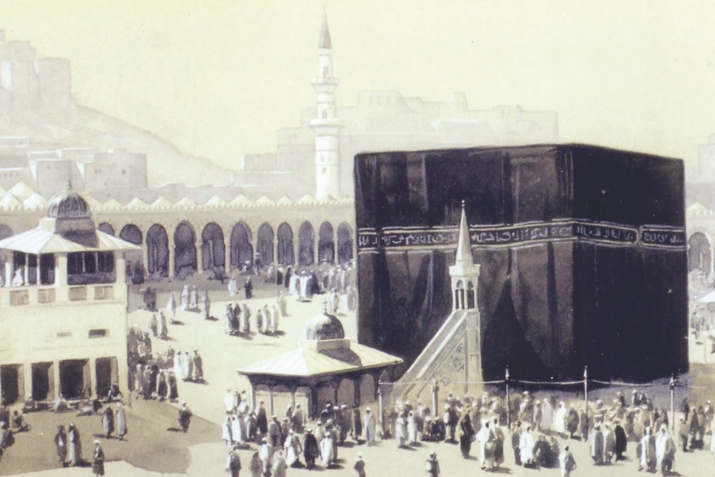
Pilgrimage (Hajj and Umrah) is a visit to holy places, which at least once in a lifetime every Muslim who has the opportunity to do so must perform. Every year, millions of Muslims gather at the holiest place for Muslims - the Kaaba, to express their respect for the house of God.
The Kaaba is the first house built on Earth, the foundation of which was laid by our forefather - the prophet Adam (peace be upon him). Later the prophet Ibrahim (peace be upon him) together with his son Ismail (peace be upon him) rebuilt the Kaaba.
The Kaaba was built four times in total. After Ibrahim (peace be upon him), the Quraysh also built the Kaaba before the advent of Islam. According to hadiths, thirty-five-year-old Muhammad (peace and the blessings be upon him) took part in the construction.
Translated from Arabic, the word hajj means intention. In Sharia theological terminology, hajj is a person’s intention to reach the Kaaba and perform other necessary deeds.
Performing a complete Hajj cleanses a person of sins so that after the pilgrimage he becomes as pure as a baby. Hajj opens the doors to a new life for the believer, strengthens his spirituality, belief in the mercy and forgiveness of the Almighty.
Abu Hurairah (may God be pleased with him) reported that he heard the Messenger of God (peace and blessings be upon him) say, “Whoever performs Hajj seeking the pleasure of Allah, the Most High, without swearing or committing any sin or unworthy, will return home the same as he was on the day his mother gave birth to him.” (Narrated by Al-Bukhari, 1521; Muslim, 1350)
The words of the Messenger of God (peace and blessings be upon him): “...will return home the same as he was on the day his mother gave birth to him” imply that all his previous sins will be forgiven.
It was also reported from Abu Hurairah (may God be pleased with him) that the Messenger of God (peace and blessings be upon him) said, “Performing each Umrah after a previous one serves as an expiation for the sins committed in the period between them, and as for the complete Hajj, there will be no reward for it except Paradise.” (Narrated by Al-Bukhari, 1773; Muslim, 1349)
Visiting these holy places and performing the rituals of Hajj and Umrah helps a person renew his connection with his Creator. All this leads to repentance, which is no longer so easy to abandon. The soul is purified so much that a person’s feelings become refined.
The Almighty has imposed various duties on us, some of which are related to our body, and others to our property. For example, we perform prayer and fasting physically and zakat is paid from our property.
As for Hajj, it covers both types of worship, that is, it includes through both the fatigue of the body and the expenditure of property. During the pilgrimage, the body is subjected to hardships and resources are spent. Thus, the Hajj includes all types of worship: prayer, fasting, zakat, i’tikaf and others.
What is the meaning of the pilgrimage to Mecca?
The Hajj also includes rituals that are a reminder for a Muslim of the great past and of the stories of the prophets (peace be upon them). This is a reminder of the hardships that the Prophet Ibrahim (peace be upon him) and his family experienced.
Walking between the hills of Safa and Marwa reminds the pilgrim of the state of Lady Hajar (the wife of the Prophet Ibrahim (peace be upon him) and the mother of the Prophet Ismail (peace be upon him)), whom Ibrahim left in the desert. Having laid the thirsty little Ismail on the ground, Hajar ran in search of water from Safa to Marwa, from Marwa to Safa and in between this ran to her son. By the will of the Almighty, a spring appeared near Ismail (peace be upon him), which is now known as Zamzam.
A pilgrim should remember this beautiful story of a mother’s love for her child and her care when he drinks the water of Zamzam. This spring became the reason for the emergence of a settlement on the territory of today’s Mecca.
Also, throwing pebbles, which is one of the rituals of the Hajj, reminds the pilgrim of the story of the sacrifice of the Prophet Ibrahim (peace be upon him) of his son Ismail (peace be upon him).
Iblis, seeing the firm intention of Ibrahim (peace be upon him) to fulfill the command of God, appeared to the mother of Ismail in the guise of a man and tried to turn her against her husband. However, the cursed Iblis was not helped by his intrigues and Hajar did not succumb to his instigations.
Having failed to achieve his goal, overcome with sadness, he went to Ismail and tried to persuade him not to obey his father but this time his efforts also were unsuccessful.
Ismail, like his mother, unwavering and unquestioningly obeyed the command of the Almighty. The mother agreed to sacrifice her son and Ismail himself agreed to be a sacrifice for the sake of God, if such was the command of the Lord.
Seeing their submission to the Almighty, Iblis lost hope and, leaving them, decided to test Ibrahim (peace be upon him) and asked him, “Where are you going?” Ibrahim cursed him and drove him away but the shaitan ran after him again.
When Ibrahim (peace be upon him) reached Jamrat al-Aqaba, Jamrat al-Wusta, Jamrat as-Sughra (the place of throwing stones in the valley of Mina), the shaitan blocked Ibrahim’s (peace be upon him) path every time, and each time Ibrahim threw seven stones at the cursed one.
The Hajj also teaches us patience and endurance of difficulties and helps a person realise the need to maintain discipline and order. Thanks to the Hajj, a slave begins to express gratitude to the Lord more sincerely.
From the point of view of social significance, Hajj contains special wisdom. During the performance of the Hajj rituals, millions of believers gather in one place. Regardless of skin colour, language, race, country, culture, authority and property status, they all share the same goals and objectives. Rich and poor, strong and weak - all pilgrims are in the same conditions, wear the same clothes, follow the same rules and experience the same hardships.
Pilgrimage to these holy places has been going on for fourteen centuries. Every year, these places remind pilgrims of the life of the Messenger of God (peace and blessings be upon him), his family, his companions (may God be pleased with them all) and the significant events that took place in these lands.
In order to approach closer to God, the Most High, the righteous used to retire to the mountains, forests, leaving people and were content with communicating only with their Lord. Instead, the Almighty gave our Ummah the Hajj. If previous communities left their homes and went to the mountains as hermits, our community was instead given the command to perform the Hajj, leaving their homeland.