
Uzbek Cuisine
In Uzbekistan, everyone cooks and the cooking profession is widely respected. Uzbek girls learn cooking skills from their mothers and grandmothers, while fathers and grandfathers teach the boys. Uzbek cuisine has an incredible variety of dishes that compete with one another for the title of most delicious. Thousands of lamb recipes, mung bean and chickpea dishes, famous Uzbek soups – Lagman and Shurpa, manti (dumplings) and samosa. And pilaf (plov), of course. There are many pilaf recipes in Uzbekistan, each steeped in its own tradition. Uzbek cuisine is open to the influence of other cultures, but each borrowed dish is cooked with its own Uzbek flavor. Modern Uzbek cuisine has the elements of Tatar, Kazakh, Mongolian, Russian, Ukrainian, Jewish, Caucasian, Uygur, Tajik, Iranian and other traditional cuisines, although many dishes look as if they appeared in Samarkand or Bukhara many centuries ago.
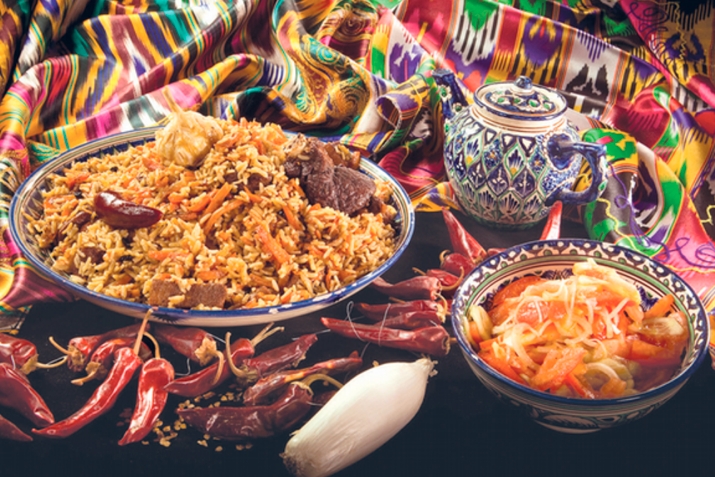
Uzbek cuisine has a special taste due to seasonings used and unique product combinations. For example, pilaf is the main dish in Uzbek cuisine and a staple on every holiday menu. It can be cooked with quince, garlic, raisins or chickpeas. Instead of the usual bread, Uzbeks bake flatbread in tandoors (ovens). A tandoor breadmaker is a virtuoso, a great master in his field. Soups hold a significant place in Uzbek cuisine. Uzbek soups are thicker than the usual European ones and are often more like a mush. Uzbek soups are rich and fat as they contain sheep’s tail fat or melted butter, even the ones that are meat-free. The famous pilaf is a favorite dish in Uzbekistan. Uzbek cuisine has dozens of different pilaf recipes: kavarma palov, ivitma palov, kavitak palov, sarymsak palov, qazi palov, khorazm palov, safaki palov, etc.
Some pilaf recipes are different in that they contain different meat – lamb is often replaced with qazi (horse sausage), postdumba (fat-tailed sheath), quails, pheasants or chicken. Pilaf is not always cooked with rice – sometimes rice is only part of the pilaf and sometimes it is completely replaced with wheat, peas or mung beans. Tograma palov is very popular among the many Uzbek varieties of pilaf. It is prepared in two stages: 1/4 of the meat, carrot and onion mix is stewed with rice and the rest of the filling is cooked in another pot and added when the dish is served. The dish is also served with pickled wild onions.

Popular Uzbek dishes include manti, chalop (cold soup with yogurt), samosa, lagman, hasyp and mastava. The order of serving dishes is unusual, too. Lunch usually begins with tea that accompanies fatty meat snacks and pastries. But tea also finishes a meal and is served with sweets.
The Uzbek way of brewing tea is a great art.
Tea is spooned into a special vessel (djush tea) or a pot; then boiling water is poured and the pot is placed on the fire. It is important not to overheat the tea during brewing. Heating is complete when tea leaves begin to move in the liquid. If you miss this moment and the water boils, the tea will turn red after serving and lose its taste and aroma. The tea is served in bowls and poured in small portions so as not to cool down. Savory cakes, homemade sweets, golden caramel, nuts, dried fruits, snow-white nishalda and mouth-watering halva are the least of what one may expect to be served with tea in Uzbekistan for dear guests.