

Islam and Tasawwuf
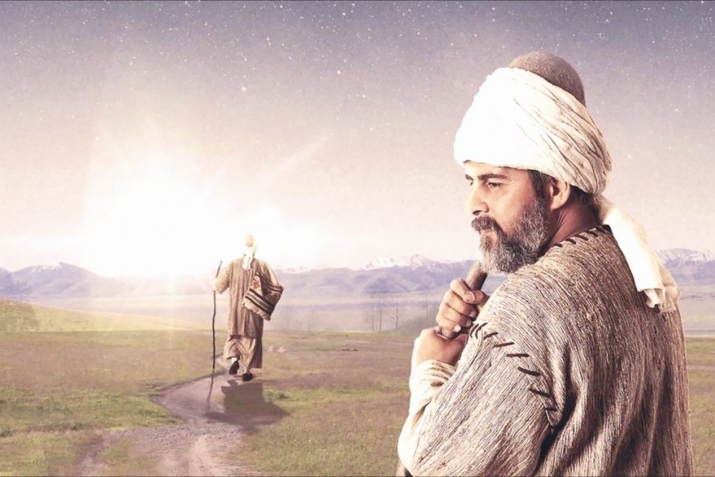
In the minds not only of Russians but also of many people in the world, Dagestan is firmly associated with Islam, because Islam has a long history here, comparable in time to the fourteen-century history of this religion itself. After all, Islam came here in the first century according to the Muslim calendar (Hijrah).
Tasawwuf (Sufism) – “the heart of Islam” - also has a long history in Dagestan. The true essence of tasawwuf combined all the messages of the prophets, starting from our master Adam and ending with our master Muhammad ﷺ. Tasawwuf in the sense of ihsan (the third pillar of faith), mentioned in the hadith as the purification of the soul from vices and shortcomings, is the heart of the call to Islam.
In the history of Muslims, at a certain stage people and those in power gradually began to deviate from the norms bequeathed by the Prophet ﷺ. The teaching of Islam turned into a dry and soulless formalism. After all, the increased economic well-being of the Muslim community (Ummah) in the first centuries of Islam pushed some believers to idleness, to the cult of profit and wasting one’s life through the thoughtless consumption of material goods. Crises accumulated in Muslim society and various sectarian religious beliefs, clearly hostile to the foundations of the true Islamic faith, multiplied. The number of people who only outwardly observed Islamic precepts grew. In such conditions, courageous behavior on the part of honest Muslims was required to oppose sanctimony, hypocrisy, tyranny and the undermining of the foundations of the Islamic faith. Prominent religious scholars such as al-Hasan al-Basri, Haris al-Muhasibi and others took up this work.
The great theologian and Qutb (a Sufi sheikh who had attained a particularly high spiritual level) Saifulla-qadi Bashlarov (1853–1919) wrote: “There are two types of faith: true and false. The false faith has only a name, it is like the reflection of fire in water or dust that cannot be touched. Hypocrites have such faith; they say they believe but, in reality, they have no faith. As for true faith, this is the faith we need and which is our goal. Angels and those with true mind have such faith and there is no danger that such faith can disappear.”
There have been difficult periods and stages in the history of Islam. Sufism has always stood in defense of Islam and has played an exceptional role. In 1257, Baghdad fell under the blows of the Mongols. The great Muslim state ceased to exist. The state and political means that united Muslims from Spain to Central Asia into a single, huge religious community – the Ummah – disappeared. Islam was under threat. The Muslim religion, which is based on universal principles that are common to people regardless of their skin colour, language, and culture, disintegrating into many separate sects, as happened with other faiths.
At this difficult historical moment, Sufi brotherhoods - tariqats - were able to protect the unity of Islam, taking on the function of uniting the Muslim community on the basis of the Koran and the Sunna of the Prophet ﷺ. Thanks to the activities of Sufi tariqats, international in nature, Muslims from different parts of the world – Bosnia and Indonesia, the North Caucasus and India – felt themselves to belong to one great religion. And in subsequent history, Sufism, in the person of its great teachers and mentors, has saved the religion of Islam in various corners of the Muslim world.
The essence of tasawwuf
I cannot agree with the opinions of various people who interpret the essence of Sufism as “mystical-asceticism”, or “mystical-philosophy” or similar movement in Islam. For centuries, the concepts of “Sufism” and “Islam” for Muslims did not exist separately and were not at all separable from their religious life.
Tasawwuf is built on the strictest and most unwavering adherence to the Koran and Sunna (the path of the Messenger of God ﷺ), which are its only sources. Junayd al-Baghdadi said, “Our knowledge (i.e. the path of tariqa) is based on the Koran and Sunna.” He also said the following, “The path to Almighty Allah is closed to His creations, except for those who follow the path of the Messenger of God ﷺ.”
The essence of tasawwuf (Sufism) is proceeding through a difficult path of moral purification, which is, in fact, the goal. It is not enough to limit oneself to the formal performance of rituals - prayers, fasting, and so on. Worship of God requires sincerity (ihlas), and this requires serious, difficult work on oneself, overcoming the bad habits of the carnal soul (nafs). Here one cannot do without the guidance of a wise mentor (a Sufi sheikh).
The goal of Sufism as teaching about the sincere and wholehearted worship of the Almighty is the improvement of service to Him, cleansing the soul from shortcomings and the desire to make it perfect through the correct understanding of the deep meanings and subtleties of belief and worship.
By following this path, a person achieves divine contentment and love and constant presence of thoughts about Allah in the heart; inattention and carelessness do not penetrate his consciousness, which allows him not to transgress the boundaries and orders of the Almighty.
Spiritual purification cannot be achieved just through reading books and by independent efforts. To study tasawwuf, an experienced spiritual mentor (murshid, sheikh) is needed. Only someone who has permission (ijazah) from a previous mentor can teach tasawwuf.
To be continued…
