
Virtues of the righteous
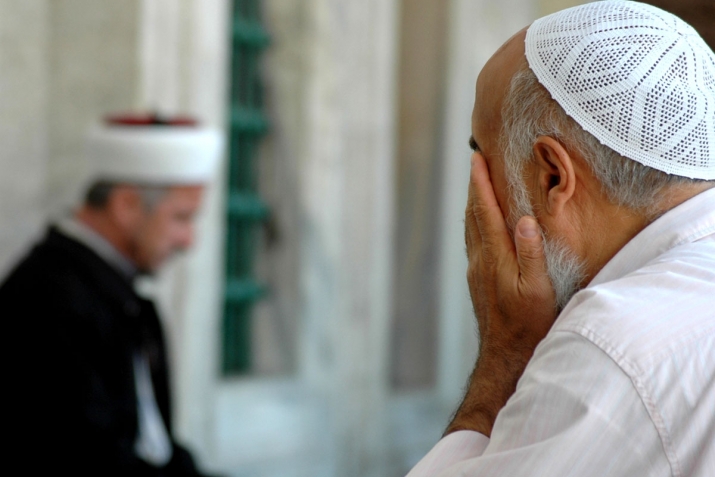
Fear and hope
Know that hope is present when there are grounds for salvation and ways for achievement, and vanity is when there are no grounds for success and salvation. Fear is the flare which illuminates your heart and by which you can discern the good and the bad in yourself. You should always be in a state between fear of the wrath of Allah and hope for His mercy, so that you will not be deceived (istidraj) without being cognizant of it.
Such is the testament of the sheikh-mentors, which they transmit to each other. A God-fearing person can only be seen by those who are also God-fearing. A woman who has lost her son wants to see people who have also experienced a similar loss. The fearful can only be seen by the fearful, and the bereaved is one who loves to see the bereaved.
The Prophet said, «He who wept out of fear of Allah will not enter into Hell, even if milk returns to the udder.» Know that everything has its own adornment and the adornment of worship is the fear of Allah. When Iblis was cursed and deprived of the mercy of the Almighty, the angels Jibril and Mika’il wept for the longest time. Then Almighty Allah sent down the revelation, «Why are you two crying so much?» They replied, «O our Lord, we are not sure that we are safe from Your trials (makr).» Then the Almighty addressed them with the words, «Stay in this state, not being certain that you are protected from My trials.»
Indeed, a person who has attained spiritual perfection will not be certain of safety from the trials of Allah, no matter to what highest degrees the Creator has brought him. Even if the Almighty had said to him, “I am satisfied with you with My greatest satisfaction,” the fear of Almighty Allah’s trials remains inherent to him.
Almighty Allah said (meaning), “And those who give whatever they give, with their hearts full of fear.” (Sura al-Muminun, ayah 60) Scholars commented on this ayah in the following way. It concerns those believers who pay zakat and make charitable donations and yet fear in their hearts that Allah will not accept this of them.
Even when they perform virtuous acts, their hearts are full of fear, lest their shortfalls should make their deeds disapproved by Allah to whom they are to return. When the companions asked the Messenger of Allah about this ayah, “O Messenger of Allah , is one who experiences fear in the heart one who stole, committed adultery or used intoxicants?”, the Prophet replied, “No, it concerns a person who observes fasting, performs namaz and distributes charity but is afraid that Allah will not accept this from him.” [1].
Imam ash-Sha`rani said, “We have vows to incline to weakness in all our states rather than strength and by appreciating the rank of knowledge of Allah. One of the conditions of the knower of Allah is the presence of intense fear. The Prophet said, «I am the most knowledgeable of you about Allah and the most fearful of you.» “They have taken yet another pledge from us, that when affliction overtakes us, to pray to the Almighty for assistance and ask Him to spare us from this misfortune and try not to demonstrate fortitude and patience, as some do.
For such fortitude is like resisting divine oppression. But sometimes our pain and illness may intensify such that our patience fails. Then, resorting to our own weakness and not being able to bear it, we ask Almighty Allah for relief. But showing the pain from the bite of a mosquito is worthier, for God Almighty loves when His servants show weakness and ask abundantly for forgiveness and wellness.”
Mercy
O Muslims, know that Almighty Allah is more merciful to His servants than are their parents. Everyone who seeks to receive Allah’s mercy must show mercy to his brother. Ka`b alAhbar said that it is written in the Injeel (Gospels), “O son of Adam, as merciful as you are to others, so they will be merciful to you. How can you hope for the mercy of Allah when you yourself do not show mercy towards His servants?” The Prophet said, “Allah is merciful to those who are merciful to others. Be merciful to those on earth and the Lord of Heaven will be merciful to you.»
O Muslims, be careful not to spurn any sinner when he asks you for medication. The remembrance of Allah (dhikr) is just such a cure. Imam ash-Sha`rani said, “He who does not look on the disobedient with a merciful glaze withdraws from the tariqa. Never counsel a person to forsake bad deeds until you truly have mercy for him in your heart.” The Prophet gently addressed someone, if he hoped that he might adopt Islam because it is preferred for guidance.
This is because gentle words provide more hope that a person may accept guidance. Among the followers of the tariqa it is known that in the eyes of those who call people to Allah, any Muslim who does not abide by the prescriptions of Islam (fasiq), is similar to the thing that he himself has lost. It is well known to the people of tariqa that the sinner (fasiq) is the stray of every caller to Allah. Wherever he finds it, he picks it up.
The Prophet also noted, «A look with love in the face of a brother by faith for the sake of Allah is better than the reward intended for someone for i`tikaf (staying with the purpose of worshipping Allah) in my mosque for forty years.» Truly, the mercy of Almighty Allah is unlimited. The prophet Dawud conveyed the following words of the Almighty, «To forgive a thousand people is more desirable to Me than to punish one with the fire of Hell, for I am the Forgiver of sins and the Merciful.» It is said that a man came to the Prophet and told him, “When on the roof of her house, a woman lost a child which slipped from her grasp. And she, out of compassion for him, threw herself after him.” The Prophet e then said, «Truly, Allah is more merciful to my community than this woman to her child.»
The people of tariqah are the people of mercy
Sheikh al-Suhrawardi f in his book “`Awarif Al-Ma`arif” writes, “The very nature of the followers of the tariqah is intrinsically manifested in mutual love and sympathy, harmony and accord with brothers in faith and the refutation of dissent] between them.” Describing the companions of the Prophet , Almighty Allah said in the Quran (meaning), “They are merciful to one another.” (Sura AlFath, ayah 92) The Almighty also said (meaning), “If you, O Prophet, were to give all there is on earth, you could not have led their hearts to friendship and reconciliation. Allah, however, brought them to agreement.”
(Sura AlAnfal, ayah 36) Truly, mutual love and predisposition arise from the affinity and harmony of souls (arwah). This is narrated in a report, «Souls that recognise each other come together, while those who were not familiar with one another, part.»
The Prophet also said, “A believer is one who is friendly with others and others are friendly with him. There is no good in those who are not friendly and with whom no one is friendly.” The Prophet said also, “Two believers when meeting are like two hands, each of which washes the other. When two believers meet, they will surely gain benefit from each other.”
[1] For some companions the words of the Almighty were unclear when He told them of those who distribute charity and disburse their belongings but at the same time experience fear of the Lord. They supposed that the cause of their fear lies in sins which are an obstacle to the acceptance of their good deeds. However, the Messenger of Allah explained to them that the reason for the fear was not sins but their closeness to Almighty Allah, which intensified their fear of Him, the AllPowerful and Greatest.