
The great botanist of the Middle Ages
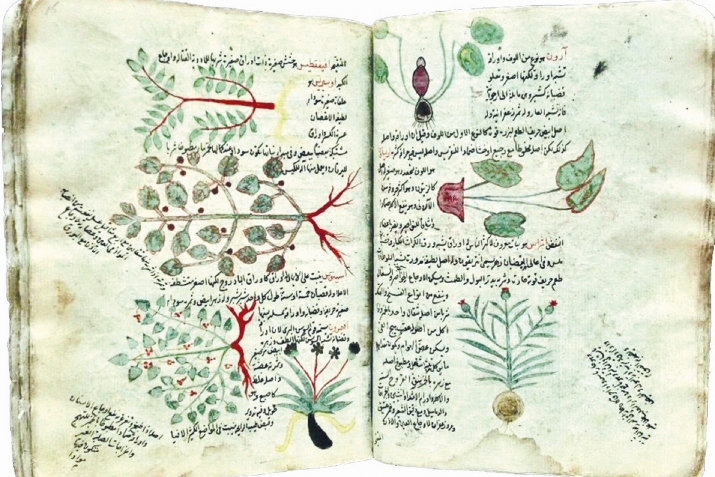
Ibn al-Baitar is the founder of Arabic botany and pharmacology. Abu Muhammad Ziyauddin Abdullah ibn Ahmad ibn al-Baitar is the most famous pharmacist and botanist of the Arabic Middle Ages.
The great scientist, botanist, pharmacist and physician, Ibn al-Baitar, was born in Muslim Spain, in the city of Malaga in Andalusia, in 1190 or 1197. He was of Arab descent, originally from Syria; his ancestors moved to Andalusia during the Arab rule of the Iberian Peninsula (711–1527). Translated from Arabic, his name means “son of a veterinarian”, the calling of his father.
Abdullah ibn al-Baitar received a very good education but from childhood he was especially fascinated by botany, collecting plants with great pleasure. In 1219, Ibn al-Baitar traveled to the coast of North Africa and then to Anatolia. He had one goal: collecting plants and studying their medicinal properties.
He visited Marrakesh, Burja, Constantinople, Tunis, Tripoli, Barka and Antalya. Visiting Algeria, Turkey and Libya, the explorer interacted with healers who introduced him to the properties of various herbs and trees. In Egypt, the scholar was warmly welcomed by Sultan al-Kamil Muhammad, who highly valued his research and appointed him head of Egypt’s botanists.
The scholar served enthusiastically while simultaneously continuing his research. He visited Iraq, Lebanon, Kurdistan and Palestine. As a result, Ibn al-Baitar, meticulously studying the properties of plants, explored three continents. The culmination of his painstaking research was the book “Dictionary of Herbal and Food Medicines”, which describes over three hundred plants, their beneficial properties and methods for making medicines.
Over the following centuries, this book became a reference for every physician. For example, the leading medieval botanist recommended a fig decoction in beef broth to remove warts. And to get rid of skin imperfections, he recommended applying a mixture of honey, salt, garlic and olive oil.
Ibn al-Baitar’s principal scientific work is called “The Book of Medical and Dietetic Terms”. It describes in Arabic the largest number of medicinal plants known at the time. In 1758, it was translated into Latin as a highly valuable work. The encyclopedia describes approximately 1,400 medicinal plants and vegetables, 200 of which were previously unknown to scholars.
Another comprehensive work, “The Book of Al-Mughni”, became an encyclopedia of medicine. The scholar skillfully described medicines proportionally in relation to their healing value. The treatise contains 20 chapters, each describing plants intended for the treatment of specific ailments.
Ibn al-Baitar gave the plants he collected Arabic names in Arabic, as well as Greek and Latin. By researching, analysing and classifying plants from three continents, the Arab scholar Abdullah ibn al-Baitar greatly benefited people of both the East and the West. The great botanist died in Damascus in 1248.