
Abu al-Qasim az-Zahrawi: scientist and surgeon
Abu al-Qasim az-Zahrawi: scientist and surgeon
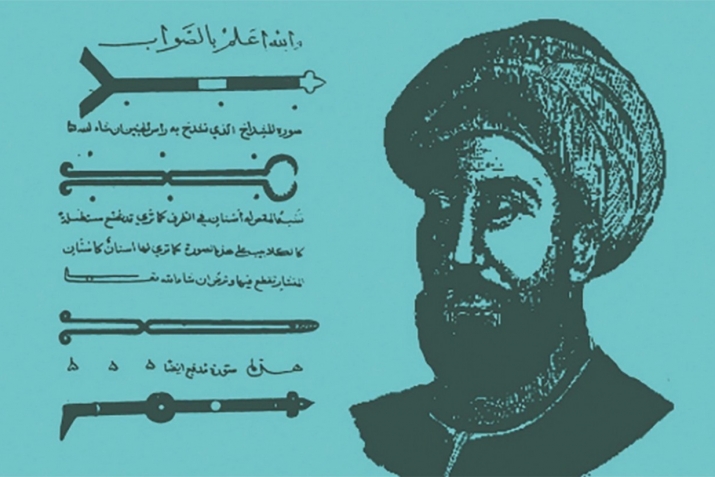
Islam has given the world community a large constellation of talented scientists.
A particularly rapid development of science and art took place from the 8th to the 17th century. This was the time known as the Islamic Renaissance. It is noteworthy that at this period Muslim scientists were actively supported by the leaders of Islamic states, while in Europe scientists were burned at the stake.
Thanks to the active creative work of Muslim scientists, an outstanding culture emerged, whose influence covered the entire globe. Arabic became the all-encompassing language of science. Scientists from the entire Islamic community began to communicate in this language. European scientists only began to vigorously apply the unique discoveries of Muslim luminaries of science centuries later.
Ammar ibn Ali al-Mosuli
An Egyptian surgeon born in Mosul (Iraq), Ammar ibn Ali al-Mosuli invented a high-quality hollow needle (a prototype of a syringe) in the 10th century, with which he was the first in the world to perform operations to treat cataracts, which led to blindness. This method, along with other types of operations, is still used today. This unique operation is called the “Ammar operation”.
Ammar ibn Ali was the most talented ophthalmologist in the Islamic world. He summarized his rich experience in a unique work, “The Book of Choice in Ophthalmology”, which is known to ophthalmologist surgeons around the world.
Abu al-Qasim az-Zahrawi
The founder of general surgery is Abu al-Qasim Khalaf ibn al-Abbas az-Zahrawi al-Ansari (936-1013), Latinized as Albucasis, a descendant of the Ansars (followers of the Prophet ﷺ from Medina). He summarized the results of his many years of experience in a 30-volume medical encyclopedia, “Kitab at-Tasrif”. The encyclopedia, translated into Latin, was a traditional textbook in medical universities in Europe for 500 years.
To be continued…