
Science and long life
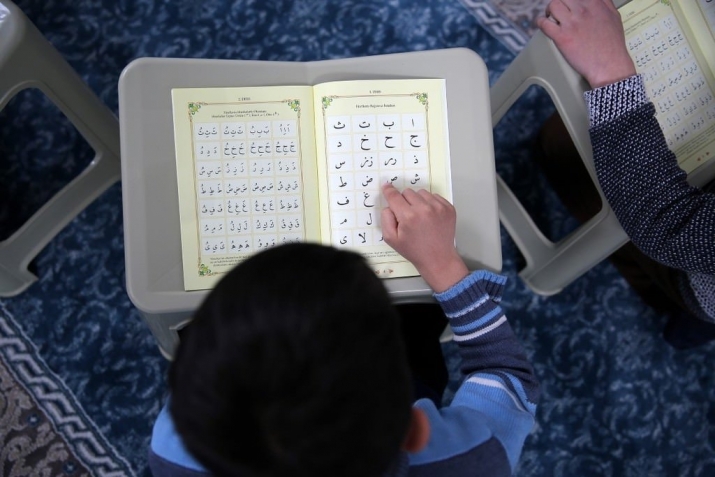
Recent researches have proved that better education increase the chance of a long life and that less educated people do not benefit from this trend.
For many years, it was known that there is a relation between income and length of life because people who have more money generally do not eat so many cheap products and can afford expensive medical services that are not paid by state health authorities. But now there is evidently a relationship between education and people’s health.
According to a study which was held by David Kotler and Ellen Meara and fellow professionals in Harvard University found that between 1981-1988 and between 1990 and 2000, people who stayed more than 12 years in education have a longer life than others who stayed for a lesser period.
Therefore, they expect that people born in 1975 who have a higher education may live till they reach 82 years of age. But others who have less education may live till they reach 75 years of age. Researchers believe that one explanation for this gap in longevity is the habit of smoking because less educated people tend to bad habits like smoking but educated people avoid the definite danger of smoking.
Islam is the religion of science
Science in Islam has a special concern. Almighty Allah urges people to learn and look for science, as He says, “God will exalt in degree those of you who believe, and those who have been granted knowledge. And God is Well-Acquainted with what you do.” (Sura Al-Mujadila, ayah 11). Also the first order God the Almighty gave to Prophet Muhammad (peace and blessings be upon him) was reading because the first descended word in the Koran was “Read” and in the following holy ayah was, “Read! In the Name of your Lord, Who has created (all that exists).” (Sura Al-‘Alaq, ayah 1).
Prophet Muhammad (peace and blessings be upon him) assured of the benefits of science but the benefits are not limited in this life but extend to the hereafter. as he says in the hadith, “When man dies his deeds are terminated except: the supplication of one of his children to him, a continuous charity or a useful science that people can get benefit from it.” Here, Prophet Muhammad (peace and blessings be upon him) not only stresses the importance of science but that it must be useful to humanity because there are many fields of sciences that are destructive to civilizations and to human beings.
Wealth is perishable, so in our life we see hoe people may commit suicide if they lose their money but people who are in the right way and follow the principles of Islam and care about science and continuous learning shall leave a useful science to humanity which benefits them in this life and in the hereafter. We should not forget some famous Muslim scientists who did not leave money but they many useful sciences such as: al-Khwarizmi, Jabir ibn Hayyan, Muhammad ibn Zakariya al-Razi, Abu ‘Ali al-Husayn ibn ‘Abd Allah ibn Sina, Abu ʿAli al-Hasan ibn alHasan ibn al-Haytham and many other scientists over the years.