
The Echo of Feminism and the Voice of Faith
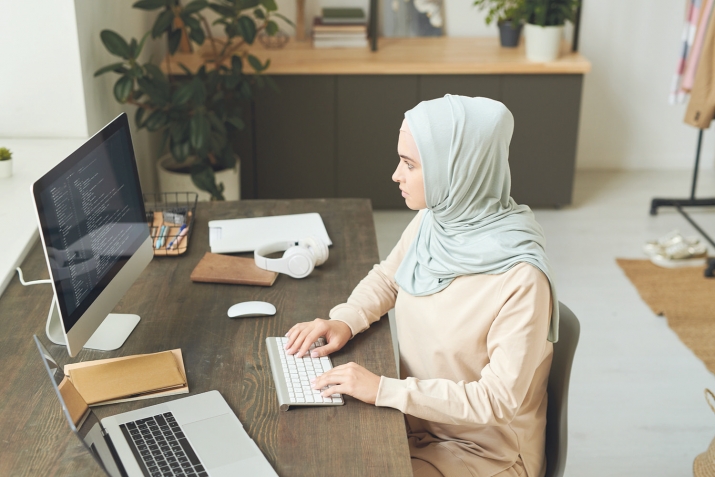
In our time, the loud voices of feminism echo even into the hearts of Muslim women.
This echo, rolling across the world, sounds loud and insistent, sometimes so powerful that it can knock down those who have not yet firmly established themselves on the path of truth. On social media, on phone screens, and in street conversations, the same slogan is increasingly repeated: “A woman should be financially independent, not dependent on her husband!”
But where does this message come from? And how consistent is it with our values, with what the Almighty has ordained for us?
Islam is a religion of justice and harmony. Allah ﷻ has established different responsibilities for men and women, but equal dignity. In Islam, a woman is not obligated to provide for the family, feed the children, or earn a living. This is the responsibility of the man: the husband, father, or brother. It is he who Allah ﷻ will ask on the Day of Judgment whether he fulfilled his duty and provided for those under his protection.
This does not mean that a woman cannot work. If work brings joy, benefits society, does not violate her modesty, and does not interfere with her primary responsibilities to Allah ﷻ and her family, it is permissible. But danger arises when work and material goals become the center of life, displacing spirituality and destroying family warmth.
The modern world, driven by the thirst for success and money, imposes on women the image of the “self-sufficient businesswoman” who needs no one. But behind this image often lies fatigue, inner emptiness, and a sense of loneliness. A woman created to be a source of mercy, tenderness, and support finds herself caught in a race that exhausts and leads away from her true nature.
Feminism says, “You must be strong!” Islam says, “You are already strong – in your gentleness and submission to your Lord.”
We Muslim women do not need to imitate other people’s ideals. Our role models are the noble women of Islam. It is Khadija, who, despite her wealth, submitted her heart to the commands of God and supported the Prophet ﷺ not only with her wealth but, above all, with her sincere faith. It is Fatima, whose modesty and piety have become a model for Muslim women of all times.
We do not need to renounce our femininity to be respected. True respect is born not from financial independence, but from spiritual maturity and submission to God.
Of course, a modern woman can have an education, a profession, and personal interests; Islam does not limit knowledge and development. But it is important to remember: success is not measured by the sum of money in an account or a position in an office. True success is the pleasure of God, harmony in the family, and the good we bring to this world.
Yes, we are emotional, and this is our uniqueness. Our feelings make us sensitive mothers, attentive wives, and sincere friends. But this is precisely why excessive pressure, stress, and the struggle for financial independence often take a toll on our souls. Work conflicts and fatigue inevitably impact the home, children, and marriage.
Do not let the noise of this world drown out the call of your heart. Do not mistake other people’s ideals for your own. Each of us has our own path, and the path of a Muslim woman is one of dignity, modesty, and fidelity to truth.
Allah ﷻ honored women not as office workers, but as guardians of a world where love thrives. May our every step be not influenced by the echoes of feminism, but by the light of faith and wisdom.