
Index

How should a widow observe mourning in clothes according to sharia?

How should a widow observe mourning in clothes according to sharia?
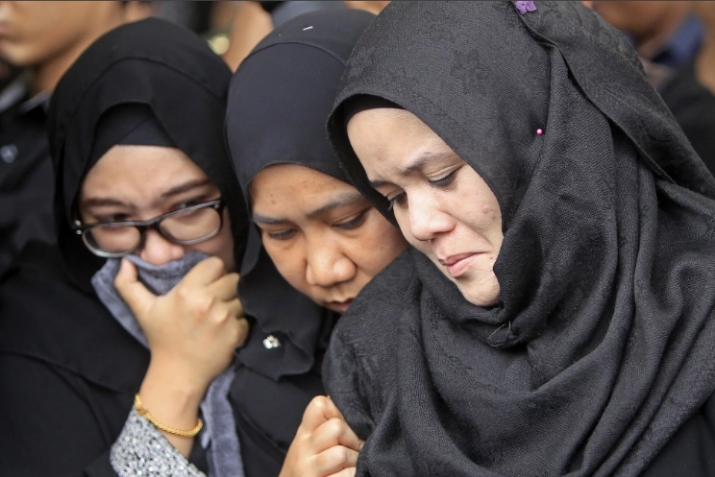
How should a widow observe mourning in clothes according to sharia?

A woman whose husband has died must be in mourning for four months and ten days. That is, she should refrain from any kind of beautification that can attract people’s attention, whether at home or outdoors. She is forbidden to wear bright clothes, even if these clothes are made of coarse fabric with beautiful patterns embroidered on it.

She is forbidden to anoint her hair with oils with or without a fragrant odor, to apply makeup and antimony to the eyes (except for medicinal purposes in which case it is to be applied at night and washed off during the day, if it does no harm), use incense and even consume products that leave a fragrant perfume. That is, everything that may arouse interest in her from the opposite sex is prohibited.

She is forbidden to wear any kind of jewelry, in whatever form: earrings, rings, bracelets, whether made of ivory or other material (even plastic), if these are considered as jewelry in the region where she lives.

If this misfortune (the loss of her husband) happens at the moment when she is in this (attractive) form, then she needs to wash off all incense, oils and makeup and change into modest clothes.

2026-04-01 (Shawwal 1447) №4.


Our Children vs. The Danger of Fast Food

Fast food has undoubtedly become a new phenomenon in our nutritional system. This is, of course, a consequence of globalization, which has engulfed the entire world.   While American culture promotes the cult of a healthy body – slim, fit, and strong thanks to the abundance of food...


Dirham of the Caliph al-Mansur

My collection includes a silver Kufic dirham minted during the reign of the Caliph al-Mansur, who ruled from 136 to 158 AH (the Muslim calendar).   The coin was minted in 146 AH at the Kufa mint (now in Iraq) and weighs 2.88 grams. It was in Kufa that local calligraphers developed a unique...


A Persian slave who loved the Koran

“There was no one among the Companions who knew the Koran better than Abu al-‘Aliya, followed by Said ibn Jubayr.” (Narrated by Abu Bakr ibn Dawud).   Rufai ibn Mihran, who bore the kunya (nickname) of Abu al-‘Aliya, was one of the most famous and distinguished...


It is faith that changes character and attitude toward the world

From resentment to forgiveness and patience Life is full of injustice, grievances and trials. The common human reaction is anger, rancor, revenge or despondency. Islam offers a different, higher strategy, based on the concepts of sabr (patience) and ‘afw (forgiveness). Patience in Islam is...


Digital faith: living as a believer in a world of IT

The digital age has become a new era for humanity. Smartphones, apps, video streaming and instant messaging have all permeated our everyday lives and changed the very fabric of social life. However, one question remains pressing: how can we maintain spiritual guidance amidst this rapid...