
Five women mentioned in the Koran
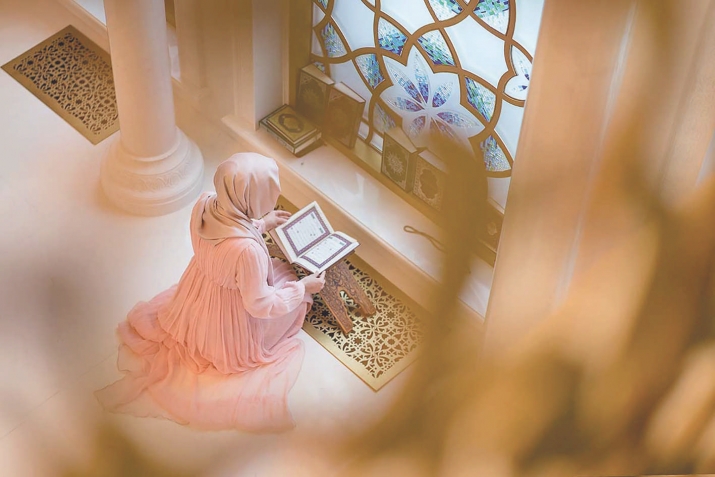
Indeed, Islam has glorified women, especially the righteous ones. Before the rise of Islam, a woman in the Arabian Peninsula was a person without rights. The birth of a girl was considered a disgrace and her father could easily bury her alive.
Islam has given woman many rights, relieved her of many duties, and put a man in charge of her. Moreover women played an important role in the spread of Islam. A famous saying goes, “Behind every great man is a great woman.”
In the history of Islam, there are women who occupied a special position. They were mothers, wives and daughters who, with their gentleness, fortitude and faith, supported the greatest of Muslims. Also, many women were assistants of previous prophets (peace be upon them) in spreading the call.
Almighty Allah honoured the best of women with a mention in the Holy Koran. Many of these women He praised for their perseverance and patience. In this article we will talk about some righteous women mentioned in the Holy Book.
1. Havva
Havva was the wife of the prophet Adam (peace be upon him) and his assistant. She was the very first woman on earth. Almighty Allah created her from the rib of Adam (peace be upon him). Therefore, Havva is considered the foremother of all mankind and the first Muslim woman on Earth.
She is not mentioned by name in the Koran. The Almighty calls her the wife of Adam, without directly naming her. However, the hadiths of the Prophet (peace and blessings be upon him) directly mention her name.
Abu Hurayrah (may God be pleased with him) reported that the Prophet (peace and blessings be upon him) said, “If it were not for the Israelites (Banu Israel), meat would not spoil, and if it was not for Havva, women would not cheat on their husbands.” (Narrated by Imam Ahmad, Al-Bukhari, Muslim, Ibn Hibban).
Hafiz Ibn Hajar Al-‘Asqalani in his book “Fath Al-Bari Sharh Sahih Al-Bukhari”, commenting on this hadith, writes the following: “This hadith indicates that Havva tempted Adam to eat the fruit from the forbidden tree and he succumbed to the temptation and ate it. The meaning of her deceit lies in the fact that she accepted the instigations of Iblis (Satan), and she, in turn, seduced Adam.”
2. Umm Musa
Umm Musa was the mother of two prophets - Musa and Harun (peace be upon them). She gave birth to the Prophet Musa (peace be upon him) at a time when the pharaoh ordered the killing of every newborn male in Egypt. In order to save her son from the minions of the pharaoh, she, following a revelation received from the Almighty, put her baby in a box and lowered it into the Nile River. After that, the baby Musa (peace be upon him) ended up in the house of the pharaoh himself and was brought up there as his son.
The separation of the mother from Musa (peace be upon him) was not long. She was soon invited to the pharaoh’s house as a nurse, as the baby refused to take the breasts of other women.
3. Pharaoh’s wife Asiya
Asia was the wife of the pharaoh. It was Asiya who discovered the baby Musa (peace be upon him), whom his mother lowered in a basket into the waters of the Nile, and she immediately fell in love with him. Asiya was able to persuade the pharaoh not to kill Musa. She kept him and raised him as her own son.
As you know, Asiya’s husband was one of the most unworthy people before Almighty God, but she was a believing woman and hid it from her husband. For this worthy deed and for the fact that she remained devoted to her Lord, the Almighty granted Asiya a high degree.
4. The wife of the prophet Musa (peace be upon him)
The prophet Musa (peace be upon him) grew up as a well-behaved and just person who did not tolerate harassment. Once he interceded for one of the sons of Israel and struck his oppressor. That man died and Musa (peace be upon him) was forced into hiding.
At this time, Musa (peace be upon him) married the daughter of the prophet Shuaib (peace be upon him), whose name was Safura. As mahr, Musa (peace be upon him) took upon himself the duty of working as a shepherd in Madyan for ten years and conscientiously fulfilled this promise.
When the Prophet Musa (peace be upon him) received a revelation from the Almighty and the order to bring the commandments of God to the pharaoh, he went to him, and left his wife and son in Madyan with her father. The enmity between Musa (peace be upon him) and the pharaoh lasted for a long time, and during this period he sometimes visited his wife and son.
During all this time, Safura, trusting her husband, patiently waited for him and did not reproach him for anything. When God the Almighty destroyed the pharaoh and his huge army, Safura and his son were reunited with Musa (peace be upon him).
5. Maryam
The only woman who is named in the Holy Koran by name is the mother of the prophet Isa (peace be upon him) Maryam. Her name is mentioned in the Koran more than thirty times. Moreover, Sura 19 of the Holy Koran is named in her honour.
Imam Muhammad ibn Ahmad Al-Qurtubi writes about this in his book Al-Jami’ fa ahkam Al-Qur’an: “Almighty God in his Book did not name a single woman by name, except for the daughter of Imran. Indeed, the Almighty mentioned her name in the Koran about thirty times.”
Lady Maryam lived among people who worshiped idols but she worshiped only Almighty Allah and for this reason she moved away from these people and her relatives and lived alone.
Sincerely worshiping the Almighty, Maryam came so close to Him that one night, when she was sitting alone, the Almighty sent the angel Jibril to her, who appeared before her in the form of a man.
Jibril reassured her and said that she would give birth to a child who in the future would become one of the prophets of the Almighty. The birth of this child by Maryam is considered a great miracle, for she gave birth to Isa (peace be upon him) without a father and was a very righteous woman.
It was narrated from ‘Ikrimah that ‘Abdullah Ibn ‘Abbas (may God be pleased with him) said, “Once the Messenger of God (peace and blessings be upon him) drew four lines on the ground and asked, ‘Do you know what this is?’ The people said, ‘God and His Messenger know best.’ He said, ‘The best women from among the inhabitants of Paradise are Khadija bint Khuwaylid, Fatimah bint Muhammad, Maryam bint ‘Imran and Asiya bint Muzahim, the wife of Pharaoh.’” (Narrated by Imam Ahmad, Ibn Hibban, At-Tabarani)
Muslim Abdulaev
Theologian