

Biography of Tatar sheikh Muhammad-Zakir al-Chistawi (Kamalov) in arabic-language manuscripts
For many centuries Tatar literature grew and developed within the framework of a single common Islamic culture in close connections with Arab, Persian and Turkish cultures.
The Muslims of the Volga and the Urals were in the close orbit of Muslim life of the Middle East, which affected the genre composition of Tatar Muslim literature, absorbing the best features of the ArabMuslim literary tradition.
It should be noted that Tatar Muslim literature developed not in isolation within the region but in close contact with other Muslim regions of Russia, in particular the Northern Caucasus with which Muslims of the Urals and the Volga region had centuries-old historical, cultural and religious ties.
These were especially close between the North Caucasus and the Volga region at the turn of the 19th and 20th centuries, when some Dagestanis due to historical circumstances improved their education in the Tatar madrasas.
A vivid example of the religious ties between the Muslims of the Volga Ural regions and Dagestan is the activity of the Dagestani Sufi sheikh Sayfulla qadi Bashlarov, who received permission to mentor (ijaza) from three Tatar sheikhs
Muhammad Zakir of Chistopol, Zainullah Rasulev of Troitsk and Muhammad Salih of the Tatar village of Asimov [4, pp.72-73]. It is interesting that biographical information concerning the abovementioned Tatar sheikhs is contained in Dagestani Arabiclanguage manuscripts.
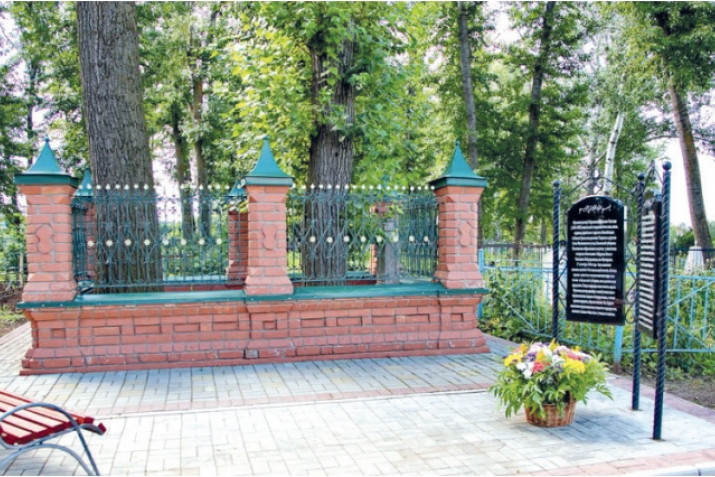
Of particular interest is biographical information relating to Sayfulla qadi Bashlarov’s first sheikhmentor, Muhammad Zakir alChistawi (Muhammad Zakir, son of Abdul Wahab Kamalov, 1804-1893).
He was the leader of the Sufi brotherhood of Naqshbandiyya in central Russia and for almost half a century served as an imam khatib in the town of Chistopol in Kazan province, which contained a very large Kamalya madrasa, whose graduates included such outstanding representatives of the Tatar people as R. Fahreddin, F. Karimi, G. Gafurov Chigtai, G. Iskhaki and others.
One of the Dagestani works containing biographical details about MuhammadZakir is the work of Tatar scholar and Sufi sheikh Muradullah (Muhammad Murad) bin Bahadirshah Abdullah bin Adelshah arRamzi al Manzalawi al Kazani (1855-1934), particularly his little known work “Nafais assalihat fi tazyil al baqiyat assalihat” (Jewels of Good Deeds in Addition to Other Virtuous Deeds).
This writing was included within the work of the Dagestani Sufi sheikh Shuaib bin Idris al Baghini (1853- 1912) “Tabaqat al Khwadjakan an Naqshbandiyya” (The Lives of Naqshbandi Mentors), recently introduced to modern scholarship by Dagestani researchers [2, pp.37-43]. According to al Baghini himself, two sections are based on “al Baqiyat as salihat fi taqrib ar rashahat” by Ali bin al Hussein al Qashifi, in which biographies of sheikhs of the Naqshbandi tarikat are mentioned, beginning with Abu Bakr al Siddiq and ending with Ubaidullah Ahrar.
In the second is an essay “Nafais as Salihat fi tazyil al Baqiyat as Salihat” (Precious Good Deeds in Addition to Other Good Deeds), written by Muhammad Murad al Ramzi al Kazani al Manzalawi. It examines the biographies of Naqshbandi sheikhs beginning with Muhammad Zahid and ending with Khalid al Baghdadi. In the third section (which is the original part written by Sheikh Shuaib al Bagini himself), biographies of other Naqshbandi sheikhs are given. In conclusion, some explanations are given regarding certain rules, features and ethics of the Naqshbandi tarikat.
Brief information about Sheikh Muhammad Zakir al Chistawi is contained in the section written by Muhammad Murad ar Ramzi as follows, “Mawlana Sheikh Muhammad Zakir Afandi alKazani al Chistawi, may Allah prolong his days and show mercy to him and to us. He was the renowned successor (caliph) of the Khalidi branch (Naqshbandi tarikat) in our lands and serves as a model for us all.
There was not a single corner in Kazan, where the great scholars of this city and its noble representatives did not follow him. He was also a scholar in all sciences: rationalist and traditional. He studied fiqh from a great scholar, the late Sheikh Abdullah al Muchaskarawi, may Allah grant His mercy to him and to us.
Muhammad Zakir Afandi then was engaged in teaching, deriving benefits from the sciences in his country for many years, using the knowledge for the benefit of many of his contemporaries.
He then took the path of the Khalidi branch of the Naqshbandi tarikat and learned the zikr from Sheikh Mahmud Afandi al Dagistani al Almali, may his soul be sanctified. Mahmud Afandi al Almali learned this zikr from Sheikh Yunus al Khalidi, and he, in turn, from Sheikh Abdullah al Arzanjani. What was mentioned (regarding this zikr), I copied from the letter written by the sheikh (Muhammad) Zakir Afandi himself. But we heard from Sheikh Khalil Bash that Yunus Afandi joined the tarikat (under the direction of) Sheikh Yahya Bek and he did not meet Sheikh Abdullah alMakki. Almight Allah is more knowledgeable about this “ all people have learned where they should drink from.”
Mahmud Afandi adDagestani joined the tarikat under the leadership of Sheikh Hashim Afandi al Yamshani who in turn was led by Sheikh Ziyaaddin Zubayhullah alShirwani. The latter was the successor of Mawlana Khalid al Baghdadi may Allah sanctify their supreme secrets. The author of these lines has many times been honored to be familiar with him.
I completed what I came across and summarised (from the composition) the scholar who knew Allah (arif), who is holding the rope of Allah, Sheikh Muhammad Murad bin Abdullah al Kazani.” (5, pp.346-347).
In the same collection, Sheikh Shuaib al Bagini also includes his own Arabic language work by Muhammad Zakir alChistawi, entitled “Tabsirat al murshidin” (Clarification of Mentors). In this work, in addition to the foreword from the publisher, there is brief biographical information about Muhammad Zakir and detailed explanations of some issues of Naqshbandi ritual practice, as well as explanation of some Sufi terms.
(to be continued).
Bibliography: 1. Koran, 2:60. 2. M.A. Musaev, Sh. Sh. Shikhaliev, Miracles of saints in the Dagestani Arabic speaking Sufi biographical composition “Tabaqat al Khawadjakan an Naqshbandiya wa sadat al Mashaikh al Khalidiya al Mahmudiyyah”, Islamology, № 4, 2011, pp. 37-43.
ALSU HASAVNEH Candidate of Philology
