
Biography of Muhammad-Tahir of Qarakh (1809-1882)
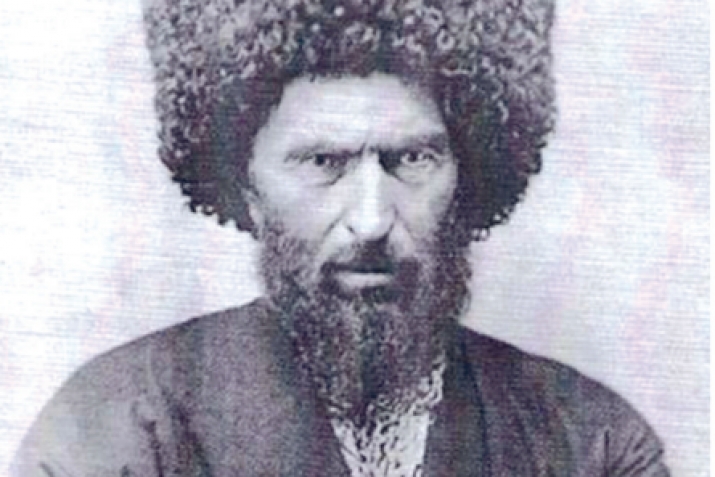
Muhammad Tahir, the son of Khuchalav al Tsulda alQarakhi, was born in the Qarakh village of Tsulda (now Charodinsky district) in 1809. Historians write that his real name was Mahamatilav Imam Shamil gave him the name of Muhammad Tahir. Under this name, he became known not only in Russia but in the entire Muslim world.
Like other Muslim students in the region of the first half of the 19th century he received a brilliant Islamic education from Qurban Muhammad of Qoroda, Mustafa from Anghida, Hajidibir from Gunukh, Muhammadamin from Hidatl and other theologians. He studied such sciences as Islamic law, tafsir, hadith, Arabic grammar, philosophy, logic and poetry. After graduation he worked as a Qadi in the village of Tlyarosh. Then from 1850 he worked as the personal secretary of Imam Shamil. At one time, the Imam even appointed him as Mufti of the Imamate.
Judging by MuhammadTahir’s written inheritance, we can say that he was one of the most prolific scholars of that time. His work “Bariqatu suyuf al jabaliyya fi ba`d al ghazawat ashShamiliyya” (Radiance of Mountain Sabres in Some of Shamil's Ghazawats) is the most objective and complete information about the Caucasian War and the life and work of Imam Shamil from 1830 to the beginning of the 1870s. The book was completed in 1872 but was not published in the form in which it was written by the author.
Muhammad Tahir's son Habibullah, at the request of Muhammad Mirza Mavraev, excised some material in order to obtain permission from the Tsarist censors but it could not be published in Russia. Chronicling Shamil's battles and the activities of the Imamat, the book, however, became popular not only in Dagestan but elsewhere in the Caucasus, Turkey, Egypt and other Arab countries. Later on parts of the chronicle were translated into Russian by researchers Barabanov and Krachkovsky and published after the 1990s under the title “Radiance of the Dagestani Sabres”.
Muhammad Tahir of Qarakh also left a rich legacy of Islamic law, grammar and theology. His personal library has been preserved.
Among the books compiled by the author, we find such titles as: “Commentary on the Grammar Composition of az Zanjani “Tasrif al `Izzy”, “Sharhu tasrif `alal maqsud”; “Ahsan dalil fi ta'wili li ma waqa`a fi zaman Imam Shamil” (“A Treatise on the Realities of Shamil's Acts”), 1848; The Composition of Fines and Punishment in the State of Shamil; “Sharhul Mafrud” an essay on Islamic law; Wasilat al ahkam; “Tarjamat al Qarahiyyah” translation of various texts and “Kitab assullam”, a commentary on the textbook on logic.
There are also numerous books which were copied by Muhammad Tahir himself.
After the Caucasian War was over, Muhammad Tahir moved to Temirkhan Shura (now Buynaksk) where he worked as a Qadi and then as the senior Qadi in the Dagestan People's Court. This gives us every reason to consider him as an expert on Islamic jurisprudence. Most of his writings were undertaken in those years. According to sources, it is known that he spent some time in the village of Urada with the local scholar Murtazali. Perhaps he was invited there as a Qadi, and, taking advantage of this, decided to learn from Murtazali.
Muhammad Tahir had great popularity and authority among the masses. His talent and diplomatic skills in many situations prevented bloodshed among the Jama`ats. Thanks to his efforts, many questions were resolved peacefully, which would otherwise have required applying the custom of blood revenge. His impeccable reputation as a man of integrity and righteousness gave him the right to act as a peacemaker. He refused any assistance; it is said that he was so honest and God fearing that he did not even take the fee from the general treasury (Bayt al Mal) allocated to him by the Imam.
Muhammad Tahir bravely refuted those scholars of his time who began to portray the ghazawat in a negative way. In many respects he succeeded, apparently because he had been with Imam Shamil for so many years, listened to his stories and saw with his own eyes how law and order in the Imamate was actually maintained.
He was very upset that after the fall of the Imamate people began to gravitate towards the Tsarist regime and this was reflected in his poetry. Among his poems one can also find his elegy on the death of Imam Gazimuhammad and the qasidah about the events in Ashilta.
Recently, access was given to the personal library of Muhammad Tahir and we think that researchers will find interesting and valuable material in it.
Muhammad Tahir of Qarakhi left this world in 1882: his ziyarat is in the village of Tsulda in the Charodinsky district.
MUHAMMADRASUL OMAROV