
Tawus ibn Kaysan – the mentor of the rulers
Tawus ibn Kaysan – the mentor of the rulers
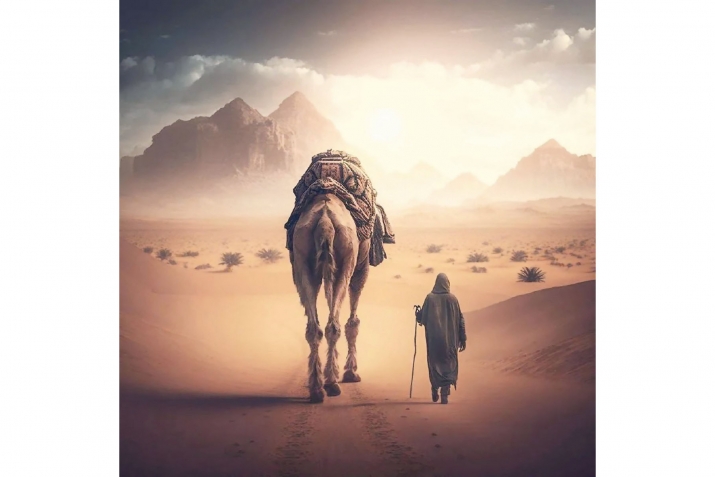
As soon as the ruler (caliph) of the Muslims, Sulayman ibn Abd al-Malik, reached the Kaaba and settled near it, having realized his desire for this great place, he turned to his gatekeeper and said, “Find for us a scholar who could enlighten us in matters of religion and address us with a reminder on this special day.”
The gatekeeper went to the pilgrims and informed them of the desire of the commander of the believers. They said to him: “There is Tawus ibn Kaysan, the master of the faqihs (scholars of Islamic law) of his time and the most sincere of them in his call to Allah ﷻ. Go to him.”
The gatekeeper approached Tawus and said, “O sheikh! Accept the invitation of the commander of the believers.”
Tawus went to the Caliph immediately, because he believed that the best of words is the word of truth, which is spoken to correct the deviations of those in power, to keep them from injustice and oppression and to bring them closer to the Most High Creator.
Tawus followed the gatekeeper. When he appeared before the Commander of the Faithful, he greeted him and the Caliph returned his greeting with an even better one, honoured his guest and seated him next to him. Then the Caliph began to ask him questions regarding the rites of Hajj and listened to him attentively and silently, demonstrating a respectful and reverent attitude towards him.
Tawus said: “And when I realized that the Commander of the Faithful had asked about everything he was going to ask about and he had no more questions, I thought, “Allah ﷻ will ask you about this meeting with him, O Tawus!” And I said, “O Commander of the Faithful... Indeed, there was a stone at the edge of a well at the bottom of Hell. It fell into this well for seventy years and only then reached the bottom. Do you know for whom Allah ﷻ has prepared this well from among the wells of Hell, O Commander of the Faithful?” He answered without hesitation, “No.” And then he seemed to wake up and asked, “Woe to you, for whom did He prepare it?!” I answered, “Almighty Allah has prepared it for one whom He endowed with power, but who acted unjustly.” Hearing this, Sulayman trembled so much that for a moment it even seemed to me that his soul was about to leave his body. And he began to cry, sobbing so much that my heart bled from his crying. I left him and went away and he kept repeating, “May Allah ﷻ reward you with good!”, “May Allah ﷻ reward you with good!””
When Umar ibn Abd al-Aziz became the caliph, he sent a messenger to Tawus ibn Kaysan with the request, “Give me some advice, O Abu Abd ar-Rahman.” Tawus wrote him back with just one line, “If you wish all your deeds to be good, take good people as your assistants. Peace be upon you.”
After reading this message, Umar said, “This advice is enough, this advice is enough!”
When Hisham ibn Abd al-Malik took over, many stories circulated in which the caliph and Tawus were the main characters.
One day, Hisham went to perform the Hajj. When he reached the Sacred Mosque, he ordered his confidants from among the people of Mecca, “Search for us for a man from among the companions of the Messenger of God ﷺ.”
They said to him, “O Commander of the Faithful! Indeed, the companions left this world one after another and now there is not a single one of them left...”
He said, “Then look for one of their followers.”
They came to Tawus ibn Kaysan and invited him. Entering the ruler, Tawus took off his sandals at the edge of his carpet, then greeted him without calling him the Commander of the Faithful, but calling him by name (without mentioning the kunya - Abu [Ibnu] such and such), sat down before the caliph invited him. Hisham was so angry that it was visible in his eyes, because Tawus’ actions seemed to him insolent and an attempt to humiliate him in the presence of his interlocutors and confidants. However, he immediately remembered that he was on holy land. Self-control returned to him and he asked Tawus, “What prompted you, O Tawus, to do what you did?”
Tawus asked, “What have I done?”
The Caliph was again overcome with anger and said, “You took off your sandals at the edge of my carpet and, when greeting me, you did not call me Commander of the Faithful but called me by my name and sat down before I gave you permission.”
Tawus replied with the utmost calmness, “As for my removing my sandals at the edge of your carpet, I remove them before the Lord of Majesty five times a day, and He does not reproach me or get angry with me for that. As for your words about not calling you the Commander of the Faithful, I did not do so because the Muslims are dissatisfied with your rule and I was afraid of lying by doing so. As for my calling you by name and not by your kunya, verily, Almighty Allah called His prophets by their names, saying, “O Dawud ... O Yahya ... O Isa ... And He called His enemies by their kunya (the meaning of the commentary to the first ayah of Sura Al-Masad), “May the hands of Abu Lahab wither - he himself is already lost.” And as for my sitting down without your permission, verily I heard the Commander of the Faithful, Ali ibn Abi Talib say, “When you wish to look at a person from among the people of Hell, look at a sitting man surrounded by people standing before him.”
Hisham, ashamed, looked at the ground and remained silent. Finally, he raised his head and said, “Give me guidance, O Abu Abd ar-Rahman.”
Tawus said, “Verily, I heard Ali ibn Abi Talib say ‘Trully, in Hell there are snakes the size of huge pillars and scorpions the size of mules. They will sting every shepherd who treats his flock unfairly.’” With these words he rose and left.
Tawus said to his son, “My son, associate with the intelligent, and you will be considered one of them, even if in reality you are not. And do not spend time with the ignorant, for then you will be considered one of them, even if in reality you are not. And know that everything has a purpose. And the purpose of man is the perfection of his religion and good behavior.”
His son Abdullah grew up to be just as his father tried to raise him. He adopted his father’s good behavior and followed in his footsteps.
Tawus lived to be a hundred years old or even beyond that. However, old age did not affect the clarity of his mind, the sharpness of his intellect or his inherent intelligence. Abdallah ash-Shami narrates, “Once I came to Tawus to learn from him but I did not know what he looked like. I knocked on the door and an old man came out to me. I greeted him and asked, “Are you Tawus ibn Kaysan?” He replied, “No, I am his son.” I said, “If you are his son, then it is quite possible that the Sheikh himself has become decrepit and has been overcome by senile dementia... And I have come to him from afar to benefit from his knowledge.” He said, “Woe to you... Indeed, the bearers of the Book of Allah ﷻ do not suffer from senile dementia. Go to him.” So, I went to Tawus, greeted him and said, “I have come to you wanting to receive guidance from you...” He asked, “Do you want me to collect for you the best of what is in the Tawrat (Torah), Zabur (Psalms), Injil (Gospel) and the Koran?” I replied, “I want to.” He said, “Fear Almighty Allah so that you fear nothing and no one as much as Him. And let the hope that you associate with Him be stronger than your fear of Him. And wish for others what you wish for yourself.””
On the night of the 10th day of the month of Dhul-Hijjah, 106 AH (the Muslim calendar), Tawus ibn Kaysan left the valley of Arafat for the fortieth time in his life, heading for Muzdalifah. Having reached Muzdalifah and stopping in its pure expanses, the sheikh performed the evening and night prayers, after which he lay down on the ground, intending to rest a little. At that moment, death came to him. He met it far from his family and homeland, being in the service of his Lord, reciting talbiyah (“Labbaika...” – “Here I am before You...”), dressed in the robes of a pilgrim (ihram), freed from his sins and becoming what he was on the day his mother gave birth to him. When morning came and they were going to bury him, they were unable to carry the bier to the burial site - so many were the people who had gathered to say goodbye to him. Then the ruler of Mecca sent guards so that they would distance the people from the bier. A huge number of people performed the funeral prayer for him - only Allah ﷻ knows exactly how many there were. Among them was the Muslim Caliph Hisham ibn Abd al-Malik.