
Islam’s tolerance in a multi-confessional society
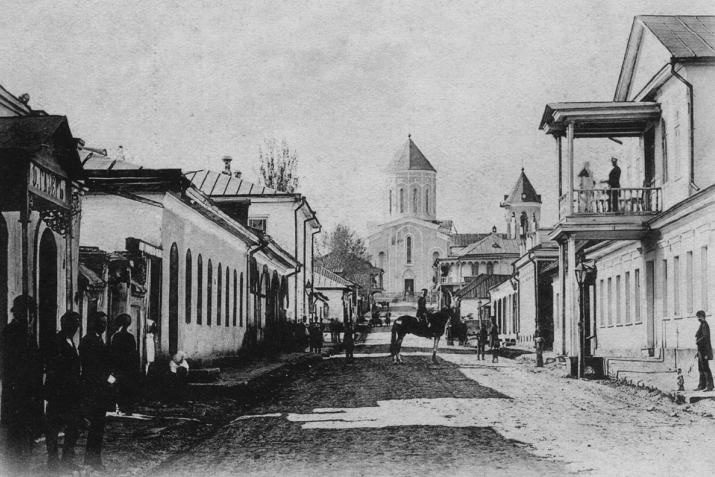
In the second half of the 19th century, along with Russian schools, there was a whole network of religious educational institutions of various denominations in Dagestan: Muslim schools - madrasas and mektebs; mountain Jewish schools in synagogues; pastoral schools at Orthodox churches.
In Dagestan, believers of various faiths provided special tolerance, revenue, and mutual support to each other. After the October Revolution of 1917 and the coming to power of the Bolsheviks, the communists of Dagestan began to repress following the instructions of Vladimir Lenin in a strictly secret report to Molotov dated March 19, 1922.
A government order was given in it: “Please do not take any copies at all. Arrest as many representatives of the clergy as possible on suspicion of directly or indirectly participating in a case of violent resistance to the decree of the Central Executive Committee on the seizure of church property. The Politburo should give a detailed directive to the judicial authorities verbally, so that the process was carried out with maximum speed and ended only with the shooting of a large number of the most influential and dangerous people not only of this city, but of Moscow and several other spiritual centres. The more clergy we manage to shoot on this issue, the better. It is necessary now to teach this public a lesson so that for a few decades they will not even dare to think about any resistance.”
At the same time, the Soviet authorities began to instigate militant atheism, to persecute religious figures, to shoot well-known Arabist scholars, sheikhs, Qadis and mullahs without trial or investigation. Speaking against such an atheistic, anti-religious policy of the Soviet power, Abusufyan Akaev, a well-known educator and Arabist scholar, boldly stated in court, “My political views are: If Soviet power is committed to creating communism, or rather socialism, I could be with everyone.
But when it comes to godlessness among Muslims, I can never agree, and you are unlikely to find a Muslim Arabist scholar who would agree to accept socialism. I have said and I will say it again that there is the Prophet (peace and blessings be upon him), and Muslims must abide by the laws of Sharia and Islam - and I do not hide from you that to the Muslim people until the last day, that is, before my arrest, I said that for every Muslim, it is imperative to fulfill first of all the five pillars of Islam, that is, the Sharia.”
When in the winter of 1929 the Buynaksk City Council raised the issue of closing the Russian Orthodox Church and using it as a club, learning about this, the “Dini Committee” (“Religious Committee”) - the head of the Sharia-based Muslims committee, created in Dagestan in 1924 to protect the interests of Muslims - decided to organize a protest against the closure of the church.
To enforce this decision, the Dini Committee appealed to Muslims who gathered on a holiday in a mosque. Muslims called for the support of the Russian community, protesting against the closure of the church. In addition, the “Dini Committee” filed a written protest to the Buynaksk Bolshevik Committee.” The Jews also spoke against the closure of the Russian church on the advice of Badawi Kadi, the Head of the Dini Committee. Their protest was found during a confiscatory search of V.A. Zhiromsky.
In the text of this protest it was said, “There were good relations between the Dini Committee, the Russian and Jewish communities. The meetings of the Dini Committee were attended by a Jewish rabbi and a representative from the Russians. They became part of the Dini Committee. The Jewish Rabbi Mushailov R.I. became the secretary of the Dini Committee and conducted correspondence in Russian.”
The Jewish Rabbi R.I. Mushailov also considered it necessary to unite with the Muslims. “Being a national minority in Buynaksk,” he said at the trial, “the Jewish population has always needed the support of the overwhelming majority of the Muslim population. The need for this support was felt especially during the years of the revolution and civil war. Over the time, this support was like a «legally» accepted norm. In difficult times, the Jewish population considered it their duty to resort to the help of the Muslims, while the latter considered it to be the same duty to render this assistance to the Jews.
If during the years of revolution, Muslims protected Jews from robberies, in subsequent years this assistance was expressed in improving the living conditions of the Jewish population. This assistance was provided through the Muslim Dini Committee.”
Muslims and Jews began to speak out in defense of Christians. The Muslims’ protest said, “We, the undersigned members of the Muslim religious community of Buynaksk, after reading a note in the local newspaper Krasny Dagestan, express a desire to take away the Holy Trinity Church, in the construction of which our labor and resources were also invested and oppose the seizure of houses of prayer.»
On the initiative of Badawi Kadi, the Jews of Buynaksk also came out in defense of the Christians persecuted by the Soviet authorities. They wrote, “With great indignation, they inquired from the newspaper, Krasny Dagestan, about the desire to take away from the believing Christians the Holy Trinity Church with the aim of turning it into a club.”
In May 1929, at the meeting of the Dini Committee, the question of an anti-religious demonstration organized by the Komsomol and trade union organizations against Russian Easter was discussed. The Dini Committee warned the Soviet Party organizations, «If such a demonstration will be organized on Kurban Bairam day, then the Dini Committee will not be responsible for the consequences, because there may be counterdemonstrations.»
The activity of the Dini Committee was interrupted at the end of 1929. Its work was considered anti-Soviet and counter-revolutionary. Some 75 Dini Committee activists were arrested. And their leader Badawi Kadi, along with 20 of his active members, was shot. Together with them, they shot Rabbi Rafail Iskiyaevich Mushailov and the clergyman of the Holy Trinity Church, Vladimir Adamovich Zhiromsky [1].
The fact that the first Muslim caliphate, and later the Ottoman Empire and other Muslim states built on their lands with multi-ethnic and multireligious population, just, tolerant and humanistic societies, was explained by the fact that such an attitude to the people was prescribed to Muslims by the Almighty Allah in the Quran. It was the deep fear of God and reverent attitude to the commands of the Almighty sent down in the Quran that motivated the behavior of Khalif Umar, Salahuddin Ayubi, Imam Shamil and many more Muslim rulers in displaying good intentions, goodwill, tolerance, mercy, justice, compassion, kindness and civilized attitude to all the subjects of their States. This model of the relationship of power with polyethnic subjects of the state is recognized as an example even by European politicians and historians [2].
Tolerance and respect for religious beliefs, which are observed today in the facts of mosques, churches and synagogues neighbouring each other in Dagestan, originate from the very essence of Islam and the mutual understanding that the Prophet Muhammad (peace and blessings be upon him) demonstrated. If over the time, in some Islamic countries or in some regions of Russia, this understanding has disappeared among some Muslims, then this is not at all connected with Islam. It would be more correct to look for other reasons, whether social, psychological or personal, primarily related to the lack of knowledge of their religion.
May Almighty Allah protect us, help us in praiseworthy affairs, forgive our sins and the sins of our near and dear ones and guide us on the path of Truth!
Amin!
IBRAHIM ABDULAEV
Theologian
References:
- Dini Committee - the Head of Dagestani Muslims. Dual Power in Dagestan in 1923–1929 Hajiyev AdilGerey, Makhachkala, 2005.
- Sultanmagomedov S.N., 2004, op. cit.