
Steps taken by the Prophet ﷺ after the Battle of Uhud
Steps taken by the Prophet ﷺ after the Battle of Uhud
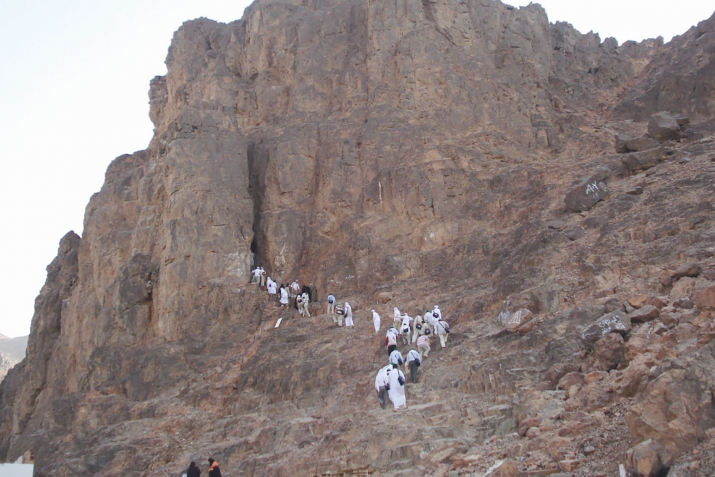
The tragedy of Uhud had weakened the authority of the Muslims and undermined their strength, as a result of which they had to face many internal and external problems.
Dangers threatened Medina from all sides and the Jews, hypocrites and Bedouins began to show open hostility towards the Muslims and all of them wanted not only to defeat the Muslims but also to finish them off once and for all. Less than two months had passed since the Battle of Uhud and the Banu Asad tribe was already ready to attack Medina. In the month of Safar (the 2nd month according to the lunar calendar) of the 4th year of the Hijra (Muslim calendar), the tribes of Udal and Kara plotted against the Muslims, which led to the death of ten companions of the Prophet ﷺ.
During this period, the Jews from the Banu Nadir tribe continued to openly show hostility towards the Muslims. In the month of Rabi’ al-Awwal (the 3rd month of the lunar calendar) of the 4th year of the Hijra, they even attempted to kill the Messenger of God ﷺ.
As for the Banu Ghatafan, they became so bold that in the month of Jumad al-Ula (the 5th month) of the same year, they decided to attack Medina. Thus, as a result of the Muslims losing part of their military potential after the Battle of Uhud, they were threatened by numerous dangers for a certain period of time. However, the wisdom of the Prophet Muhammad ﷺ allowed them not only to avoid many dangers but also to restore the lost authority of the Muslims, to regain their former glory and to retrieve their former position.
His first step in this direction was the campaign against Hamra al-Asad to pursue the enemy, thanks to which the authority of the Muslim army was largely preserved. The Prophet ﷺ continued to act in the same spirit, which confused the Jews and hypocrites and then he took certain actions, thanks to which the Muslims not only restored their shaken prestige but also began to enjoy even greater respect than before.
The campaign of Abu Salama
After the failure at Uhud, the first to oppose the Muslims were the people of the tribe of Banu Asad bin Khuzaimah. Medina intelligence reported to the Prophet ﷺ that Talha bin Khuwaylid and Salama bin Khuwaylid, together with their fellow tribesmen and those who obeyed them, began to call the tribe of Banu Asad to war against the Messenger of God ﷺ. Upon learning of this, the Prophet ﷺ immediately sent a detachment of 150 Muhajirun (migrants from Mecca) and Ansar (residents of Medina) to them. He appointed Abu Salama as the commander of this detachment, to whom he handed the banner. Abu Salama unexpectedly attacked the Banu Asad in their territory, getting ahead of them and not allowing them to attack Medina. As a result of this they scattered and the Muslims captured their camels and sheep and drove them to Medina, returning home safe and sound and taking booty without a fight. This campaign took place at the beginning of the month of Muharram (1st month of the year) of the 4th year of the Hijra. After returning, Abu Salama suffered a wound that he had received in the Battle of Uhud and died shortly thereafter.
The campaign of Abdullah bin Unays
On the 5th day of the same month of the 4th year of the Hijra, intelligence reported that Khalid bin Sufyan al-Khuzali was gathering forces for war against the Muslims and the Messenger of God ﷺ sent a detachment to him under the command of Abdullah bin Unays.
Abdullah bin Unays was absent from Medina for 18 days and on Saturday, the 23rd of Muharram, he returned with the good news of victory. As a reward for this, the Messenger of God ﷺ gave him his staff and said, “On the Day of Resurrection, this will be a sign by which we will recognize each other.” Before his death, Abdullah bin Unays bequeathed that this staff be wrapped in his shroud.
The incident in ar-Rajiya
In the month of Safar in the 4th year of Hijra, representatives of the tribes of Udal and Kara came to the Messenger of God ﷺ stating that there were Muslims among them and asking him to send them those who would teach these Muslims their religion and to read the Koran. And the Prophet ﷺ sent six people with them (in another version it is reported that there were ten), appointing Mursid bin Abu Mursid al-Ghanawi as their senior (according to other sources, Asim bin Thabit was appointed as their senior). They set out with these people and when they reached the area of ar-Rajiya (the source of water of the tribe of al-Huzail), they called for help from the people of the tribe of Banu Lihyan, about a hundred archers, to attack the Muslims. They began to pursue the Muslims until they were forced to climb some heights. The archers surrounded them and said, “We promise that if you come down to us, we will not kill any of you.” Asim refused to come down and decided to fight them with his companions, seven of whom were killed by arrows. Only three remained alive: Khubayb, Zayd bin ad-Dasin and one more companion of the Prophet ﷺ.
The attackers again promised the Muslims that they would not kill them and they went down to them, but they did not keep their promise and tied them with bowstrings. As for the third man, he said, “This is the treachery!” and refused to join them. They tried to persuade him but when he again refused, they killed him.
As for Khubayb and Zayd, they were brought to Mecca and sold into slavery there. Both of them participated in the Battle of Badr, where they killed some of the Meccan nobles. Khubayb remained in captivity with them, and after some time the Meccans decided to execute him and took him to at-Tan’im (an area that was then a suburb of Mecca). When they were ready to kill him, he asked, “Give me the opportunity to perform the prayer of two rak’ahs.” And they allowed him to do so. After performing two rak’ahs and saying the words of tasleem (greeting - ending prayer), Khubayb said, “By Allah ﷻ I would have extended the prayer if you had not thought that I was extending the prayer out of fear of death.” Then he prayed, “O Allah ﷻ, count their number and destroy them one by one and do not leave a single one of them!” Then he recited the following verses (meaning), “The allied tribes gathered around me, gathering everyone they could and brought with them their children and wives and tied me to a tall tree trunk. To Allah alone do I complain about my loneliness, grief and the fact that they have gathered a multitude of people before my execution. O Owner of the Throne, give me patience to overcome everything that they want to do to me, for they have torn my flesh and poisoned my life. They offered me the choice of disbelief but death is better than that. My eyes weep but no one sees my tears. If I am killed, being a Muslim, it is all the same to me.”
After this, Abu Sufyan asked him, “Would you be happy to return home, if Muhammad ﷺ were with us and we cut off his head?” To which he replied, “No, by Allah ﷻ, I would not be happy to return to my family, even if Muhammad ﷺ remained in his place and a thorn were to prick him, causing him pain!”