
The story of the rescue of the Prophet’s ﷺ body
As soon as the list of Medina’s inhabitants was ready, they all appeared the Sultan one by one and received alms from him. The Sultan carefully examined each of their faces but none of them matched the description of the people in his dream.
The Sultan did not lose hope and persistently asked the inhabitants of Medina: “Is there anyone left? Think carefully.” The Medinans replied, “No one remains except two rich and righteous men from the Maghreb. They accept no alms from anyone and greatly help the needy.”
Sultan Nuruddin ordered these men to be brought to him and when they arrived, he began questioning them about the purpose of their visit to Medina. The Maghrebis confidently declared, “We are pilgrims from the Maghreb and are staying near the Prophet ﷺ.” Despite the good accounts of the Medinans, the Sultan did not believe their words, but they continued to insist. Then the Sultan ordered them to show him their living quarters.
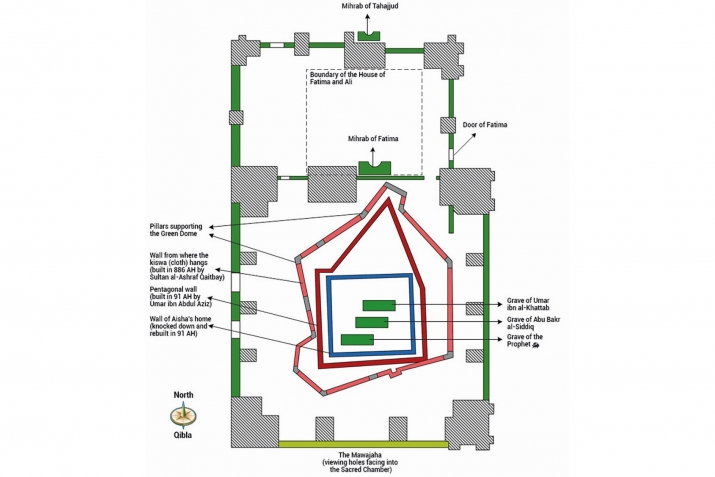
Sultan Nuruddin personally inspected their quarters and, lifting the floor mat, discovered an underground passage leading directly to Aisha’s chamber, where the body of the Prophet ﷺ was buried.
The perpetrators were caught red-handed and confessed that they were Christians sent to Medina disguised as pilgrims in order to steal the body of the Prophet ﷺ. They stated that they had been allocated colossal funds for this task. Each of them carried a leather bag, which they filled with excavated sand and scattered between the graves in the Baqi’ cemetery, thus concealing their tracks. But the Almighty cannot be fooled.
As they approached the grave of the Prophet ﷺ, lightning flashed and the earth shook. The next morning, Nuruddin Zanki exposed their plot.
The perpetrators were executed, and a trench was dug around the Prophet’s ﷺ grave and filled with lead. This leaden wall served as protection against further similar attempts.
The sultan was deeply moved, with tears of joy, as the Almighty had chosen him to protect His Prophet ﷺ. This was a great honour for Nuruddin Zanki.