

THE FIRST FEMALE CONVERT TO ISLAM: HAZRAT KHADIJA
THE FIRST FEMALE CONVERT TO ISLAM: HAZRAT KHADIJA
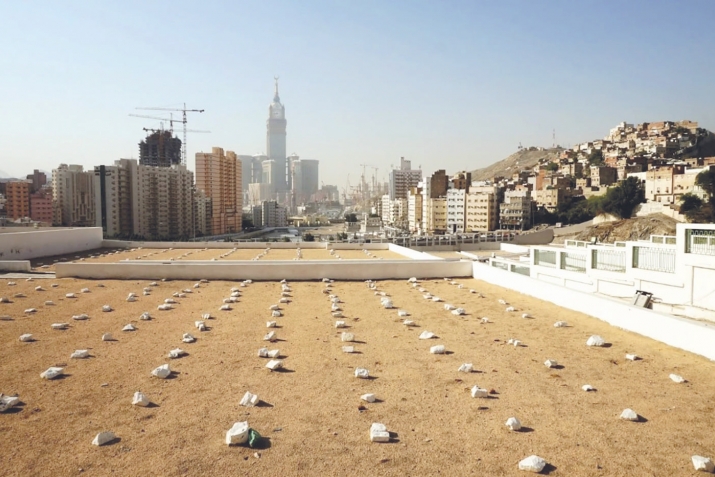
Hazrat Khadija (may Allah be pleased with her), the first wife of our beloved Prophet Muhammad (peace and blessings be upon him), was at the same time the first female Muslim.
Our worthy mother made great efforts to assist the spread of Islam through her intellect, foresight and wisdom.
Through her submission, courage and devotion, Hazrat Khadija (may Allah be pleased with her), one of our Prophet’s (peace and blessings be upon him) greatest supporters, was a role model for all Muslims.
Our Prophet (peace and blessings be upon him) first told Hazrat Khadija (may Allah be pleased with her) of the revelation that came to him and she, with her intelligence and foresight, her unquestioning obedience to and trust in our Prophet (peace and blessings be upon him), realised that he had been especially chosen by Allah and believed him straight away. When the prophethood was bestowed upon him, Hazrat Khadija (may Allah be pleased with her) said, “I bear witness that you are the Messenger of God (peace and blessings be upon him)” and converted to Islam.
Hazrat Khadija (may Allah be pleased with her) was from the Quraysh, one of the leading Arab tribes and her family shared the same line of descent as our Prophet (peace and blessings be upon him). And although she was subjected to many tests reflecting the moral values of the ignorant Arab society in which she lived, she always exhibited a most powerful and determined character in the face of all adversities.
According to accounts, Hazrat Khadija (may Allah be pleased with her) died three years before the Hijrah (19 April, 620 A.D.) and lived at a time when Islam had not yet become strong and achieved dominion. Despite the difficult conditions of the time and all the persecution by the pagans of Mecca, she maintained her unquestioning submission to Allah and our Prophet (peace and blessings be upon him).
At a time when there were quite literally only three Muslims in the world, Hazrat Khadija (may Allah be pleased with her) would sometimes worship around the Kaaba with the Messenger of Allah (peace and blessings be upon him) and Hazrat Ali (may Allah be pleased with him) and sometimes at home.
When the pagans of Mecca besieged the Muslims at Shi’bu Abi Talib, Hazrat Khadija (may Allah be pleased with her) withstood the siege alongside our Prophet (peace and blessings be upon him) with tremendous courage, fortitude and heroism.
Our Prophet (peace and blessings be upon him) had six children with our mother Hazrat Khadija (may Allah be pleased with her). The first of these was Hazrat Fatima (may Allah be pleased with her), who would continue the line, from whom Hazrat Hassan and Hazrat Hussein (may Allah be pleased be with them) whose lines will also continue until the Day of Reckoning, were born.
Hazrat Khadija (may Allah be pleased with her) was a wealthy person engaged in business; but after becoming a Muslim, instead of seeking worldly advantages, she happily used everything she had acquired in order to earn the approval of Allah and was a role model in terms of spending her fortune for the sake of Islam.
Hazrat Khadija’s (may Allah be pleased with her) purity and chastity were renowned even before her conversion to Islam, for which reason she was known as “Tahira” (the spotless and immaculate woman).
Adil Salami
As-Salam correspondent
Source: Agencies
