
REMEMBERING SHEIKH ABDULHAMID AFANDI
REMEMBERING SHEIKH ABDULHAMID AFANDI
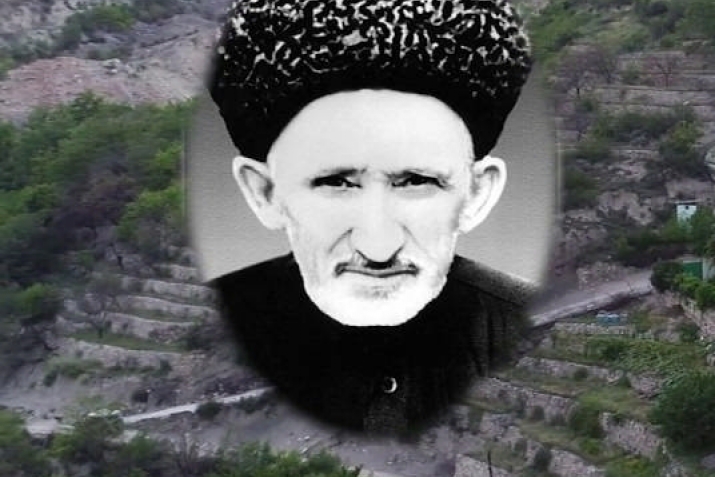
Islam in Russia has a rich history, which can be traced back to the reign of Umar, the second righteous Caliph in the 7th century Hijri. Since then Russia has produced many scholars and learned men who have left indelible impact on the preservation and proliferation of Islam on its territory. From their numerous books, sermons, and continuing guidance for murids, we know how such scholars as Sheikh Hasan Afandi and others have defended the religion and the tariqah institution, cleansing it from false teachings, explaining the differences between the pseudo and the true murshids and contributing to the renewal and thriving of the tariqah.
Reflecting on his disciple Saadu Hajiyasul Muhammad of Batlukh and his murid, Said Afandi and their continuing barakah they left behind during the most difficult of times, characterized by the growth of enemies of the religion, appearance of discord and divisions among the believers, the Muslims appreciate the contribution and legacy of the Murshid of the Naqshbandi tariqah AbdulHamid Afandi ibn Yusuf, the son of Yusuf.
He was born in 1888 in the Dagestani village of Inkho and he is of the progeny of the Prophet Muhammad (peace and blessings be upon him), from the lineage of Zahra, a descentent of Fatima az-Zahra’s son Hassan. Talking about him, the following lines of poetry, come to one’s mind (meaning): O Muslims, to love the descendants of the Prophet has been made obligatory upon you. And the prayer will not be accepted of one who has not sent salutations to them (i.e. to the progeny of the Prophet [peace and blessings be upon him]). Because, if we do not send blessings upon the Prophet and his progeny in our prayer, it will not be accepted, for it is its pillar. So honoured is the noble ancestry of Abdul Hamid Afandi.

When the honourable Sheikh Said Afandi was asked about him, he replied his character was the Koran and this is enough of him as a description. He was described as a walking Koran and his character was that of the Prophet Muhammad (peace and blessings be upon him). Writing about him, Sheikh Said Afandi has the following lines: Sheikh of the Tariqah, The Knower of the Shariah, the illuminating radiant light for the people, the fountain of life of the Naqshbandis, and the stream of Nafyu al-Ithbat of the Shazalis. (Nafyu al-Ithbat is the formula of monotheism - la ilaha illa-Llah). Abdul Hamid Afandi, may we receive his barakah, was an ocean of knowledge, - the murids and scholars who used to take his lessons during his lifetime said this about him. When he received Sharia related questions there was no one like him who gave such complete, comprehensive and elaborated answers during his lifetime.
He received spiritual education from Hasan Afandi, Humaid Afandi and when they passed away, Husein Muhammad Afandi al-`Uribi, may Allah sanctify their secrets. Husein Muhammad Afandi gave him ijazah mutlaqah in tariqah in 1375. Ijazah mutlaqah means that his permission for mentorship was not confined to his village, but that he had the permission to mentor anyone anywhere, including during his travels. And he taught murids for 21 years and guided them. When he was given ijazah for mentorship, he visited Mahmud Afandi in Astrakhan and weepingly asked for his help to get the ijazah revoked as he is not worth of it. Notwithstanding, he was not relieved of that task. It is very difficult to fully cover his blessed biography, since his life was similar to that of the Prophet (peace and blessings be upon him), especially his character. When he passed away in 1977, thousands of people from all over the country and beyond, including Avars, Kumyks, Chechens, Azerbaijanis, and Georgians, attended his funeral.
The Mubarak used to say that after his passing the Islamic religion would not experience its rebirth again, that Germany will be unified, and that there will come a time when their village will need to be defended. He used to frequently visit Sheikh Husenil Muhammad in `Urib. Once Husein Muhammad, turning to his wife, commented that he is so delighted that such person like Abdul Hamid opened his door. No one like him ever entered my door - he said. Abdul Hamid Afandi used to quote Hasan Afandi’s words, that if the murids fully comprehended the merits of tariqah khatmu gathering, they would have with hunger and thirst, walked on foot for tens of kilometres, to attend it.
The Ulama say that during the tough Soviet times, when the KGB and the communist regime used to persecute religious scholars, Abdul Hamid Afandi was responsible for the preservation and continuation of underground religious classes, and Islamic education and the appearance of madrasas in Khasavyurt city. Said Afandi writes: The knowledge that only enlightened scholars can learn, from where did it strengthen in your heart?
They say that he was a scholar of manifest sciences. If we consider his mastery of both intrinsic and extrinsic sciences, his scholarship and his prophetic lineage and affiliation to the heirs of the prophetic heritage, it is a blessing one cannot fully appreciate and be thankful for enough. Abdul Hamid Afandi used to say: be relentless in gaining knowledge, Allah will not deprive you of righteous deed.
He accentuated and encouraged learning and scholarship. He used to say when one making dua, ask God not for patience during afflictions but for thankfulness for God’s blessings. The Mubarak also used to say: O people, free your gatherings of talks about women and food, for these idle talks are among the worst. Once he told a fellow passenger on a bus after inquiring about his village and name, by God you are a very brave man! The stranger was taken by surprise. And the Sheikh added, how could you not be brave since you keep in one pocket tasbih and in another pocket tobacco! You must be very brave man. When the bus stopped, the man hurried away. Such an insightful person was he, may Allah grant us his barakah.
He used to say about murids: A murid is he whose desire is dissolved in his murshid's desire. He who does something depending on his desire is not a murid.
Mubarak from `Urib used to say: the murshid from Inkho is the one who totally assumed the prophetic qualities in himself and whose insight is complete.
Hamzat Afandi used to say, even if I glance in the seven heavens I see there Abdul Hamid Afandi. I do not see a place where he is absent.
Mubarak from Nechaevka every time he talked about Abdulhamid Afandi used to say, may his station be in the center of the Paradise.
By remembering pious people Almighty Allah may shower us with His blessings. May the endless peace, blessings and mercy of Allah be upon us and the entire Ummah of the Prophet Muhammad. May Allah the Most Hugh protect all the Muslims, the Ummah of Prophet Muhammad (peace and blessings be upon him) from calamities of the final times.