

The last path of the great Imam Shamil
Imam Shamil
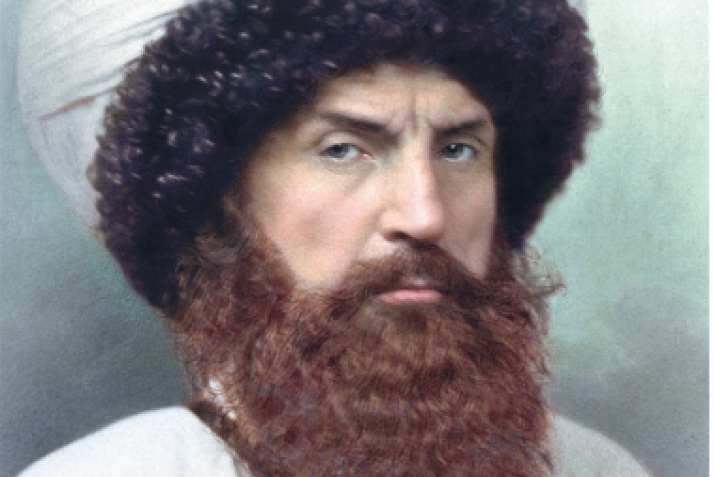
One hundred and forty nine years have passed since the greatest scholar of our time, the defender and supporter of religion, the freedom fi ghter of the Caucasian mountaineers, the Sheikh of the Naqshbandi tariqat, the great Imam of Chechnya and Dagestan, Sheikh Shamil left this perishable world.
In Arabic, his name sounds like Shamwil, and the Imam himself loved to be called like this. In old manuscripts, the name of the Imam is also written as Shamwil.
On 25 August 1859, the Caucasian war which had lasted more than thirty years ended through a peace treaty agreed between Imam Shamil and Field Marshal Baryatinsky.
Later, on 18 March 1869, while in Kiev, Imam Shamil received permission to make a pilgrimage to the Holy Land. Having learned the glad tidings, he first accomplished the Shukr namaz (prayer of thanks), expressing gratitude to Almighty Allah.
In 1870, after making a pilgrimage, the Imam moved to the city of the Prophet (peace and blessings be upon him), Medina. There he was met by descendants of the Messenger of Allah (peace and blessings be upon him) and the governor of the city, Hafiz Pasha. The Medinites settled the Imam in the house of the reverend Sheikh Ahmad Rifai, who was a Sayyid, a descendant of the Prophet (peace and blessings be upon him).
Muhammad Tahir al Karahi in his book “Radiance of the Mountain Sabres” dedicated to the life of Imam Shamil writes: “Haji Abdullah, the grandson of Haji Abdurrahman Sogratlinsky, narrated from the sheikh, the learned Imam who taught our master, the Khutba of people of the tarikat and the support of the people of Sharia, Ahmad al Madani ar Rifai, the following: “When this famous Sheikh, the warrior for the faith, supported by the help of Allah, the victorious Shamwil saw the dome of the mosque of the master of all the Prophets, his tears flowed abundantly, he sighed heavily and submissively and humbly said with trembling in the heart: “O Lord! O my Lord! If my intention, my efforts, my struggle and my jihad before You are pure and find approval from Your Messenger, then do not remove me from the neighborhood of Your Prophet (peace and blessings be upon him), let me die in the sacred land of Your beloved, show me his face, reward me with his love, raise me with those who always surround the Prophet (peace and blessings be upon him) in the next world, and do not deprive me of his intercession.”
Then the Imam, may Almighty Allah purify his soul, on the night of the sacrifice (Kurban Bayram) in 1287 on Hijra (3 February 1871 according to the Gregorian calendar) moved to the purity of His Mercy. He was buried with great honor and respect in the al Baqi cemetery behind the funeral mausoleum of Abbas, the uncle of the Prophet (peace and blessings be upon him).
The above mentioned Abdullah narrated the words of this sheikh that the people of Medina who had gathered for the funeral, scholars, Sufis and possessors of ‘al ahwal’ (1), wept and said, “O Sultan of Islam! O crown of Mujahideen! (2) O defender of religion! Your death is a great calamity.” Countless multitude of people gathered to his body on the territory of al Baqi cemetery, desiring to be blessed (barakat).
When Sheikh Shamwil died (may his soul be sanctified) his body was brought to the place of the blessed tomb of Muhammad (peace and blessings be upon him) and left for a funeral prayer to be said over him.
The elder of their Sheikhs appealed to Allah for Shamwil and everyone else repeated, “Amin!”. This elder, referring to the grave of Muhammad (peace and blessings be upon him) pronounced the following, “Verily, Sheikh Shamwil did his best to spread your Sharia, for which you were sent. He rightly fought in the way of Allah Almighty for the faith, for the exaltation of your religion.
Then he went to the sacred house of Allah (3) and to your noble grave. And, verily, we, all present, seeking from you intercession for him and testifying in his favor about this mentioned application of all the efforts of Shamwil, all to one before you. Therefore, receive this testimony from us and take it and put it before you to intercede with your noble bearer, the Lord.”
Sheikh Ahmad al Rifai ordered the following to be engraved on the gravestone of Imam Shamil: “The grave of Sheikh Shamwil, a fighter for a just cause, on his body were twenty wounds received from infidels and people of vice. It is the grave of a knower of Allah and a fighter for a just cause, twenty-five years of walking along the path of Allah, a glorious, excellent scholar, Imam, the lord of the faithful (Amirul Muminin), al Haji Sheikh Shamwil adDaghestani. May Allah forgive him, his parents and children, and those who visit his grave. AlFatihah for his bright soul.”
No doubt, Shamil is from the avliya (beloved servants) of the Most High, his deeds and barakat remained on earth even after his death and will remain until the Day of Judgment. Blessed is he, after whose death his noble deeds remain.
May Allah Almighty not deprive us of barakat and Shafa’at (intercession) of the great Imam, Sheikh Shamil! Amin!
(1) Hal (plural ahwal) is, as those of Truth (ahl al-haq) say, something spiritual that is found in the heart without artificial effort, without evoking it and trying to gain, from mirth or sadness, depression or respect, fear, which disappear because of the manifestation of the qualities of the carnal soul (nafs), independently, following something similar or not. When this is established, it is called ‘maqam’. Ahwal gifts, maqamat acquired. Ahwal comes from the source of generosity, and the maqamat is obtained as a result of zeal.
(2) Fighting for true faith.
(3) This refers to the Ka’ba.
MURADULLA DADAEV
THEOLOGIAN. HEAD, DEPARTMENT OF HISTORY, DAGESTAN ISLAMIC UNIVERSITY
