
What has space exploration given humanity?
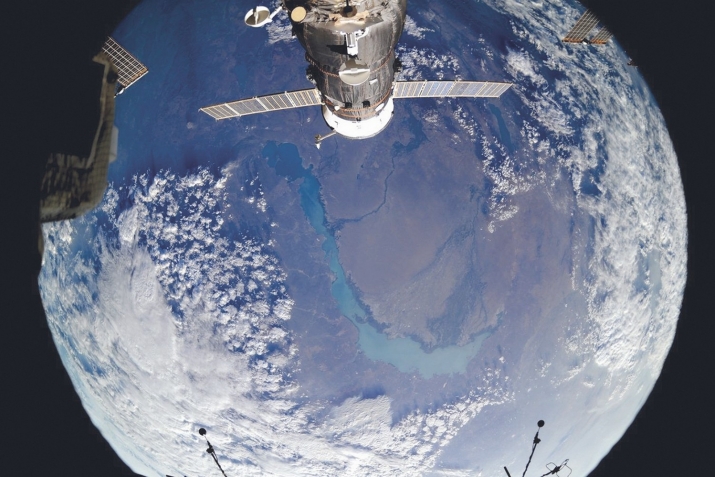
Now let us recall some of the discoveries that have become a permanent part of our lives, thanks to space. We have become accustomed to the fact that we can turn on a device at any time and watch a programme of our own choosing.
We use the internet, find our home using a GPS and call family and friends in distant lands. And all this thanks to artificial satellites!
Astronauts, spending long periods in spaceships, experienced limited mobility, which caused significant discomfort to their bodies. Therefore, medical scientists created the necessary mini-trainers and the “Adélie” spacesuits, which have been successfully used on Earth to treat children with cerebral palsy. And the “Regent” and “Pingvin” special suits, developed using spacecraft techniques, are successfully used to treat people with Parkinson’s disease and central nervous system disorders. Based on the results of research conducted during space flights, scientists have developed various medications: for motion sickness, dizziness, decompression, normalization of breathing, and promotion of bowel function.
As we can see, caring for the health of astronauts has a positive impact on the well-being of all citizens of the planet. And Teflon! Has any housewife, happily using a Teflon-coated frying pan, ever wondered where such a delight came from? It turns out Teflon was invented back in 1938 but it was not until it began to be used for spacecraft insulation that housewives acquired the unique benefits of non-stick frying pans. Nowadays Teflon is widely used to coat stadiums and oil pipelines and Teflon joints are widely used.
Can you imagine your life without Velcro and zippers? It turns out that the zipper was invented back in 1914 and Velcro in 1948. Cosmonauts began actively using these discoveries for their spacesuits. They quickly realized that Velcro was the only way to quickly open and close their clothing while in outer space. Later, skiers and then scuba divers began using Velcro. Velcro’s popularity exploded after a television show where viewers saw cosmonauts using it to attach food to walls.
During the construction of space satellites, engineers began actively developing specialised solar panel technology. They are now found in every calculator, used for autonomous power supply systems and installed on roofs. Humanity owes the invention of solar panels to Soviet physics professor, Nikolai Stepanovich Lidorenko. Solar modules are now installed on all space stations because they operate thanks to solar energy. As we can see, space itself facilitates human exploration and innovation.
The technology behind pumps that quickly transfer huge amounts of fuel to spacecraft engines is used on Earth. Doctors used the same principle to create an artificial heart – a tiny device that saves the lives of sick people. All firefighter suits are now made of fire-resistant fabric. This material was originally invented for astronauts’ spacesuits. It is made of highly durable synthetic fabrics, plastics and metal.
Not everyone knows that it was space that gave millions of people beautiful smiles. In 1987, transparent dental braces (brackets) – an accessory for straightening crooked teeth – became widely used. Now thin dental braces based on transparent polycrystalline aluminum oxide are used, the same material as in spacecraft construction. We have seen how space has given humanity many innovations that have become an integral part of our lives.