
The morning prayer – story
The morning prayer – story
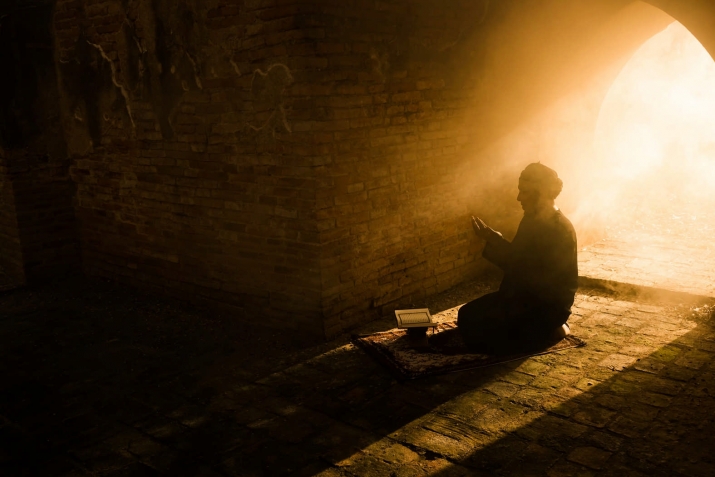
A man woke up early in order to pray the Fajr prayer in the mosque. He got dressed, made his ablution and was on his way to the mosque.
On his way to the mosque, the man fell and his clothes got dirty. He got up, brushed himself off, and headed home. At home, he changed his clothes, made his ablution, and was, again, on his way to the mosque. On his way to the mosque, he fell again and at the same spot! He, again, got up, brushed himself off and headed home. At home he, once again, changed his clothes, made his ablution and was on his way to the mosque. On his way to the mosque, he met a man holding a lamp. He asked the man of his identity and the man replied, “I saw you fall twice on your way to the mosque, so I brought a lamp so I can light your way.” The first man thanked him profusely and the two were on their way to the mosque. Once at the mosque, the first man asked the man with the lamp to come in and pray the morning prayer with him. The second man refused. The first man asked him a couple more times and, again, the answer was the same.
The first man asked him why he did not wish to come in and pray. The man replied, “I am Satan”. The man was shocked at this reply. Satan went on to explain, “I saw you on your way to the mosque and it was I who made you fall. When you went home, cleaned yourself and went back on your way to the mosque, God forgave all of your sins. I made you fall a second time, and even that did not encourage you to stay home, but rather, you went back on your way to the mosque. Because of that, God forgave all the sins of the people of your household. I was afraid if I made you fall one more time, then God will forgive the sins of the people of your village, so I made sure that you reached the mosque safely”.
Abu Huraira (may God be pleased with him) reports: The Prophet (peace and blessings be upon him) said, “No prayer is harder for the hypocrites than the morning and the night prayers and if they knew the reward for these prayers at their respective times, they would certainly present themselves (in the mosques) even if they had to crawl.” The Prophet (peace and blessings be upon him) added, “Certainly I decided to order the Muazzin (call-maker) to pronounce Iqama and order a man to lead the prayer and then take a fire flame to burn all those who had not left their houses so far for the prayer along with their houses.” (Narrated by Al-Bukhari)
Abu Bakr bin Abi Musa (may God be pleased with him) reports: My father said, “God’s Apostle (peace and blessings be upon him) said, ‘Whoever prays the two cool prayers («Asr and Fajr) will go to Paradise’.” (Narrated by Al-Bukhari)
Therefore, do not let Satan benefit from his actions. Do not put off a good that you intended to do, as you never know how much reward you might receive from the hardships you encounter while trying to achieve that good.
Muhammad Yusuf, As-Salam correspondent.
Source: Agencies