

Murat ramzi - the great son of the bashkir people
Murat ramzi - the great son of the bashkir people
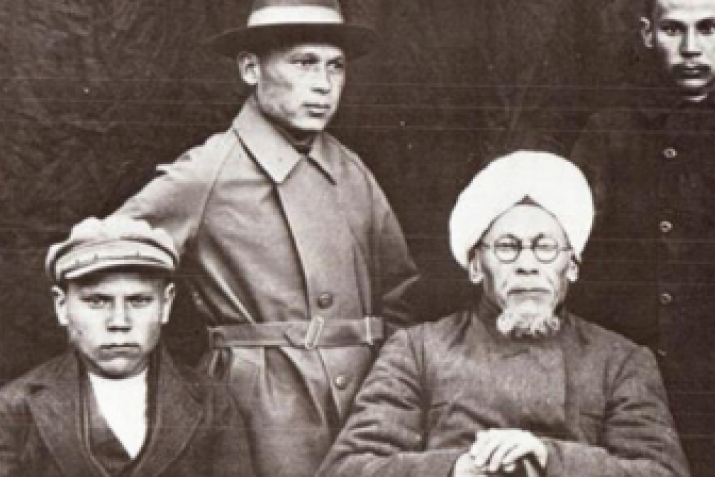
Often the life path of talented and extraordinary people develops dramatically and even tragically and we are not surprised that they have to overcome severe trials and losses.
But forgetting those personalities who made a significant contribution to culture and the loss of their names from people’s historical memory is this not the most bitter injustice? Murat Ramzi is one of these undeservedly forgotten sons of the Bashkir people.
Of course, his lived during the most dramatic years of the history of Russia the turbulent years of the October Revolution, the civil war and the change in the socio-economic structure of the whole country. This in some way justifies the guilt of descendants with respect to Murat Ramzi: after all, in those years not only individuals disappeared thousands of people died and an entire socio economic formation ceased to exist.
Moradullah ibn Bahadirshah Abdullah Sheikh Murat Ramzi is one of the prominent representatives of those Muslim scholars and religious figures who, at the end of the 19th and beginning of the 20th centuries, not only carried out the cultural and “religious upsurge of the Tatar and Bashkir peoples but had a beneficial effect on the overall processes of the spiritual revival of the Muslim peoples of the Russian Empire.”
Today in Western and Arab scientific circles he is known as a Muslim historian and author of the two volume historical work “Talfik alakhbar”, dedicated to the history of the Turks living in tsarist Russia (Bashkirs, Kazakhs, Volga Bulgars, Kazan Tatars, Uzbeks and Nogais) and Islam in the vast territories of the former Russian Empire. In the West, this work has long been in scientific circulation and used as a scientific source, in particular by Professor Hamid Algar of the University of California.
A copy of Sheikh M. Ramzi’s book is kept in the Department of Rare Books of the King AlSaud University Library in the Kingdom of Saudi Arabia. Murat Ramzi received the honorary title of Sheikh for his services to the field of historical research and in the education of Muslims.
He was a murid (pupil) of the Sufi brotherhood of Naqshbandiya and a substantial part of his book “Talfik al akhbar” is dedicated to the biographies of the prominent Sufi sheikhs of the Volga region, the Urals and the North Caucasus real spiritual guides, murshids.
Unfortunately, information about Shaykh M. Ramzi is scattered and fragmentary. A bit of information about his life can be found in the scientific article of Professor H. Algar about Zainullah Rasulev ash Sharifi AlNaqshbandi, an outstanding Bashkir Sufi sheikh and Muslim theologian in the collection entitled, Muslims of Central Asia, (Duke University Press, Durham and London, 1992).
Sheikh Ramzi himself gives a little information about his life in the second volume of “Talfik al akhbar”. It gives us an opportunity to reveal the main milestones of his biography, even his pedigree or genealogical tree, known among the Bashkirs as “shejere”, which goes back to Arabic “shajarat”, meaning “tree”.
Murat Ramzi was born in 1854 in the Bashkir aul of Almet Bulyarskoy volost in Minzelinsky district of Ufa province His nationality was Bashkir.
This is confirmed by his own genealogy. His uncle’s father, Mulla Zeynuddin Nurkai, served as a regimental Imam in the Bashkir Cossack Host.
The pedigree of M. Ramzi looks like this: Murat Ramzi (Muradulla)
In his youth, M. Ramzi studied in the city of Troitsk, Chelyabinsk province. One of his teachers was Sharafetdin ibn Mahdi, a fellow countryman from the Bashkir aul Dusmet Tirme of the Baylar volost of Menzelinsky district of Ufa province. It is known that Sharafetdin was occupied in religious studies for 12 years in Bukhara. In Troitsk, M. Ramzi studied in the madrasa of the third city mosque, which had been built with the money of the rich Bashkir patron of art, Gaisa bai.
The name of one of M. Ramzi’s teachers is also known: Uyezd Muhammad ibn Abdaz Zahir Rahmangol, native of the Troitsk, who also received religious education in Bukhara.
Undoubtedly, while studying in Troitsk and absorbing the usual religious knowledge, Ramzi also became familiar with Sufi knowledge and also joined the Naqshbandiya brotherhood. After receiving education in Troitsk, he continued his studies in Bukhara, spent several years in the Volga region and the Urals preparing his historical work and then moved to permanent residence in Medina (Saudi Arabia). Sheikh Murat Ramzi died in 1936.
The main occupation of Sheikh Ramzi was the study of the history of Russian Turks and Islam in the Volga region, the Urals and Western Siberia. He began his main book “Talfik alakhbar” (full name “Talfik al akhbar wa talqih al asar fi waqai Kazan wa Bulgar va muluk at tatar”, or “Work on the history of Kazan, Bulgars and Tatar kings”) in 1892 and completed it in 1907.
In 1908, with the financial support of Sheikh Zaynulla Rasulev ash Sharifi, a prominent Bashkir Sufi and rector of the Rasuliya madrasa in Troitsk, the book was published in Orenburg.
As for its actual content, it is a presentation of the historical development of the Huns, Turks, Slavs, Magyars and Goths from ancient times to the Middle Ages.
Then the author tends to focus exclusively on the history of the Golden Horde, its culture and peoples who inhabited it, studying the relationship of the Tatar khanates with the rapidly growing young Russian state. Finally, Sheikh Ramzi goes on to the concluding part of his historical research, which explores the history of Russia’s conquest of the Volga, the Urals and Western Siberia and the consequences of these events for the peoples of the Volga Ural region.
The destinies of these peoples are the subject of special concern for Sheikh Ramzi because of his ethnic background and his stay as a murid in the ranks of the Naqshbandiya brotherhood.
This obliged him to take care of the fate of the “uninitiated”, that is, the main part of the Muslim population of the Volga and the Urals. Of particular value is bibliographic material about more than one hundred and fifty prominent religious figures, mostly Tatars and Bashkirs (there are also reports about some Dagestani scholars) who carried out cultural and educational activities in the 18th and 19th centuries.
Sheikh Murat Ramzi allotted several pages for the presentation of the biography of Sheikh Zaynulla Rasulev ash Sharifi Al Naqshbandi, his spiritual mentor, and writes very warmly about him, praising him as a man and as a religious figure.
The book of Sheikh Ramzi differs favourably from works of similar genre by other Muslim scholars of this region. He wrote his book in Arabic but he made use of the rich experience of Russian and West European historians. Ramzi divides his work into chapters, paragraphs and provides a list of used works. His book is supplied with drawings, diagrams, tables and plans of historical places.
In it we see a transition to a fundamentally new method of historical research. For example, when analyzing the extent of colonisation of the Bashkir land, methods used by the tsarist authorities to suppress the great Bashkir uprisings and the colonists’ ways of plundering Bashkir lands, M. Ramzi employs statistics, clarifies the role of the economic factor in the policy of the Russian government and explains the negative effects of the Bashkir transfer to the military Cossack class. The work of M. Ramzi is based on a large array of historical materials. But most importantly, Sheikh Ramzi has rationally criticized incorrect approaches of Russian historians to covering the history of Russian Turks and Islam in the territory of the Russian Empire.
Sheikh Ramzi’s principled stance in upholding the idea of the national independence of the Turks, his open condemnation of the policy of violent Christianisation of the peoples of the Volga and the Urals, his criticism of swaggering and corrupt local officials found a response in the soul of the future great historian the Turkologist, Zaki Walidi Togan (1890- 1970), the founder of the Bashkir republic.
Now we can explain the reason for the great success of the young Zaki Walidi Togan, who in 1912, not twenty two years old, published the book “The History of the Turks and Tatars.” This book almost coincides with the structure of the book of Sheikh Murat Ramzi.
Of course, Zaki Walidi cannot be accused of mechanical rewriting but one should recognize the fact that he wrote his book under the strong influence of the work of Sheikh Ramzi. Moreover, Zaki Walidi writes in his Memoirs that he read the book of the Sheikh in manuscript, since he was friendly with his father and uncle, often visited his father’s house in the village of Kuzyan (now Ishimbay district of the Republic of Bashkortostan) and left there drafts of his work to be viewed by the parent of Zaki Walidi, Mulla Akhmatshah.
We can only hope that among Russian Muslims there will be people who are not indifferent to the historical heritage of Islamic scholars in Russia and will render effective assistance in the translation of the book of Sheikh Murat Ramzi from Arabic so that a wide range of readers interested in the history and culture of the Muslim world may benefit from it.
ILSHAT NASIROV DOCTOR OF PHILOSOPHY, LEADING RESEARCHER OF ISLAMIC WORLD PHILOSOPHY, INSTITUTE OF PHILOSOPHY, RUSSIAN ACADEMY OF SCIENCES.
