

Muslim scientist’s new tool can curb infections
A female Muslim nanotechnologist has developed a revolutionary new tool that can ‘listen to bacterial communication’ in a way that could help curb antibiotic resistance and accurately diagnose a range of diseases in a matter of seconds, the Daily Mail has reported.
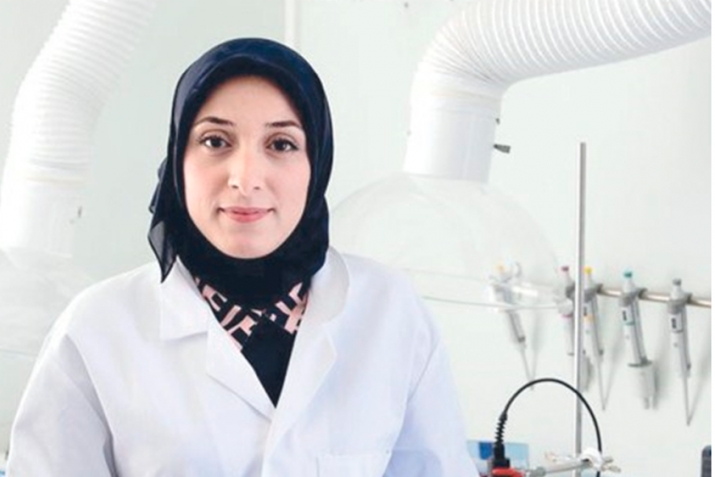
“The new technology used in my test is able to identify bacteria and make a diagnosis within 30 seconds. I hope it will allow doctors to prescribe specific drugs straight away, thus reducing the use of blanket treatments or guesswork,” explained Dr. Fatima Al-Zahraa Al-Atraktchi. The Muslim mother of two, born in Kuwait to Lebanese and Iraqi parents, earned her Ph.D in physics and nanotechnology at the Technical University of Denmark (DTU) in January 2018. Al-Atraktchi developed a sensor that can detect Pseudomonas aeruginosa, a problematic bacterial infection for people with compromised immune systems, faster than traditional methods. Thanks to her scientific breakthrough, Al-Atraktchi in November 2017 received one of the Lundbeck Foundation’s five research talent awards for scientists under 30 years old. Al-Atraktchi’s test, still under development, could be used to diagnose everything from urinary tract infections (UTIs) to lung infections in cystic fibrosis patients. The groundbreaking test works by translating the communications bacteria have before they colonize and attack, which is when they can become life-threatening.
Antibiotic Resistance
Researchers highlighted that current standard testing such as throat swabs can take up to days to produce a result and lead to a diagnosis. This leads doctors to prescribe antibiotics ahead of time, fueling drug resistance which is labeled as one of the biggest threats to global health.
“You’ll get treatment exactly for you yourself based on the samples you give at the point of infection. There are antibiotics that cover everything but are not very specific. Doctors change them depending on results obtained from the lab,” Al- Atraktchi explained.
“This old standard method is a huge waste of resources. My hypothesis is that if we know the exact bacteria, we can target the treatment and reduce the amount of antibiotics used per patient. In fact, bacteria communicate by secreting molecules. When there is a large accumulation of these molecules, it signals to the bacteria that they are not alone,” she continued.
The Muslim scientist further reported that the bacteria acknowledge that there is an opportunity to attack the body and initiate action when there is a high enough threshold. Together they may overrule healthy bacteria, thrive, and excrete a toxin that is dangerous to the human body.
Al-Atraktchi recognized the potential of her test while trialing it on 62 patients with cystic fibrosis in 2016, the results of which are yet to be published. It identified the bacterial communications in more than half the patients whose traditional diagnostic tests had come back negative. According to the World Health Organization, antibiotic resistance is rising to dangerously high levels in all parts of the world. Antibiotic resistance occurs when bacteria change in response to the use of these medicines.
SOURCE: AGENCIES
