

What should hospitality be like in Islam?
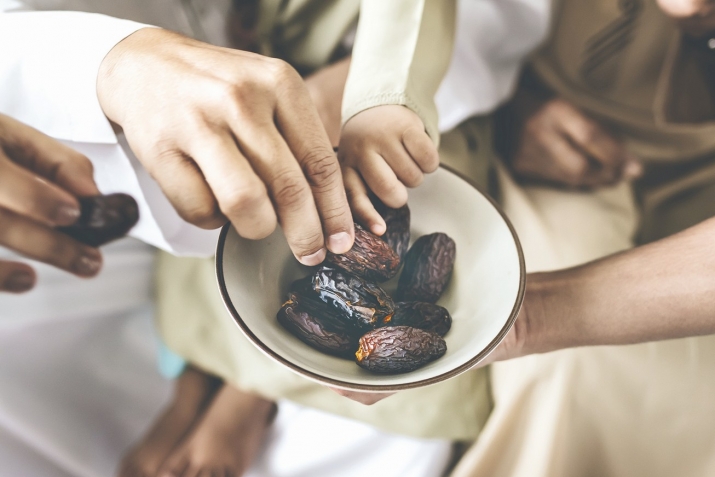
Ethics of receiving guests
In Islam, hospitality, like other relationships between people, is built on a certain ethic. Ethics helps people to organize relationships, as well as to accord them nobility.
The receiving of guests has an important spiritual meaning. A guest is someone sent to us by the Almighty Creator. Hospitality is a socio-cultural phenomenon that involves providing a stranger (that is, a guest) with protection and care.
What could be more valuable than providing protection and care to someone whom the Almighty Himself entrusted to us by sending him to our home? As for the refusal to receive a guest as befits Islamic etiquette, this is considered a manifestation of bad character.
It was reported from ‘Uqbah ibn ‘Amir that the Prophet ﷺ said, “Let no good come to the one who does not give guests the proper welcome.” (Narrated by Imam Ahmad, 17419; Bayhaqi, “Shu‘ab al-Iman”, 9588)
Providing a proper welcome and showing respect to a guest is one of the signs of a person’s sincerity of faith. One who has sincerely believed will certainly give a guest a welcome and provide him with protection and care.
It was reported from Abu Hurairah that the Messenger of God ﷺ said: “Whoever believes in Allah and the Last Day, let him treat his guest well.” (Narrated by Al-Bukhari, 6018; Muslim, 47)
The etiquette of hospitality is not only to provide protection and care to a guest but also to show him due attention and provide him with rest and leisure.
It is advisable to greet the guest warmly, in a friendly manner and with a smile on the face. One should hurry to meet and greet him. One should not make him wait at the door or in any other place.
It was reported from Abu Jamrat that ‘Abdullah Ibn ‘Abbas said, “When a delegation from the tribe of ‘Abd al-Qays came to the Prophet ﷺ, he asked, “Who are these people?” (or: What is this delegation?) They replied, “Rabi’ah [a group of tribes that included the tribe of ‘Abd al-Qays].” He said, “Welcome, O people! (or: Welcome to this delegation.) You will not be put to shame nor will you be regretful.” (Narrated by Al-Bukhari, 53)
A warm welcome to a guest implies that the host is not saddened by the fact that caring for him will cause him some inconvenience. Therefore, one should receive a guest with a pure heart and sincerely care for him.
The host should sit at the table with the guest and share the meal with him. A guest should not be left alone at the table. Also, a guest should be treated with the best food that is available at home.
When receiving guests, we must show generosity, hospitality and respect. However, in any life situation, one should not allow the boundaries of what is permissible to be violated. Therefore, even in such a good deed as receiving guests, one should not allow extravagance (israf); moreover, one should not incur unbearable debts.
During a meal and after it, one should have a pleasant conversation with one’s guest, supporting the dialogue with good words. One needs one’s guest to feel pleased for his presence in your home and not let him feel neglected.
One should not remain silent for a long time in the presence of a guest; on the contrary, one should maintain a conversation with him, ask what is new with him and how he is doing. If there are no questions left, one should entertain one’s guest by telling him good stories, because the essence of hospitality is not in offering expensive, exquisite dishes, but in the attitude towards a guest.
However, in our time it has become a common misfortune that guests and hosts prefer communication over the phone to a live conversation - the virtual wins over the real. One often sees the following scene: several people who have not seen each other for a long time are sitting at the table but they do not talk to each other, rather they are buried in their smartphones and are hovering somewhere far away, although physically they are all in the same place. We must know that such behavior is contrary to the etiquette of receiving guests and Islamic ethics in general.
In no case should one frown in front of a guest or scold one’s children and household members in his presence. It is also forbidden to show anger in front of him, because it can cause discomfort and embarrassment to one’s guest.
When a guest leaves, it is advisable for the host to leave the house with him to see him off and say goodbye to him. It is forbidden for a guest to leave one’s house without seeing him off and without saying goodbye.
After leaving the house, it is advisable to open the door of his car for him and if he is going on horseback, the horse should be brought to him and held by the bridle while he gets on and helped into the saddle.
Respectful reception of guests was the Sunna not only of the Prophet Muhammad ﷺ, but of all the prophets. The etiquette of receiving guests may have different forms in different nations depending on culture and customs. However, the most important thing is to warmly welcome a guest whom the Lord has sent us and provide him with the best of what is in the house.
In this article, we have given only a few examples of what hospitality should be. All this points to the importance of hospitality and the etiquette of receiving guests before Almighty Allah.
