

Treat your neighbour well
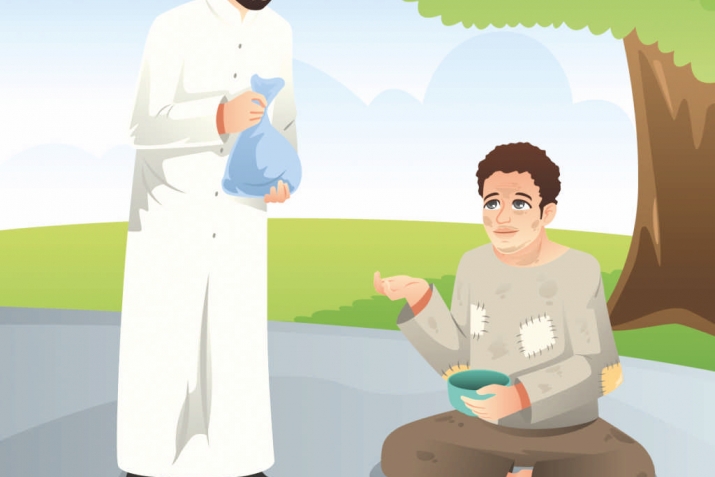
“Love thy neighbour as thyself” is a proverbial saying. Love is a feeling of deep affection towards a person or a great interest in something. A neighbour is a person living next door to or very near to another. They also say that your neighbours are those forty houses that are located around you. A good neighbourhood is developed by mutual understanding and by exchange of love and care among the people living in a locality.
There are many examples in the way of life of the Prophet Muhammad (peace and blessings be upon him) emphasising the importance of good neighbourliness.
Here are some sayings of the Prophet (peace and blessings be upon him) which are more relevant in this context:
“He is not a Believer (Mu’min) who eats to his heart’s content while his neighbour is without food”.
“While preparing gravy for food, some water may be added if necessary, to dilute the dish so that the neighbour’s need could be satisfied.”
The following extract from the narration of Abdullah bin Mubarak (may God be pleased with him) is a feast for our thought:
There lived a cobbler who was very poor. He was a pious man who had a great desire to go on the Hajj pilgrimage. He reduced his household expenses and began to save from his daily income in order to fulfil his desire. As days passed: his daily savings became a sizeable amount of 300 dirhams sufficient for his pilgrimage. He started preparing for the journey.
At this time, his wife was pregnant and wished to have some tasty food. She felt the smell of food that was under preparation in her neighbour’s house. She requested her husband to get a little food for her from the neighbour.
The cobbler went to the neighbour and was shocked to find that the neighbour was cooking the flesh of a dead donkey. The neighbour explained that his family had been without food for some days. His children could not bear the pangs of hunger. He had no money either to buy or to prepare food for his family. He could find no other way to satisfy their hunger. Therefore. he had taken this extreme step. On hearing this, the cobbler was very moved and took pity on his house: he took the money that he had saved for his pilgrimage and gave it to the neighbour.
The cobbler told his neighbour to make use of the money to feed all the members of his family and to free themselves from starvation in future. The neighbour was very pleased, as was the cobbler.
Now the cobbler could not fulfil his long desire of performing Hajj. He had given away his entire savings to the neighbour. God Almighty knew the real intention of the cobbler to perform the Hajj and the efforts he had taken to save money for the purpose and the great sacrifice he had done to free his neighbour from hunger.
The Merciful God was very much pleased with the conduct of this poor cobbler and granted him the reward of an accepted Hajj, though the cobbler could not actually undertake the journey to Mecca.
