
Nine tips to teach a child to perform namaz
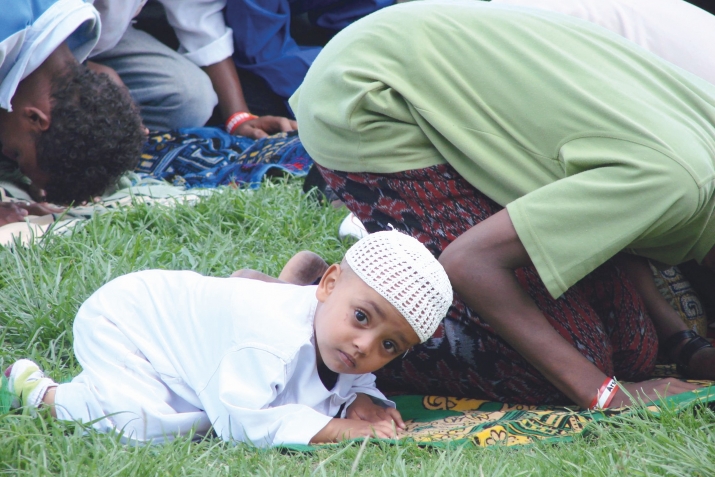
Every Muslim knows the importance and value of performing namaz five times a day: regardless of position or social status, whether he is poor or rich, healthy or sick (in some cases, relief is provided). A believer is obliged to perform namaz five times a day, which is a worship of Allah ﷻ, and which purifies a person’s soul, illuminates the heart and exalts it before Allah ﷻ.
Namaz is a good deed for which a person will be asked on the Day of Judgment first of all. The hadith says: “The first thing that is paid attention to when reporting on the Day of Judgment is namaz.”
Namaz is obligatory for all sane and adult Muslims (men and women). Namaz is not prescribed for minors, but it is necessary to prepare children for the practice of namaz, because everyone who has reached adulthood, boy or girl, must perform it correctly.
The Prophet ﷺ said, “Instruct your children to perform namaz when they are seven years old, and punish them if they neglect it after ten and separate them in beds.”
It is important for parents to help develop in their children the desire to perform namaz and to instill a love for this duty. It is necessary to cultivate in children the need to perform worship not because their parents force them to, but for the pleasure of Almighty Allah.
Here are ten ways to teach a child the obligatory namaz:
- Parents who perform namaz are a positive example for a child
A child is introduced to the obligatory namaz while still in the womb. The baby gets used to the fact that the mother establishes the same actions five times a day, therefore, namaz becomes a part of the baby’s life even before birth.
Parents are the primary example for their children. If performing namaz is their first priority and they try to perform it on time, without delaying or postponing it indefinitely, their child will also understand the importance of performing namaz on time.
Parents can say to the children, “Allah ﷻ is waiting for me. I need to go!” or “Oh, it is time for namaz! I need to hurry to worship the Almighty! I cannot be late!”
Children should see their parents performing namaz from birth. A baby can be placed next to a rug, and he will be happy to watch his mother performing namaz. When the baby grows up, the mother can pick up the child in her arms and perform namaz like that, follow the rules of care for the child). After all, our Prophet ﷺ did this: when he lowered himself in sujud, he would place the child next to himself, and then, when he got up, he would pick him up again.
It is known of a little girl who sat on the back of the Messenger of God ﷺ when he was prostrating. She was Umama, the daughter of Zainab. The Prophet ﷺ remained in prostration for so long that his companions already thought that he had left this world, as though something had happened to him. And when he stood up, having completed the namaz, he said, “My granddaughter climbed on me, and I did not want to disturb her.”
Thus, the Almighty let us know that He did not impose anything impossible on us and that a mother can perform namaz on time. Older children try to copy the movements performed by their parents, stand next to and perform the worship together with adults. For this purpose, let your little one have his own small rug, which will always lie amongst the prayer rugs. The performance of namaz should be part of everyday life, the main duty of a Muslim, and then from childhood onwards, the young person will understand the importance of this worship!
- Teach them to pray from childhood
Namaz is not obligatory for children under the age of ten but it is better to create conditions and an atmosphere in which they themselves express a desire to perform namaz while they are still young. The Prophet ﷺ commanded us to teach a child to perform namaz starting from the age of seven.
Many advise that parents wake their children up for the morning prayer from a very early age so that they get used to waking up before dawn, and later they will develop a good habit of getting up for the morning prayer by the age when namaz becomes obligatory for them!
Try to allocate a separate space for performing namaz, let it be either a room or a corner of a room. Children thus should understand how important namaz is, since a special area in the house has been created for it. Tell the children that this space has been created for performing namaz and that it must be kept clean and tidy.
When setting up a prayer corner, you can lay out special clothes for namaz, hang up a prayer schedule, reminders which state the obligatory components of namaz, and pictures with desirable duas (supplications) for performing additional worship.
- Make visual aids
Children learn well with the aid of visual cues, pictures and tables. Make a visual Islamic calendar together with your children, which show the days of the week and date, name and time of namaz, name of the months of the Islamic calendar and what year according to the Hijri calendar it is now. Using such a calendar, children will be able to learn the Muslim months, get acquainted with the concept of ‘time’ and instill the importance of planning a daily routine.
Another way is to make a prayer schedule for the week, in which you will mark each namaz performed, and at the end of the schedule reward the child for his efforts in performing worship.
The next auxiliary aid can be the “Prayer Tree”. To do this, it is worth drawing a tree on which the child will draw leaves:
- For a namaz performed on time, its token is a green leaf, so that the child will know that Almighty Allah is pleased with him.
- For a late namaz - an orange leaflet is placed on the tree. This is a warning sign that the Almighty does not like when a Muslim performs namaz late and therefore, the child should try not to allow this to happen again.
- For a missed namaz - a red leaflet is placed, which says that Almighty Allah is displeased and the child should repent for this omission.
- Mark the day when the child is charged with performing namaz
When the child turns seven Islamic years old, it is advisable to organize an event ‘Namaz Festival’. Invite children and their parents to celebrate the importance of this event - the age of seven, the moment after which it is advisable to perform namaz. Give the child a personal prayer rug, clothes for namaz, prayer training manuals and an alarm clock. Tell of the importance of performing namaz, come up with a quiz on the basics of Islam or organize a prayer competition among older children. There are many other ideas which will allow you to highlight this event, which is so important for the child!
- Teach your child to love the Prophet ﷺ
Initially, one of the duties of parents is to teach their child about the Prophet Muhammad ﷺ, who was born and lived in Mecca, moved to Medina and left this world there.
Stories about the Prophet ﷺ should become a mandatory part of your educational process, gradually giving birth to love for the Prophet ﷺ in children, presenting him as the most perfect person, motivating children to imitate and do everything as the Prophet ﷺ did and become followers of the Sunna.
Tell children about the night of Miraj, one of the most amazing miracles of the Prophet ﷺ, when he was transferred from Mecca to Jerusalem and then ascended to heaven. On this same night, the Almighty obliged the Ummah (community) of the Prophet ﷺ to perform five daily namaz. Before Isra wal-Miraj, the Messenger ﷺ prayed as Ibrahim did - two rak’ahs in the morning and evening. After Miraj, Jabrail taught the Prophet ﷺ how to perform namaz and its timing as we know it today.
To be continued…