
If anyone of you brings up a child in a proper way, then it will be much better for him than giving alms to the poor every day...
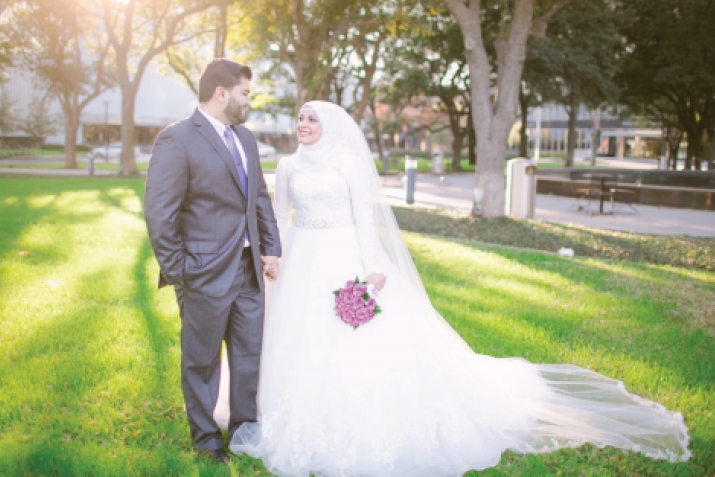
The best gift that parents can give their children is a good upbringing. A child is an amanat (trustee) from Almighty Allah, given to its mother and father for safekeeping. Therefore, they should treat the child as the best of gifts and try to raise it as a worthy person.
It is conveyed from Jabir bin Sumrat (may Allah be pleased with him) that the Messenger of Allah (peace and blessings be upon him) said, “If anyone of you brings up a child in a proper way (in accordance with the Sharia), then it will be much better for him than giving alms to the poor every day to the amount of half a saa’.” (Narrated by At Tirmidhi and Hakim). Thus parents should commence the upbringing and development of a child even earlier than its birth.
First of all, a father should choose a good mother for his children. Similarly, a mother should choose a decent father for her child. In a hadith transmitted from Abu Huraira (may Allah be pleased with him) the Messenger of Allah (peace and blessings be upon him) said, “A woman is married for four things: for her wealth, her family lineage, her beauty and her religion. So choose the religious and you will prosper.” (Narrated by Muslim).
The Messenger of Allah (peace and blessings be upon him) listed all these qualities but did not speak about the desirability of paying attention to the wealth, nobility and beauty of a woman. A mother with these qualities will not be able to give a child a good upbringing, if she does not have the fourth quality that the Prophet (peace and blessings be upon him) listed religiosity.
When choosing a potential spouse, men, unfortunately, usually pay attention to qualities other than her religiosity. But a true Muslim should seek a bride who is religious, as in the above hadith.
The Prophet (peace and blessings be upon him) gave similar instructions to women, or rather to their parents or guardians, as to how to choose a future husband. It is transmitted from Abu Huraira (may Allah be pleased with him) that the Messenger of Allah (peace and blessings be upon him) said, “If someone whose religion and trustworthiness you approve should come to you, then marry him; if you do not, you will cause discord on earth and great corruption.” (Narrated by Ibn Majah). Thus the Prophet (peace and blessings be upon him) strongly encourages the marriage of daughters to religious young people of good manners.
Nevertheless, nowadays few people follow these instructions of the Prophet (peace and blessings be upon him) and we see how ignoring his advice leads to worsening of relationships between spouses. This, of course, is reflected in their children. Thus, such a family is not capable of raising a decent child, even if one of the parents has the best qualities.
Furthermore, after a parent for a future child has been chosen, the relationship between a man and a woman must be legal, i.e. they must conclude a nikah (marriage) according to the Sharia. If there is no legal relationship between the parents, the child is considered to be illegitimate. This fact will have an extremely negative effect on his upbringing.
Prospective parents should also be very careful to ensure that whatever they earn is permitted (halal). Particular attention should be paid to the food an expectant mother eats.
From Jabir ibn Abdullah (may Allah be pleased with him) it is transmitted that the Prophet (peace and blessings be upon him) said, “Flesh will not enter Paradise which has grown from haram, and all flesh which has grown from haram is more worthy of the fire (of Hell).” (Narrated by Imam Ahmad). This hadith indicates that the flesh of a person which has grown in his body through the consumption of forbidden food deserves more to enter the flames of Hell.
That which is haram (forbidden) in food can be represented in the following three categories:
- consumption of what Almighty Allah has forbidden: carrion, pork, alcohol and the like;
- consumption of what is permitted but obtained with money which has been earned in an unlawful way: theft, deception, bribery and the like;
- obtained from earning a living in ways which are forbidden, through commercial transactions prohibited by Islam, as well as through usury (riba) and the like.
The reason for such keen attention to the issue of eating only food which is permitted is that it has a clear effect on human behaviour and deeds. What is more, the food eaten by a person can affect his children. Therefore, in the Koran Almighty Allah repeatedly stresses the command to eat only permitted (halal) food.
Allah said (meaning), “O believers! Eat from the good things which We have provided for you.” (Sura AlBaqarah, ayah 172).
After the birth of a child, it is the responsibility of the parents to give it a good upbringing based on the principles of piety and this should begin with the naming, i.e. giving it a beautiful name that has good meaning.
The Prophet (peace and blessings be upon him) said, “A father is obliged to give a child a good name, as well as to provide a good education and to marry him or her on becoming an adult.” (Narrated by Kurtubi).
The subsequent upbringing of a child should proceed in the same manner. A mother should start feeding her baby by mentioning Almighty Allah. If possible, this should be done in a state of ablution. When starting to speak, first of all the child should be taught the word “Allah” and the statement of the Shahada (witness of the Islamic faith).
The development of the character and personality of the child is greatly influenced by the parental lifestyle. Their behaviour, as well as that of all other family members, provides an example for children: they will always try to imitate the deeds of their parents.
Therefore, above all, parents should be the persons they imagine their children will become.
NURMUHAMMAD IZUDINOV THEOLOGIAN