
The Prophet of the little ones too
3. HE TAUGHT CHILDREN TO BE PROBLEM SOLVERS
The Prophet included young people in his decisionmaking. Not only would he take suggestions from them but he himself would call upon them for their opinions. When the Sura of Al Nasr was revealed, he asked the other Sahaba for their interpretations of the Sura and then turned to his young cousin, Abdullah ibn Abbas, for his explanation.
Indeed, the Prophet went beyond this. He allocated serious responsibilities to young people based on their abilities. Osama bin Zayd was but seventeen years old when he was appointed by the Messenger as commander over the army to check the Romans and his elevation over that of more senior Companions met with much surprise. Osama enjoyed a special relationship with the Messenger.
As the son of Zayd, a freed slave and formerly adopted son of the Prophet and Barakah, a freed slave woman, he had lived in the household of the Prophet since his birth. But this was not nepotism. It meant that he had received special attention and extensive training from the Prophet , which resulted in superior judgment and spiritual character.
4. HE USED EVERYDAY CONTEXT TO TEACH VALUES AND PRINCIPLES
Although some Companions, like the impoverished Ahl al Suffah or the homeless Companions of the Bench in the masjid of the Prophet , had special learning sessions with the Prophet most of his lessons took place in everyday contexts.
Abdullah ibn Abbas, the Prophet's celebrated young cousin and son of his beloved uncle, Abbas, narrates, “One day, I rode behind the Messenger of God on his mount. He said to me, ‘Young boy! Uphold (the limits set by) God, and He will uphold you. Uphold God and you will find Him ever before you. And should you ask of anyone, ask of God.
And should you seek help, seek the help of God. And know that if all the nations were to resolve to benefit you in any way, they could not benefit you, except as God has already decreed for you. And should they resolve to harm you in any way, they could not harm you except as God has already decreed for you. The pens have been lifted and the pages dried.’” (Narrated by At Tirmidhi)
What a profound lesson for anyone. But imagine the intensity of its far reaching effect on a youngster in whom it would steep and mature through the years.
5. HE REFINED THE MANNERS OF THE YOUNG, TEACHING BY EXAMPLE
The Prophet paid key attention to the good manners and proper etiquette of everyone but particularly emphasized their importance for the young, stating that no father gives his children a finer gift than good manners. But the Prophet did not stop at verbal instruction:
He modeled appropriate behavior. When once a child eating with the Prophet was moving his hand to all corners of the communal plate, the Prophet gently intervened. He taught the boy to eat reservedly from what was nearest to him, not only telling him so but taking the boy’s hand in his own and showing him the prophetic manner of partaking his meal.
6. HE RAISED CHILDREN TO BE WORSHIPPERS OF GOD BY HAVING THEM CLOSE TO HIM WHEN HE WORSHIPPED
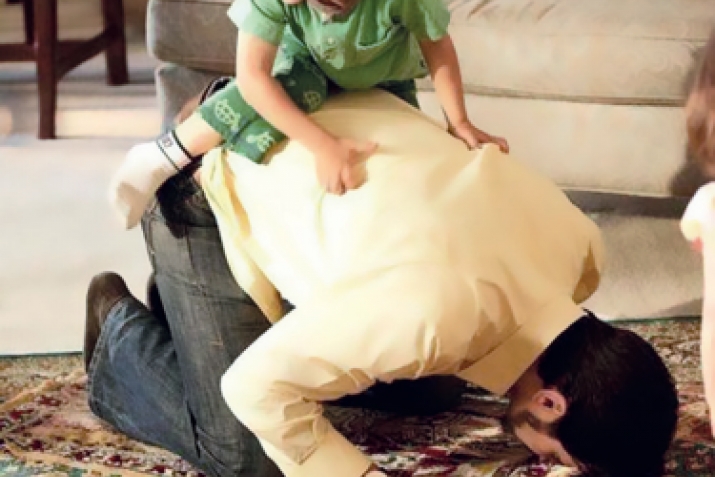
For mothers of young children, who have difficulty finding a quiet, undisturbed time to perform their own salah (prayer), the example of the Prophet is extraordinarily heartening. He not only allowed them to be with him in the sacred moments of salah but encouraged them to be there with him as they were, children. He made his salah with his granddaughter Umamah riding on his shoulders and lengthened his sujood when his grandsons famously rode on his back.
All of them became worshippers extraordinaire because they saw the most beloved of people to them immerse himself in worship and with what joy allowed them to participate at the youngest age in a manner appropriate to them. As children grew older, he let them accompany him in his late night vigils, adjusting their positioning, letting them see and hear him and participate with him in his most spiritual moments, and giving them a full glimpse of what a prophet is like in his most emotional devotions to the Lord of All the Worlds.
7. HE JOINED CHILDREN IN PLAY
Our own childhood memories of play and laughter bring back warm feelings and those who played with us enjoy a special place in our most tender hearts. How wondrous is it that the Prophet delighted in the games of children! With all his dignity, nobility and holiness the Prophet felt none too lofty (though the most exalted of all men) to join heartily in their games, throw them over his shoulder, chase after them and, laughing, catch them.
He took interest in their play, commenting to his young wife Aisha about her toy, before her age of consummation, that he had never seen a horse with wings. She replied that this one was the horse of the Prophet Sulaiman at which the Messenger of God smiled heartily at her imaginative mind.
8. HIS METHOD OF DISCIPLINE WAS AMR BIL MA ROOF WA NAHI ANIL MUNKAR
This is the command of the Koran and the order of its injunction is vital: “Commanding good” precedes “forbidding evil”. The Prophet is called in the Koran “basher” a giver of glad tidings before the mention of “nadheer” a forewarner. And his sunnah attests to the fact that he followed that implicit instruction, first calling to good, before forbidding evil.
With children, however, he was more apt to command good and demonstrate the behavior he wanted them to emulate, than he was to reprimand and forbid. All too often, we fall into the trap of saying, “Don't” without taking the time to model the desired mode of conduct ourselves. There are dangers in saying “Don't”. Say it too often and you risk reinforcing the very behavior you want to extinguish.
Love for the Prophet and the desire to win his approval and earn his praise was sufficient motivation for the child companions to strive to do good. And good they did. Our history bears witness to the bravery, generosity, courage, and moral principles demonstrated by those who were still children around the Messenger.
9. HE TREATED CHILDREN WITH RESPECT
The Prophet beheld the little ones and the young with esteem. This is demonstrated by the focused attention he paid to them whenever they were in his company, in the politeness with which he spoke to them, in the serious way he took their behavior, the responsibilities he accorded them in accordance with their abilities, the gentleness with which he merely implied any admonition, the importance and sanctity he bestowed to their play, participating in it himself, and the recognition he showed for the fact that they carried within them young souls, which he sought at every appropriate opportunity to inform and nurture alongside his own.
One ought not to lose sight of the fact that this attention, in all its details, elevated the child Companions to special status among their adult peers. For the words, lessons, and accompaniment of the Prophet were all like great medals of honour for life upon whomever he bestowed them. Thus he taught that childhood is a special and dignified phase of life and children are believers in their own right, not just adults inthe making.
A Legacy of Love
We judge a theory or philosophy by the result it produces. Abdullah ibn Abbas became known as “Al Habr wal bahr” the sage of the ummah and the ocean of knowledge. His are still the most esteemed explanations of the Koran and they shall not be surpassed.
When the perennial theme of the role of women in society comes up for debate, we forever have the example of Aisha, who set a standard of learned piety, female intellectual leadership and community activism, not only for women but for all believers. Anas ibn Malik grew up to be one of the foremost narrators of hadith. The list goes on.
But it is much more than knowledge that they have passed on to us. They lived the example of their Prophetteacher. Their lives were those of ascetics, even when wealth was presented to them. They were the havens of the poor and destitute. They maintained their principled stance, even in the face of torture and oppression, never wavering from the moral path.
The Messenger left us with one great lesson: That spiritual, moral training cannot be done without a close bond of affection between parent and child, or student and teacher. Love is the basis of learning,and emulation out of intuitive understanding its highest form. And from his love, his legacy lives on and on.
From Al-Jumuah Magazine