

The virtue of the month of Rajab
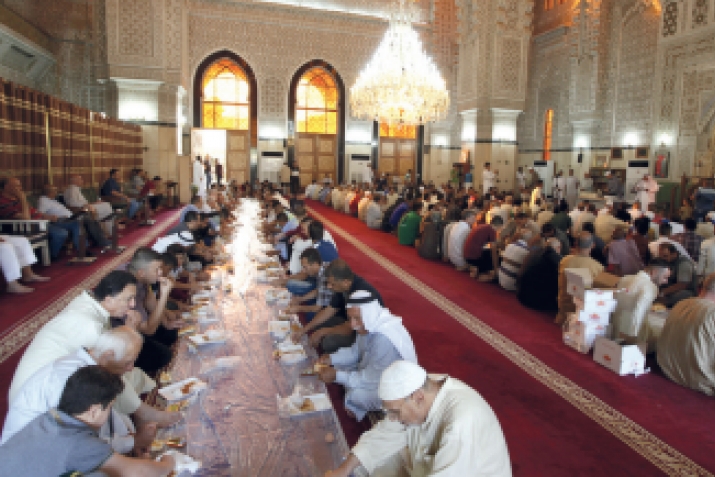
Rajab is also one of the four forbidden months for waging war (ashhur alhurum), about which God the Almighty said (meaning), “Indeed, the number of months ordained by Allah is twelve in Allah’s record since the day He created the heavens and the earth of which four are sacred. That is the right way. So do not wrong one another during these months.” (Sura At Tawbah, ayah 36).
These months are the most revered; during them Muslims are prohibited from engaging in all kinds of clashes and hostilities. This prohibition has remained in force since the time of the prophets Ibrahim (peace be upon him) and Ismail (peace be upon him).
Following the teachings of these prophets, the Arabs in the pre-Islamic period refused to wage wars with their enemies. For example, when any Arabs, who especially revered the traditions of their ancestors, met the killer of their father or brother on their way, they did not attack him, showing respect for the forbidden month.
The Almighty explained that He had made these months as time intervals for His servants, in which they obey Him, thank Him for the mercy shown and are beware of unjust acts.
God the Almighty said about this in the Koran (meaning), “They ask you (O Prophet) about fighting in the sacred months. Say, ‘Fighting during these months is a great sin.’” (Sura Al Baqara, ayah 217).
Because of the sacredness of the forbidden months, our responsibility and punishment for sins, as well as reward for good deeds, are increased in them. In the month of Rajab, as in any of the forbidden months, fasting is a desirable act, for the Prophet (peace and blessings be upon him) in his authentic hadith said, “Fast during the forbidden months and break your fast, fast during the forbidden months and break your fast, fast during the forbidden months and break your fast.” (Narrated by Abu Dawud).
Imam al Nawawi in the book “Sharh ul Muslim” in confirmation of this hadith writes the following, “In the “Sunan” (collection of hadiths) of Abu Dawud it is said that the Prophet (peace and blessings be upon him) encouraged fasting in the forbidden months (ashhur al hurum), and Rajab is one of them. God knows best.”
Imam al Khatib al Shirbini writes the following about this in his book “Mughni alMukhtaj”, “The best months for fasting after Ramadan are the forbidden months (ashhur al hurum), and the most worthy of them is the month of Muharram (the first month of the lunar year). According to the hadith quoted by Imam Muslim, ‘The best fasting after the month of Ramadan is fasting in the forbidden month of God Muharram.’”
After this the best month for fasting is considered to be Rajab. Then (according to the level of merit of observing the fast) come the other forbidden months (Zul Kada and ZulHijja), and after them comes Shaban, as transmitted in the hadith, “The Prophet observed fasting during the whole month of Shaban.” (Narrated by Muslim).
And in another version of this hadith, it is stated that the Messenger of God (peace and blessings be upon him) observed fasting for almost the entire month of Shaban (“Mughni al Mukhtaj”).
We all know that the month of Rajab is the precursor of the blessed month of Ramadan. And the Messenger of God (peace and blessings be upon him), on seeing the new moon of the month of Rajab, enjoyed reading the following prayer: “Allahumma barik lana fi Rajab wa Shaban wa balligna Ramadan.” (“O Allah, bless us in the months of Rajab and Shaban and enable us to reach Ramadan.” (Narrated by At Tabarani).
It is desirable to read this prayer regularly during the months of Rajab and Shaban, thereby spiritually preparing oneself for the main month of the year. May the Supreme Lord grant us mercy to spend the month of Rajab with dignity, showing zeal in worshiping the Almighty, observing fasting and giving alms to those in need. Amin!
ADIL IBRAGIMOV
AS-SALAM NEWSPAPER THEOLOGICAL EDITOR
