

THE ISLAMIC VIEW OF NATURE
THE ISLAMIC VIEW OF NATURE
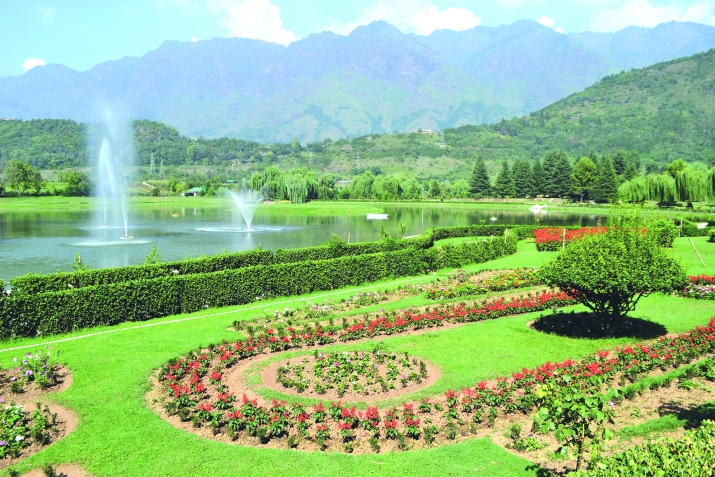
From the Islamic perspective, nature is one, created and sustained by the One All-Powerful God, who is constantly, intimately aware of and continuously in control of all things, from the tiniest particle to the greatest galaxy. All follows Allah’s unified laws, exhibiting perfect pattern and balance. Everything has its role - its reason for existing and interacting with other things in its own particular way, according to Allah’s all-encompassing knowledge and wisdom. Everything in the universe obeys, submits to, serves and declares the praises of God, each in its own way.
Who is the earth for?
The earth was created for all living things, not just human beings. Animals form communities like those of humans.
There is not an animal (that lives) on the earth, nor a being that flies on its wings, but (it forms a part of) communities like you. Nothing have We omitted from the Book, and they (all) shall be gathered to their Lord in the end. Quran: Sura 6, Verse 38.
Allah provides sustenance for all His creatures as He wills, and inspires them with the knowledge and instincts with which they need to live. Even though for a long time they did not exist, and were ‘not mentioned’, human beings are an especially honoured and preferred element of God’s Creation.
How does Allah relate to Humans?
Human beings are exceptional in having the responsibility of a very limited conscious free will in choosing whether or not to do the same as the rest of Creation and obey God’s laws in their intentions, attitudes, words and deeds. However, whether they like it or not, their bodies obey those same laws! This free will of human beings is a test for them, to see who will obey Allah’s commands and who will disobey. In order to obey they must fulfil their responsibilities as Allah’s appointed custodians and guardians of the earth.
Human Beings are Agents or Custodians of the Earth
Allah, the Creator and Sustainer of the Universe, has appointed humanity as His agent and inheritor (Khalifah) to act as a custodian by looking after everything according to Allah’s commands. Allah’s Creation, including plants and animals, has been put under the power of human beings for them to use but they must only do so within the limits set by God.
It is He (Allah) who has made you (His) Khalifah in the earth. He has raised you in rank, some above others, that He may try you in the gifts He has given you, for your Lord is quick in punishment: yet He is indeed Oft-Forgiving, Most Merciful. Koran: Sura 6, Ayah165.
In many situations, injustice occurs due to lack of accountability, what is the answer to this?
Muslims believe all humans are held accountable by Allah, and are judged by Allah, so that there are consequences in this life and the Hereafter for all our decisions.
Firstly, in all situations, the natural consequences in this life may be a reward or punishment from Allah. All good is from Allah, and all evil and mischief is allowed by Allah to show the results of the misuse of free will. If humans disobey Allah’s laws, He only lets them taste a part of these negative consequences, and He is patient before punishing them more severely, so as to give people a chance to turn back to, and obey Him.
“Mischief has appeared on land and sea because of (the result) that the hands of men have earned. That (Allah) may give them a taste of some of their deeds, in order that they may turn back (from evil).” Koran: Sura 30, ayah 41.
“Whatever misfortune happens to you is because of the things your hands have wrought, and for many of them He grants forgiveness.” Koran: Sura 42, ayah 30.
Therefore punishment, in the form of mischief and misfortune, is a test of faith, to make us look at our lives and turn back to Allah, seeking forgiveness, asking for his help and improving our behaviour. The reward of abundance and ease is a test of faith as well, to see whether those rewarded become arrogant and forget Allah or are grateful to and keep serving Him.
Day of Allah’s Judgement of all Souls
Secondly, a central belief of Muslims is that there will be a Day of Judgement, when all souls that have ‘passed away’ from their earthly life will be raised to life again. Each person will then be held accountable for the degree to which they sought, acknowledged, spoke and lived by the truth. They will also be judged upon whether, when they had the opportunity to make informed choices, they obeyed God, in everything, big and small, that they had power or influence over and therefore had responsibility for. The just and merciful outcome will be either the reward of living for eternity in Paradise and being close to Allah, or the punishment of Hell and being distanced from Allah.
Every Muslim who has heartfelt faith in Islam is conscious of this in their daily lives. Therefore, they enforce the Islamic laws from within themselves. Also, if there were a truly Islamic state, as has existed in the past, there would be punishments for publicly witnessed crimes- those that are a threat to society and can be proven without doubt.
Muslims are encouraged to be as mindful of death and the coming judgement as they can. The Prophet Muhammad ﷺ said that he remembered death about twenty times every day! This does not however mean that Muslims can forget about the importance of this world. On the contrary, such remembrance should heighten their consciousness that every decision made in this life matters a great deal. They are guided by the principle of:
Prepare for the Hereafter as if you were going to die tomorrow, and prepare for this life as if you were going to live forever.
There should be an attitude of long-termism in this life with a strong and clear consciousness of accountability to Allah in the next life, on the Day of Judgment, which is faced by the individual after death and at any moment is a possibility.
Muslims do not try to fulfill all their desires and try to create Paradise on earth. Islam is a way of taming and reducing those desires and attempting to live according to our needs. Therefore, practicing Islam should reduce consumerism and the excessive burdens that it places on nature. However, Muslims should work to establish the laws of Allah which help to bring out the best potentials of the human soul, part of which being to care for and manage the environment responsibly, preserving the beautiful and holy signs of God in nature for us to reflect on and learn from.
Even if good environmental projects cannot continue or disasters occur, a believing Muslim with knowledge should continue to do their best to apply Islamic principles, not losing heart, planning with optimism and hope for the future, with the conviction that Allah is watching and that the important thing is to keep on doing their best. The earth is not eternal but our souls are!
Source: Islam.ru.en
