
TREASURY OF BLESSED KNOWLEDGE
TREASURY OF BLESSED KNOWLEDGE
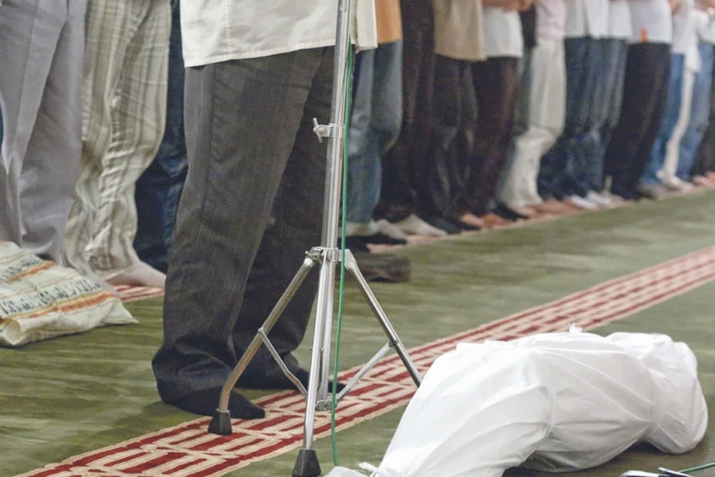
Is it allowed for a person who does not observe the obligatory prayer to enter into a Muslim marriage (nikah) and is it possible to perform a memorial prayer for him after his death?
If time were subject to Sharia law and people were ruled by Sharia rulers, everything would have happened in this way. But is it possible today to follow these laws? What we are doing today is looking for a loophole for nikah, like the tayammum [1] for ablution in the absence of water. Thus, an ignorant person should not undertake the conclusion of a nikah. One who knows must explain to the groom the necessity of repentance. And together with his witnesses, convince him of the need to reimburse all missed prayers, fasting, paying the remaining obligatory zakat and alms for him on the occasion of the end of the fast in the month of Ramadan. And if there is illegally appropriated property, then they are obliged to return it to the owner. Once they have repented, they should not further neglect any of the above. The same must happen for the bride. To this end, a person who concludes nikah, or a knowledgeable woman, should be sent to her. To teach newlyweds to pronounce the shahada it is necessary, first of all, to explain to them its meaning and purpose. After the nikah has been concluded in such a way, the groom becomes responsible for their word. This is how at once the imam gets out of a similar situation. I do not know what advice to give them, which would be the most appropriate in this situation. But if you send them away without concluding nikah, then what will come of it? All this generates perplexity. Nowadays, when there is so much freedom, 18–20-year-old youths do not hesitate to come with a request to conclude nikah, without having elementary knowledge regarding the pronunciation of the words of the testimony of the One God. And what to say to those parents who could not teach their children even this?
The question of performing the funeral prayer is similar to the one discussed above. To confirm the legitimacy of not praying for the deceased, solid knowledge and confidence that a person died in unbelief is needed, especially since sometimes we may not even know how, for example, a person who prayed and observed fasting died. In this matter, we have no right to make our own conclusions and make our own decisions. However, there are conditions that can indicate whether a person died as a believer or not.
The meaning of the above is as follows. Two Khawarijis [2], drawing their swords, came to Imam Abu Hanifa with the demand, "You must answer us two questions. If you answer, you will stay alive, if not, we will kill you." The imam agreed. They said that there were two corpses in the yard. One of them was the corpse of a man who died in a state of alcoholic intoxication and the second belonged to a woman who died giving birth to a child, conceived in adultery. Both of these people passed away without having time to repent. Who are they - Muslims or infidels - and what will be the decision regarding them? The imam asked them if the dead were Jews? They answered no. Then he asked if they were Christians? They again answered in the negative. When asked if they were fire worshipers, the answer was again negative. When the imam asked, "Who were they then?" the two replied, "Muslims." Then Abu Hanifa said, "So you yourself have answered your own question." "Like this?" - they were surprised. “Now you have both testified that the deceased were Muslims. Who can now establish that they were unfaithful?"
Notice how sagacious the imam was in making them testify themselves that the dead were Muslim. Then they both asked,
"If so, then tell us where these two will go, to Heaven or Hell?" “There, wherever the Almighty ﷻ wills. To pardon or punish - everything is His will!" Imam al-Ghazali [3], who is called “hujjat ul-Islam” [4] (proof of Islam), said, “Whatever great sins you may see in a Muslim, do not accuse him of unbelief, for you do not know if he has some kind of trait of character that is commendable before the Almighty ﷻ." Likewise, those who have come to know Allah ﷻ (arifun) and the imams are wary of unreasonably accusing any people of unbelief. May the Almighty ﷻ reward us with reason in order to follow their path!
The meaning of the hadith cited above, in which the Prophet ﷺ says that his ummah will split into 73 branches and that 72 of them will go to Hell, does not signify that they are all unfaithful (kafirun). The meaning of this hadith can be compared with the example of the trial of 73 groups of people, of which one will be released from freedom and 72 will have to be imprisoned. Just as after the execution of the sentence, each group will be released, so each, depending on his sin, will be in Hell for some time and then will come out of it. None of the Muslim ummah will remain in Hell forever. Like those of the condemned who were sentenced to death at the trial and can no longer return to life, there is no salvation for those who breathed their last in unbelief. These people will remain in Hell forever and will not benefit from alms given for them. Such people are called dead in unbelief. There is no greater joy for a person than dying in faith. May Allah ﷻ preserve the faith for the entire ummah at the hour of death! No one knows what his last breath will be. And no one can blame a Muslim that he died unfaithful, if there is no solid evidence for this. It is impossible to prohibit the performance of a memorial prayer for him, because ignorance (jahl) conquered someone or someone was illiterate in matters of faith.
Is it possible after the death of a father to spend as alms from the property inherited by his children?
Property that a person bequeathed before his death to be directed to charitable purposes is not the property of orphans. If the size of the property indicated in the will for spending for good purposes does not exceed one third, then this will should be fulfilled. If the will exceeds one third of the property, but the heirs are adults, then with their consent, it can be spent for good purposes. If there is no consent of the heirs, this is impossible. If minor children are the heirs, not a single penny should be spent beyond the stipulations of the will. If the deceased had debts, they are not reimbursed from the funds of the will but are reimbursed from the property remaining after death (tarika).
Many wives try to donate the clothes of their deceased husband as alms. This cannot be done. They can sell or keep these clothes until the children reach the age of majority for their benefit. And the widow should also spend other property only for the benefit of the children. If the children were brought the obligatory zakat paid annually from property, the zakat in the case of the completion of the fast in the month of Ramadan or simply alms, then the mother can eat from what was brought but has no right to waste it. The mother of the children may give alms from her own property, which has nothing to do with the property of her children or her husband. For example, from her salary, pension or money received for harvest from her labour.
There are also cases when mothers want to spend as alms from their share of the inheritance. This also cannot be done. In order for this to be resolved, one condition must be taken into account: it is necessary to divide the inheritance in the proper way and show everyone his share. Only in this case, can the mother do with her share what she wants but until the division of the property she is not allowed to use it.
For example, from an apple divided into eight parts, a mother will take one part. This one part also has a common share. Thus, if the mother voluntarily takes one eighth of the property, then she does not become the mistress of this part until the division, since it includes the share of the rest. She cannot spend as alms property which does not belong to her. Pension money can be used for a will and for any charitable purposes.
______________________________________
[1] Ablution by clean earth or sand in the absence of water.
[2] Khawarij ("rebels", "schismatics") were representatives of a religious political group formed during the struggle for power in the Caliphate between supporters of ‘Ali ibn Abi Talib and Mu'awiyah at the Battle of Siffin in 36 AH (657 CE).
[3] Al-Ghazali Abu Hamid (1058 – 1111 CE) was a most prominent theologian, Sufi, philosopher and Shafi’i faqih.
[4] A title given for exceptional knowledge. The word of such a scholar is accepted unquestioningly.
FROM THE BOOK “TREASURY OF BLESSED KNOWLEDGE”
BY SHEIKH SAID-AFANDI AL-CHIRKAWI