
The Explorer of Natural Laws: Al-Jahiz
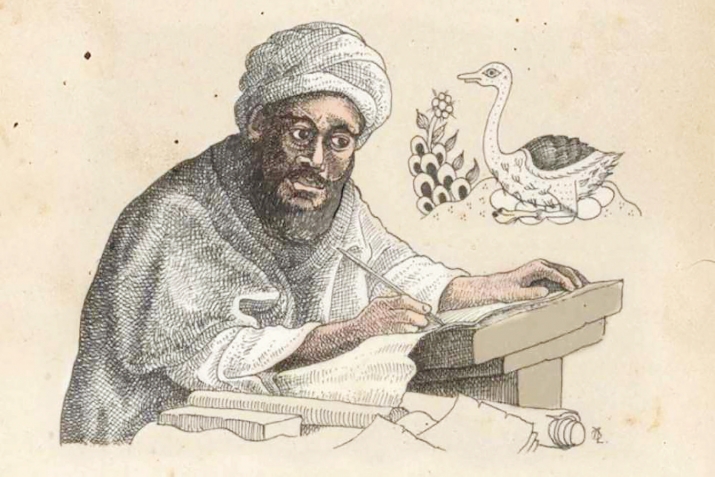
In every nation, there always appear a small number of individuals who are inexorably drawn to the understanding of nature and its laws.
Abu Uthman Amr ibn Bakr al-Basri, better known as al-Jahiz, noted: “Nations that do not have such individuals are doomed to perish.”
Al-Jahiz himself was one of these outstanding individuals. He was fortunate to live during one of the most significant eras in human history: a period when the Arabs were embracing the legacy of classical science and developing Arabic literature, and he actively participated in both processes.
Birth and Education
Al-Jahiz was born in 776, just 14 years after the founding of Baghdad by the Abbasid Caliph al-Mansur. He grew up in Basra, a fortress that eventually became an important centre of intellect in the caliphate, alongside Kufa.
Al-Jahiz studied in the schools of Basra, where renowned Islamic scholars taught. The abundant availability of books in his hometown significantly influenced his development and career. Although the Islamic world had only recently become familiar with paper, by his 30th birthday it had virtually supplanted parchment, ushering in a new intellectual era.
Al-Jahiz’s family lived in poverty and he earned his living selling fish until he was 20. Nevertheless, he could read and write from an early age, which, in the context of 8th-century Iraq, opened up opportunities for social advancement.
Extensive Legacy
Al-Jahiz authored over two hundred works, but only about thirty of them survive. His interests encompassed zoology, Arabic grammar, poetry, rhetoric and lexicography. He is considered one of the few Muslim scholars capable of explaining complex scientific concepts to ordinary people.
In his writings, he often used engaging stories to illustrate his ideas and present both sides of a debate. His original works can be recognized by titles such as “The Superiority of Speech over Silence”, “Arabic Food”, “Praise of Merchants and Blame of Officials”, “Frivolity and Seriousness”, and “The Book of the Fine Style and Clear Expression of Thoughts”.
Al-Jahiz’s most famous work is “The Book of Animals” (Kitab al-Hayawan), which, even in its unfinished form, fills seven volumes in its printed version.
This book contains meticulous descriptions of over 350 animal species and its texts are filled with poetic elements and well-known proverbs. Al-Jahiz was the first scholar to recognize the importance of the environment for animals, noting that living conditions influence their survival.
Contributions to Zoology and Natural Science
Al-Jahiz’s research focused on animal mimicry, mentioning parasites that adapted to the colour of their hosts. He wrote in detail about the influence of climate and nutrition on humans and described animals and plants from various regions.
As one of the first scientists in the fields of zoology and anthropology, he noted how environmental conditions influence animal life and studied the evolution of species under the influence of these factors. Furthermore, al-Jahiz proposed the theory of natural selection, which was later attributed to Charles Darwin. This theory was a significant advance in science.
Preserving the Legacy of Al-Jahiz
Eighty-seven pages from the “Book of Animals” (representing approximately 10% of the original text) are preserved in the Ambrosian Library in Milan. These dating from the 14th century, andbear the name of the last owner, Abd al-Rahman al-Maghribi, and the date 1615. The text is also accompanied by thirty miniatures.
After serving for over fifty years in Baghdad, al-Jahiz returned to Basra, where he died in 868. His death was the result of an accident: the writer was killed by the rubble of books that fell on him in his personal library.
Scientists and Zoology
The development of zoology among Muslim scholars, inter alia, encompassed issues of livestock breeding and the selection of superior horses and other animals. One notable scholar in this field was Ibn Bakhtishu, a Christian scholar who wrote a treatise in the 8th century entitled “The Uses of Animals”. This work contains information on zoology, largely based on earlier Greek works, but with the addition of an extensive section devoted to animal husbandry.
Al-Damairi, a 13th-century scholar who lived in Cairo and drew inspiration from the works of al-Jahiz, authored the treatise “Hayat al-Hayawan” (“The Life of Animals”). This encyclopedia, containing detailed information on many animal species, became an important and foundational work in zoology.
Several other scholars are also worth mentioning who had a significant influence on European thought. Abu Ubaydah (728–825) wrote over 50 volumes on horse and cattle breeding, which were later adopted by Europeans. In the 12th century, Ibn al-Awwan authored “The Book of Agriculture”, covering many aspects of animal husbandry and beekeeping. Finally, Ibn al-Baytar wrote a pharmacological work containing detailed information on veterinary care for animals.