
Dad wanted a son, but a daughter was born...
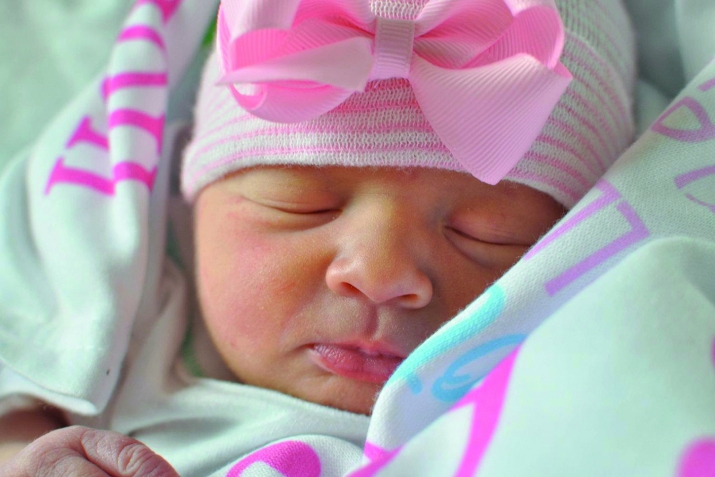
In many eastern countries and regions, the problem of the gender of a newborn baby in the family may be very acute. There, almost from the third month of pregnancy, the expectant mother and her closest start to annoy doctors with demands for information about the sex of the unborn child.
In such circumstances, as practice shows, if a doctor is sure that there will be a girl, it is better not to report the news, since it is possible that there be a loss of confidence in the motherto-be and a gender-related abortion or the treatment of a pregnant woman may be even worse.
The case that “dad wanted a son but a daughter was born” especially if there are already three or four daughters in the house (or even more), usually ends up by inducing a nervous breakdown in a pregnant wife and a sense that “life has failed.”
Surprisingly, such psychological pressure quite often comes not from the husband himself, but rather from his relatives, especially the close ones like mother, sister and daughters-in-law. In societies where polygamy is acceptable, this situation may present a pretext for remarriage.
When she gets older an unwanted girl is most likely to understand that she was never generally welcomed in the family, not only by the father, who wanted a son, but also by the mother, who suffered because she bore a daughter.
Boys, on the other hand, are much less likely to complain that their parents wanted a girl instead. It is worth noting that the phenomenon of preferred gender, with its ancient echoes, is still quite a contemporary one. And here’s the point.
History of the issue
In antiquity and up to the 19th century, people had many children and a situation was very unlikely in which only girls were born or survived in a particular family (at that time often only two or three children out of ten survived).
In today’s world, where families rarely give birth to more than two children, gender issues are much more acute. However, traditions still continue of desiring more sons than daughters; from a purely economic point of view in many cultures a son will bring his wife to the house, a son can help earn more and will keep and provide care to his elders in their declining years.
A daughter, whatever one may say, is not profitable under such circumstances. Nevertheless, one should observe what such an economic perspective can lead to in the case of modern China. When its national “one family one child” programme was first introduced, every Chinese family, of course, dreamed of a son.
Over the almost 35-year existence of the programme, however, the number of men in China has grown so much that those who want to get married have to seek brides from neighbouring countries (Thailand, Vietnam, Pakistan, Russia, etc.): brides are in severe shortage in China today.
Religious factor
Here it is not rational calculation comes to people’s aid but religious laws that protect daughters. In fact, it was the laws of Islam that managed to maintain the gender balance in Arab society where formerly in the era of ignorance it had been customary to kill newborn girls.
The Almighty God says (meaning), “To Allah (alone) belongs the kingdom of the heavens and the earth. He creates whatever He wills. He blesses whoever He wills with daughters and blesses whoever He wills with sons.” (Sura Ash-Shuraa, ayah 49).
Jabir ibn Abdullah (may God be pleased with him) said that he once heard the Messenger of God (peace and blessings of God be upon him) say, “Whoever has three daughters and cares for them, is merciful to them and clothes them, then Paradise is certainly required for him.”
It was transmitted that to the query, “O Messenger of Allah, what if he has only two?” the Prophet said, “Even two.” (Narrated by Ahmad and Al Bukhari) The status and value of women rose among those peoples where, in addition to economic issues, the preservation of the nation itself became relevant.
If you look closely among peoples who have survived genocide, a woman who is able to give birth and increase the nation takes priority place. Nations which were practically wiped off the face of the earth became convinced of the value of girls from first hand experience.
A vivid example is Christian Armenia, where women’s monasteries are categorically prohibited while men’s flourish. Unfortunately, every now and then in a maternity hospital we still come across women who have given birth to a daughter and whose eyes are full of tears, not from the joy, but from frustration. “My husband said on the phone that he was hoping for a son and is not coming to take us!” they say.
FATIMA MANZUR