
My daughter is a tomboy. What to do?
My daughter is a tomboy. What to do?
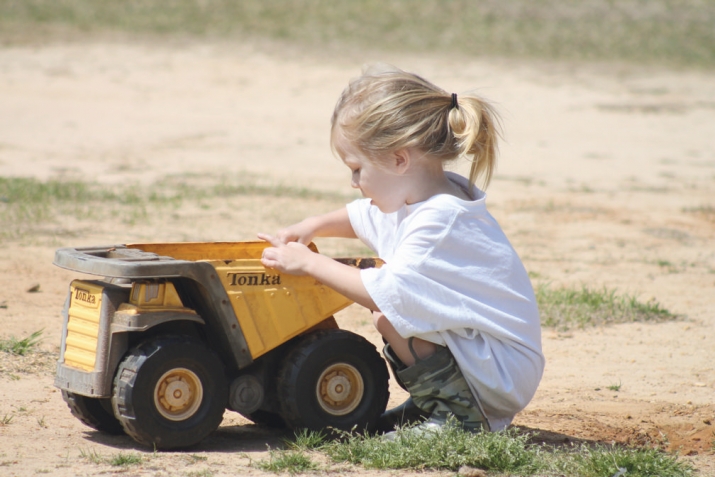
“They gave my daughter so many dolls but she is not interested in them, she plays with her older brother’s cars. She does not like dresses and prefers pants. In the yard she makes friends and plays with the boys and she herself behaves like a boy. I try to captivate her with toys and activities suitable for a girl but it is useless. What to do?"
Such questions are sometimes found in “mom” chats and websites. And really what actually happens in such cases and why? And most importantly - what to do?
In responses to such questions, we often come across confessions from some former tomboys: yes, I was like that as a child too but I grew up, madly fell in love - and I wanted to ‘be a girl’. I changed my jeans for a skirt, learned to cook, my gait even changed, became smoother. Indeed, this is almost always what happens. However, let us look at the possible reasons why a girl turns into a ‘boy’ even at preschool age.
- It is about family.
It happens that one of the spouses or both together enthusiastically expect the birth of a boy - but a girl appears. The parents seem to have reconciled themselves to this but their disappointment in some non-verbal way is transmitted to their daughter and she unconsciously tries to behave like a child of the gender desired by mother and father. Another variant is that initially the girl does not develop a very good understanding with her mother, who wanted the birth of a son, but the daughter adores her father and tries to imitate him: she disappears with him in the garage, helps repair the car or make something and dresses like him. Another variant is that the girl has an older brother (or brothers) and the parents either, by inertia, raise children of different sexes equally or constantly emphasize that the daughter is a girl, so that she is deprived of the freedom of action that a boy has and must ‘stay at home and help mother’, while the brothers have an interesting and fun time. Out of a natural feeling of protest against such inequality, the girl begins to want to be like the boy and she begins to behave accordingly. The fourth “family” variant is that the daughter copies her mother. In this case, the mother herself vaguely resembles a “princess in lace”: she runs around in jeans, demonstrates the decisive character of a leader and prefers leadership roles. There is nothing to be surprised if the daughter begins to imitate such a mother.
- Temperament.
One of the possible reasons for a girl’s ‘boyish’ behavior is an active temperament, which means that she has a lot of energy that needs to be expressed. It is unrealistic to do this through calm games of mother and daughter. This temperament is often accompanied by a corresponding character - active, combative, restless – and, of course, it requires implementation.
- Predominantly male environment.
Often the situation develops in such a way that there are simply more boys than girls in the yard and your daughter has not found a common language with those girls who are around, or for some reason they are not suitable for her as friends. After all, adults are not ready to call every representative of the same sex who happens to be nearby a friend or girlfriend. And it turns out that it is easier and more convenient for the daughter to play and be friends with boys and - accordingly - take part in their boyish games.
How to react?
Most likely, no special reaction is required. Try to determine the reason for your daughter’s behavior. From time to time, on holidays, you can offer her beautiful dresses and emphasise that she is very beautiful in them. It is also advisable to enroll her in a sports body, choosing an active sport that she would also like, for example, swimming or gymnastics; here she will be able to splash out excess energy and also make friends with the same interests.
If a daughter imitates her mother, then the mother should ask herself: perhaps something should be changed in her own behavior and appearance? If you add femininity to the image of such a mother, the daughter will almost certainly change her behavior. If your daughter imitates her adored father, tell your spouse to sometimes unobtrusively tell the girl that he likes to see her in an elegant dress. If a girl thinks that boys have more freedom and other ‘goodies,’ show her the joy of being a girl.
Only if a girl exaggeratedly copies boyish behavior or even asks to be called in the masculine gender, does it make sense to show the child to a child psychologist to determine the exact cause of this phenomenon. Perhaps the issue is a with her endocrine system - in this case, you can consult a doctor.
In general, psychologists recommend one thing: love your daughters, no matter how they are: quiet or noisy, calm or energetic, obedient or mischievous. Of course, tell them what they should or should not do, support them, build a trusting relationship with them and then any problem will be solved more easily.