
Ar-Rabia - The Holder of Opinion
Ar-Rabia - The Holder of Opinion
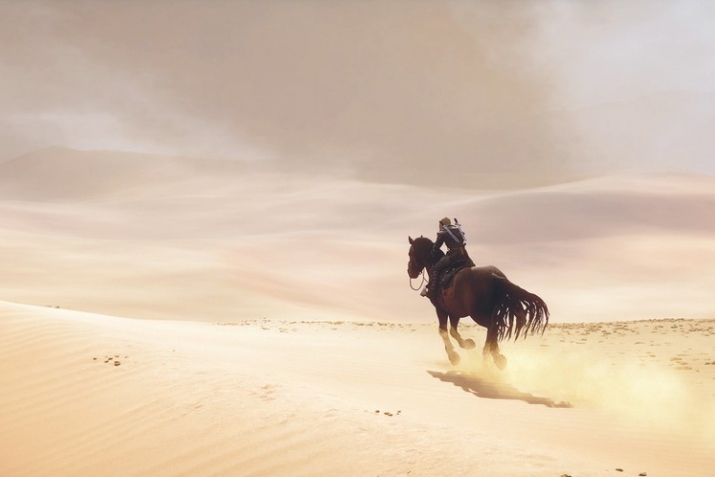
Let us fast forward to the 51st year of the Hijri (Muslim calendar).
Detachments of Muslims go to the east and west, bringing to humanity the correct faith in the Lord and extending a creative, caring hand to people.
Thus, they spread throughout the vastness of the earth a law that frees man from slavish obedience to his own kind and turns his allegiance to the Almighty Creator alone, Who has no partners. Here is the noble companion ar-Rabia ibn Ziyad al-Harisi , the governor of Khorasan, leading his army on another campaign on the path of the Almighty. He is accompanied by his faithful servant Farrukh.
After Allah ﷻ honored ar-Rabia by delivering Sijistan and other regions into his hands, he decided to end his life by crossing the Saykhun (Syr Darya) River to raise the banner of Islam over the lands of Maverannakhr.
Ar-Rabia ibn Ziyad carefully prepared for the upcoming battle and himself chose the time and place for it, leaving no choice for the enemy. When the battle broke out, ar-Rabia and his warriors fought valiantly and fearlessly, remembering and praising Allah ﷻ, and their heroism remained on the pages of history. Ar-Rabia’s servant Farrukh also showed himself worthily on the battlefield, so that ar-Rabia never ceased to be amazed and his respect for Farrukh and his merits constantly grew. The battle ended with a overwhelming victory for the Muslims. Then they crossed the river beyond which the Turkic lands began. This river also blocked their path to China and served as an obstacle to the conquest of Sogd. Having crossed it, the first thing the great commander did, as soon as he stepped on the opposite bank, was to perform a small ablution with water from this river together with his warriors. Then everyone turned towards the qibla (Kaaba in Mecca) and prayed two rak’ahs as a sign of gratitude to the Creator, who granted them victory. The commander duly rewarded his servant Farrukh by granting him freedom, allocating him a share of the spoils of war and giving him additional gifts.
Return of Farrukh to Medina
Ar-Rabia ibn Ziyad al-Harisi did not live long after this magnificent day. He died two years after the fulfillment of his cherished dream and went to the Lord, gaining His pleasure. And the valiant and fearless Farrukh returned to the blessed Medina with his share of military spoils and other gifts received from his commander.
In the days of his arrival in Medina, Farrukh was a young, energetic, dexterous and valiant warrior. He was approaching thirty years of age. Farrukh decided to buy a house and get married. He bought a house in the centre of Medina and chose a reasonable, worthy and sincerely religious woman of about the same age as himself and married her. Farrukh lived happily in his home and his married life was even more serene, pleasant and beautiful than he had imagined. However, neither this wonderful house with all its advantages, nor the wife, whom Allah ﷻ endowed with many beautiful features and noble qualities, could overcome this warrior’s longing for the battlefields and the clanking of swords. Every time news of victories won by Muslim troops came to Medina, his desire to fight in the path of Allahﷻ grew.
Deciding to go into battle in the way of the Lord
Then one Friday Farrukh heard the preacher (khatib) of the Prophet’s ﷺ mosque telling Muslims the good news about victories of the Muslim troops and encouraging people to fight in the path of Allah ﷻ in the name of exalting His religion. He returned home, having already decided for himself that he would definitely stand under the banners of Muslims going on campaigns in different regions. He informed his wife of his intention, to which she said, “O Abu Abd-ar-Rahman, to whom are you leaving me and this child who is in my womb? After all, you are not a local and you have no family or relatives here.” Farrukh tried to calm her down, “I leave you to Allah ﷻ and His Messenger ﷺ. In addition, I leave you thirty thousand dinars, which I collected as war booty. Take care of them, increase them and spend them on yourself and your child according to custom, until I return to you safe and sound.”
Having said goodbye to her, he left.
The birth of a child and caring for his upbringing
The wise and prudent woman was delivered from her pregnancy a few months after her husband left. She gave birth to a boy with beautiful features, pleasing to the eyes and was so happy about his birth that she almost forgot the bitterness of separation from his father. She named her son Rabia. From an early age, signs of nobility and intelligence became noticeable in the boy, which manifested themselves in his words and actions. His mother gave him to the teachers, ordering them to teach him everything necessary and to the educators, asking them to instill in him the best morals. The boy quickly learned to write and read and then he memorised the Book of Allah ﷻ (Koran) and read it as it was revealed to the Beloved of God – Muhammad ﷺ. He mastered many hadiths of the Messenger of Allah ﷺ and mastered the Arabic language quite well for his age. He learned what he needed to know about religion.
Rabia’s mother did not skimp, generously giving gifts to her son’s teachers and educators. Seeing how his knowledge increased every day, she respected his teachers more and more and tried to adequately reward them for their work. She waited for her husband’s return and did everything to ensure that her son would please not only her, but also his father with his successes. But Farrukh’s absence dragged on. At the same time, various news arrived that Farrukh was captured. Someone claimed that he was free and continued to fight in the path of Allah ﷻ. The soldiers who recently returned from another campaign said that Farrukh had achieved the death of a martyr (shahid), which he had been striving for. Rabia’s mother was inclined to believe this last statement since there was no news from Farrukh. She was very sad about him, but showed patience, hoping for a reward from the Lord.
Choice of profession
Rabia was approaching adulthood and kind people advised his mother: “Rabia has already learned what a boy of his age should be able to do: read and write. And he has surpassed his peers by learning the Book of Allah ﷻ and many hadith. It would be good if you chose some kind of craft for him. He will quickly master it and will be able to support you and himself with the money that his work will bring.”
She said, “I ask Allah ﷻ to choose for him what will be good for his earthly life and eternal life.”
Rabia chose knowledge for himself and decided to live as a student and teacher until the end of his days. He joined several circles that met in large numbers in the mosque of Medina and drank greedily from the source of knowledge. He almost could not leave the circle of the noble companions who survived to those days, especially Anas ibn Malik, the servant of the Messenger of Allah ﷺ. He also adopted knowledge from the oldest followers of the Companions, including Said ibn al-Musayyab, Makhul al-Shami, Salama ibn Dinar. He devoted his nights to worship and his days to acquiring knowledge, without knowing rest and when someone advised him to spare himself, he replied, “Our teachers said, ‘Truly, knowledge will give you a part of itself only if you surrender yourself entirely to it.’”
Very soon he gained fame. He gained many students and followers. The life of this scientist of Medina was calm and serene. He spent half his time at home, devoting it to his family and brothers in faith and the other half he spent in the mosque of the Messenger of Allah ﷺ, participating in meetings and circles in which knowledge was passed on.
To be continued…