

The story of Napoleon who imagined himself the Imam Mahdi
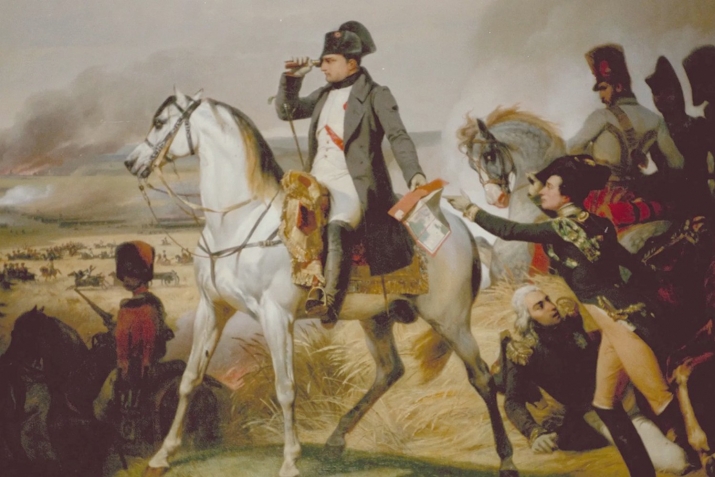
We know Napoleon as a renowned military leader, the Emperor of France, who captured Moscow and was routed by Russia in the Patriotic War of 1812.
But few can imagine Bonaparte going to a mosque, wearing a turban, celebrating the birthday of the Prophet Muhammad ﷺ and even claiming to be the Imam Mahdi...
In the spring of 1798, the future Emperor of France, Napoleon Bonaparte, launched a campaign in Africa with the aim of capturing Egypt. France was already facing numerous internal problems at this time and the British had also seized several French colonies, disrupting many trade ties.
Furthermore, the Ottoman Empire was weakening, losing control over its territories. All this combined to make Egypt a lucrative resource, which the French authorities hoped to seize, as well as to solve their lingering problems and, at the same time, to oust their English rivals. As Bonaparte later recalled in his memoirs, “If the French had established themselves in Egypt, the English would not have been able to hold out in India.”
On 2 July 1798, a 38,000-strong French army led by Napoleon landed in Egypt and, within hours, captured the poorly prepared Alexandria. Subsequently, the Mamluk army suffered one defeat after another and the main Egyptian cities, including Cairo, came under French control. The French army’s superiority in armament, organization and discipline, as well as the lack of unity within the Mamluk army, took their toll.
However, Bonaparte actively used not only bayonets and cannons but also cunning diplomatic maneuvers.
Like any other invader in his position, the commander, wishing to ensure the success of his military campaign, decided to enlist the support of the common people and exploit the contradictions existing in Egyptian society.
Thus, in his appeal to the Egyptian people, Napoleon declared that his goal was not to enslave the Egyptians but, on the contrary, to liberate them from the Mamluks, who ruled the land of the pyramids at that time.
“There was a time when you had great cities, great canals, great trade; why did all this disappear, if not from the stinginess, injustice and tyranny of the Mamluks?” the commander addressed the Egyptians.
Furthermore, Napoleon presented himself as a supporter of the Ottoman Caliph, whose dominion included Egypt but which was in fact ruled by the local military class – the Mamluks.
“The purpose of our arrival in your country is to destroy the power of the Mamluks, who humiliated the French people, treated them with disdain and seized the property of French merchants and the Sultan,” the commander assured the Egyptians, noting that, “the French have always been true friends of His Majesty the Turkish Sultan,” while the Mamluks, on the contrary, “refuse to obey the Sultan.”
Incidentally, Napoleon sent letters to the Turkish viceroy in Egypt and to the Sultan himself, promising to restore the true authority of the Caliph. Perhaps this was one of the reasons that initially prevented the Porte from entering the war with France. But everything would change later, including the loyal rhetoric of the future French emperor.
In his policies, Napoleon paid special attention to the religion professed by the majority of Egyptians – Islam. The future emperor hastened to assure the people of his exceptional religiosity and respect for local traditions: “Peoples of Egypt! You will be told that I have come to destroy your religion; do not believe it! Answer the slanderers that I have come to restore your rights, to punish the kidnappers, and that I, more than the Mamluks, revere God, His Prophet ﷺ, and the Koran.”
In his desire to gain the support of Muslim believers, the commander went further and even declared the French to be “true Muslims”: “Sheikhs, qadis, imams, chorbajis, nobles of the state! Tell your people that the French are also true Muslims.” Proof of this is that they came to Greater Rome and destroyed the power of the Pope, who constantly incited Christians to war against Muslims, and then went to the island of Malta and expelled the knights who claimed that God Almighty commanded them to wage war against Muslims.”
However, the French themselves had no illusions about what lay behind their leader’s “Islamic” rhetoric and understood his true motives perfectly well. Thus, Pierre Jaubert, a participant in the Egyptian campaign and translator, wrote to a friend in this regard: “You Parisians will perhaps laugh at this Mohammedan proclamation from the commander-in-chief. It is a veritable circus but it has had a great effect.”
Moreover, Bonaparte’s public rhetoric did not match what was happening in reality. The Egyptians were taxed no worse under the French than under the Mamluks. Moreover, the growing needs of the military expedition led to ever-increasing levies, accompanied by robberies, confiscation of property and beatings of the local population who refused to hand over their last possessions.
Rebellions periodically broke out in various corners of the country, often on such a scale that the French were expelled from several regions and provinces. In Cairo itself, a number of uprisings were harshly suppressed, including with the use of artillery.
The suppression of popular unrest in the capital and provinces of Egypt was accompanied by brutal repression and mass executions. “Every day,” wrote Bonaparte, “we chop off thirty heads... This will serve as a lesson to them.”
Alternating between carrot and stick, bribery and threats, weapons and skillful propaganda, Napoleon sought to retain control of Egypt.
