
MY FIRST USTAZ AND HOW I ENTERED THE TARIQAH – SHEIKH SAID AFANDI AL-CHIRKAWI AD-DAGHESTANI
MY FIRST USTAZ AND HOW I ENTERED THE TARIQAH – SHEIKH SAID AFANDI AL-CHIRKAWI AD-DAGHESTANI
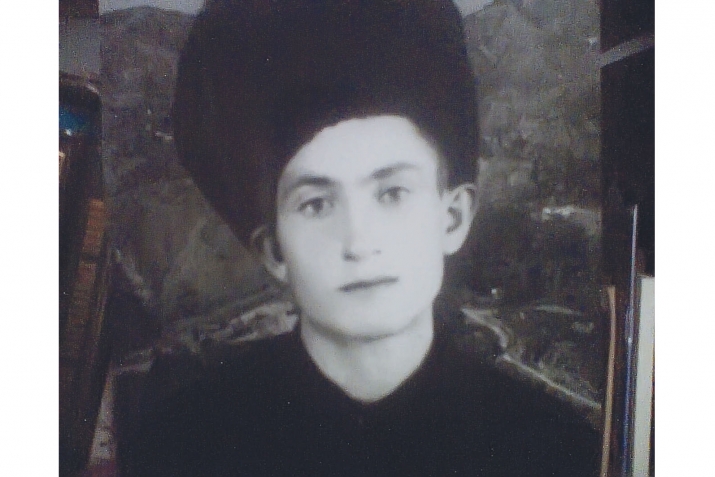
The Honourable Sheikh Said Afandi al-Chirkawi talks here about his first Sheikh Abdul Hamid Afandi from the village Inkho and how he started on the Tariqa path as a murid. He also touches on some important Tariqa issues.
Abdulhamid afandi was my first spiritual teacher. I can hardly say much about him. I was young; I still knew and understood little. When they asked about the Messenger of Allah ﷺ, the Prophet’s wife Aisha replied, “The Koran was his manners”. Neither do I know what to tell you about the Ustaz, but for him the Koran was his every movement and word. These then were amazing people, very different from us today. Their powerful faith and perfection were beyond words. As for my first meeting with the Ustaz, I had heard about him before. And prior to that I used to hear of the Ustaz from `Urib also. But I did not pay much attention to this, as people in those days often said that in AkhirZaman there are no more Ustazes. Today, when I see those who doubt Ustazes, I cannot blame them, as I also experienced this.
My deceased mother followed the Tariqa and visited `Urib. When I got home from work, she told me about the Tariqa, but I would not let it into my heart, thinking that in our time there were no Ustazes, because I had heard so from others. I used to read the Koran and said that there was nothing apart from it. Knowledgeable people were fewer then. Apparently, the words of the ignorant turned people’s hearts away from the Tariqa and led to the conclusion that there is nothing besides the Koran.
In our village there was a man named Isa-haji, I knew him well, because before we had worked as shepherds together. It so happened that I lost sight of him, but long after that I heard that he had joined the Tariqa. Despite everything I have said, deep down I have loved the Tariqa from childhood. I was intrigued to learn that my friend was in the Tariqa and I really wanted to see him. This happened in spring at the time of sheep shearing. Isa-haji had a brother Muhammad, now deceased. As head of the collective farm, he brought his brother Isa-haji as a trusted person to guard the wool. I worked there too, so we met. I asked Isa-haji whether it was true that he had taken the Tariqa. He said, yes. Then I began to question what it is like, what do you do in the Tariqa. We talked about this a lot. I had prayer beads with which I recited whatever I knew. I exchanged beads with Isa-haji and asked him to take my beads to ustaz Abdul Hamid afandi (may Allah bless his soul) for him to recite dua with them. Then we parted. I had to go to the mountains for the summer grazing.
Our foreman at that time was Muhammad-Sultan and we shepherded with a man named Uzairil Mukhtar. He always got up at night, before dawn, and at first I had no idea why. It turns out that at this time he was saying dhikr with his heart. But I was not interested then.

Once Muhammad-Sultan asked me, “Mukhtar always gets up before dawn, looks at a photo for a long time and then starts crying. Do you know what this picture is?” “Wallahi, I do not,” I replied. After that I was curious as to what it was. After a while, when we had taken the flock to the mountains, I said to Mukhtar, “Muhammad-Sultan told me that you carry some photo with you, do you?” “Yes, I do,” he replied. “What is this picture?” “This is a snapshot of the ustaz from `Urib. (Sheikh Husenil Muhammad Afandi).” Since he had the photo with him, I asked him to show it to me. Then he took it out of his notebook and showed to me. Indeed, it is difficult to put into words my emotions, but in my whole life I have never seen a more attractive face. It filled my heart with an amazing feeling. After that something changed in me: in my desires and thoughts. By that time the ustaz from `Urib had already left our world.
After the summer we had to leave for the winter pastures. However, a man could shepherd no more than 70 in winter. So I stayed in the mountains to shepherd the rest of the sheep with Timuruk-haji, who is now deceased. We had to sort out the remaining sheep, separate the old and sick for slaughter, and then head back to the winter livestock station. That day in the central square I met a villager, Muhammad-haji. He asked me whether I had spoken to Isa-haji at all. I replied that I had not seen him for a long time. I had completely forgotten what had happened in spring.
“Did you give Isa-haji your beads?” asked Muhammad-haji.
“Oh yes, I did this spring.” I remembered.
“You have been accepted into the Tariqa”, he said.
I asked what I was to do. He asked for my notebook to write down the task. It was the task from the Shazali Tariqah to me. That is how I came to the Tariqa.
I want to tell you about another thing that happened to me before that. The day before Timuruk-haji and I had to sort out the flock, I went to the store to buy cigarettes. Ten packs of cigarettes cost one rouble. At that time I smoked a lot, because I had become addicted to it early. Usually I bought 100 packs for 10 roubles there to stock up. But that day there were a lot of women in the store and I hesitated. I bought only 5 or 6 packs and returned home. I hoped to ask my wife to buy the rest later. At home I threw the pack on the table and left again. Then I met Muhammad-haji who gave me a paper with the Tariqa task. It made me think, whether I should ask my wife to buy more cigarettes. What should I do now? Can I smoke? I did not ask my wife to buy cigarettes and the ones I had already bought were left lying on the table. In the morning, when I was leaving home, I put one pack in my pocket just in case, because I was not sure. My wife asked why I did not take the rest of the pile. She thought that I had forgotten them but I said nothing and left. On my way I lit a cigarette twice. But as soon as I smelled the smoke, I suddenly began sweating, as if a fire was burning inside me and I away the cigarette away Climbing up the mountain, I met our villager Biyakail-Ali, the head of the hay cutters. The herds were gone and he needed meat for his workers. He came up to me and asked me to give them a sheep. I replied that I could only give them my own but provided he gave me back another later. Then he asked me for a cigarette and I only had one pack. And suddenly it dawned on me, “I have quit smoking, am I not a murid?” I gave him the pack, and, to be frank, he was happier about the cigarettes than he was about the sheep. That is how I managed to give up smoking.
I knew that smoking was bad and had spent many years hoping to quit someday. I tried to fight this habit in the army and thought that I would leave the army a non-smoker. Despite the constant shortage of money, I used to buy candies and stuff my pockets with them. Whenever I wanted to smoke, I would eat candies. But after the candies I wanted to smoke again. Thus, with my stomach filled with candies, I again reached for cigarettes.
After the army, I worked as a shepherd with a man named Zitayil Abdurahman. This was at the livestock station in winter. In the evening after supper I usually lit a cigarette and wondered how long I would go on smoking and how to give it up. My partner did not smoke and I asked him if he had done so previously. After his “Yes”, I wondered how he had managed to quit and asked for how long he had not been smoking. “Five years”, he said. Then I asked, “Do you still want to?” He replied, “Whenever you smoke, I always want you to come nearer so that I can smell the smoke.” After that, I did not believe that I could quit cigarettes. If a person still misses them even after five years, should I suffer too? I gave up my intention to quit.
And yet, being such a heavy smoker, as I said, I gave that pack to Ali and then never even thought about cigarettes again.
To be continued…
Source: Islam.ru.en