

What is family happiness today?
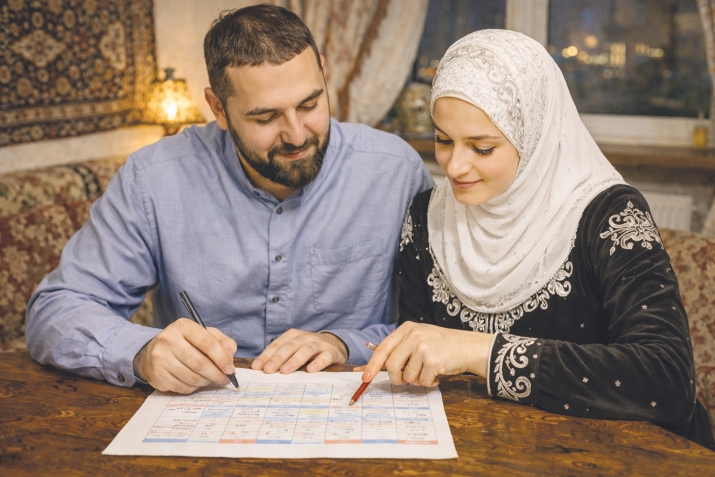
If we were to gather all our grandmothers and great-grandmothers in one room and ask them what family happiness is, the answers would likely be similar. A solid home, a full larder, the children provided for and a husband who does not drink. It was clear what this happiness was built from, as if from sturdy logs. It was shared, almost collective, and in many ways – obligatory. People held onto each other not only out of love but out of necessity, to survive in a world where so many hardships waited beyond the threshold.
And what about today? We live in a world where anything is possible - or so it seems to us. You can choose any partner, you cannot marry at all, you can get divorced and you can raise children alone or with two fathers. You can live in different cities and still be a family. There is so much freedom now that the old recipes have crumbled to dust. And now we, like pioneers, must define for ourselves what it means to be happy together. This is the main difficulty and the main gift of our time.
Previously, happiness used to be something static, like a photograph on a chest of drawers. You reached a certain state, and that was it, mission accomplished. Today, it has become a process, a journey, not a final destination. We no longer just want to “have a family”. We want to feel the joy of growing together, of dialogue, of becoming better people together. Happiness is not the absence of quarrels but the ability to make up. Not a perfect household but a shared pursuit that lights up our eyes. Not a perpetual ‘yes’, but respect for another’s no’.
The paradox is that modern family happiness closely resembles personal happiness. It begins with honesty towards oneself. With a strange question: “What do I really want? What fills me with meaning?” This only because a filled person, not an empty one, can sincerely share warmth. In the past, such a question would have seemed selfish. Today, it is the foundation. You cannot give your loved ones what you do not have yourself. So, the first brick in the foundation of today’s family well-being is personal emotional health and awareness.
But here, too, a trap awaits us. Social networks, movies, blogs: they all create an endless parade of ‘perfect moments’. Smiles, travels, impeccable breakfasts. We involuntarily begin to compare our real, living, messy and funny life with these images. And it seems that happiness is somewhere out there - with others. That we do not have it because today we are tired and reluctant to talk or because the child once again did not do his homework. Happiness has become something comparative and that is the surest way to lose it.
Real, not cardboard, happiness today hides not in grand gestures but in microscopic details. In silently holding a hand when times are hard. In a shared joke that only the two of you understand. In the ability to be in silence without feeling awkward. In seeing your partner not as a breadwinner or a nanny but as a person who is also changing and searching for his place in the world. This happiness lies in flexibility, in the ability to change together and give each other space for that change.
And finally, family happiness today is impossible without one important skill – gratitude. To thank not for gifts or help but simply for presence. For the fact that this specific person, with all his quirks and flaws, is in your life. In a world where everything is changing rapidly and nothing is certain, this anchor (your shared home, your shared memories, your shared “we”) becomes the greatest treasure.
Well, maybe family happiness today is not about building an impregnable fortress. It is about growing a garden together. Where there is room for both shady corners and bright flowers. Where you need not just guard the borders but patiently water, prune and provide light. And watch as something unique, something your very own, something alive grows from a tiny sprout. Something that is fragile and is in need of care.
