

The trials and tribulations of the children of Adam
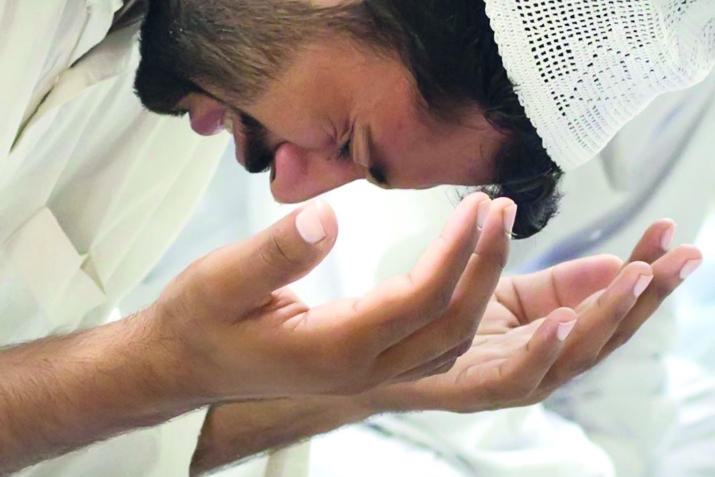
Why is it useful to appeal to God?
By divine predestination, man comes into this world being weak, and returns as weak to the Almighty, despite the advantages that God has given him. The Creator made him the apex of creation and put him in charge of all other creations.
Despite such a great honour, man is still a weak creature. The Almighty intended him so. God says in the Koran (meaning), “Allah intends to make things easy on you. And man has been created weak.” In another ayah God says (meaning), “O ye men! It is ye that have need of Allah: but Allah is the One Free of all wants, worthy of all praise.”
When we talk about poverty or weakness, it does not mean that man is created moneyless. It is not about money or property. It implies that God has created man as always lacking something, whatever he may do. Whoever the person is, he cannot do without the support of another, without any help at all and especially without the help of the Almighty.
Weakness of Man
So what is the weakness, the Creator tells us about? God has given us reason, yet tests us with the temptations of our Nafs (ego). We always have to conquer it. It is constantly acting and does not let us act according to reason, which advises us to do good. A person who acts against his reason understands he has to do otherwise. He cannot help it, as in this case it is his Nafs which hampers him!
Besides the Nafs, which constantly makes us contradict reason, God created Satan, who also prevents us from following our reason. Our mind has learnt about the Creator, about what is allowed and what is forbidden. But, alas, it is difficult to follow our mind, because of our weakness. A person cannot do anything about it and follows his Nafs, Satan, of whom the Prophet (peace and blessings be upon him) said, “Verily Satan circulates in the body like blood.” God says in the Koran (meaning), “Verily Satan is an enemy to you: so treat him as an enemy.”
This is the weakness that is given by the Almighty to make people different from the angels. Angels are possessed neither by Satan nor by their Nafs, which always prompt wrongdoing. God is constantly testing man through those enemies inside himself.
The Trials and Tribulations of the Children of Adam
God also tests man by benefits and misfortunes. God in the Koran says (meaning), “We test you by evil and by good by way of trial.” It means that the Creator puts man to test by both pleasures and adversities. This testing reveals the weakness of man as he goes through it. God also says (meaning), “Ye shall certainly be tried and tested in your possessions and in your personal selves (i.e. death of your dearest ones); and ye shall certainly Hear much that will grieve you, from those who received the Book before you and from those who worship many gods.” We have lately witnessed some of the Western media trying to foul the name of the Prophet Muhammad (peace and blessings be upon him). The Almighty warned us about it in this ayah. This is some sort of a test for us too.
God also says (meaning), “Be sure we shall test you with something of fear and hunger, some loss in goods or lives or the fruits (of your toil).” The Almighty gives us all these trials and tribulations. The all reveal our weakness, which God put into each of us.
But we can say, “Oh God, You give us fear of You; and You give us strength to follow the right path. You command us to die being Muslims, and at the same time, You put us to trial.” What to do in this case? Everybody can ask this question. The answer is found in the Koran, where God says (meaning), “Hasten ye then (at once) to Allah.” The answer is here in the ayah. Whenever we are weak and feel the need for the Almighty, we must seek Him, we must turn to God.
In the next ayah He says (meaning), “I did not send a messenger to the people, unless I put them to trial through misery and misfortune, so that they turned to Me with a prayer.” By these trials and tribulations the Almighty calls us, makes us turn to Him, because He loves it. He loves when a slave realizes his weakness before Him and turns to Him. That is what these trials prove to all of us! Man begins to realize that he cannot even control himself and cannot even do what he thinks to be correct without the help of the Almighty. He realizes he is weak, that he is not the master of his own soul and not the master of himself. That is the mysterious purpose of the trials! Man cannot do anything on his own, without God’s help. And He says (meaning), “So that they (people) turned to Me with a prayer.” God makes us turn to Him. Surely, this is salvation.
What Is Salvation?
When we realize our weakness, our inability to commit good or bad deeds without the help of God, we see that we fully belong to the Almighty and that only His help makes us capable. That is why God created tests within each of us. He tests us throughout our whole life in order to make a man look into the mirror of his soul and realize that he is a slave, who belongs only to God, the slave whom God created in the form He wanted.
God only requires us to appeal to Him. It is necessary to flee from everything else in the world and only to strive for the Almighty. He Himself says (meaning), “Hasten ye then (at once) to Allah.” In trouble and in adversity, when you cannot cope, hasten to God, open your soul to Him and ask Him for help.
Man strives because of this inner state. He must clearly understand that he is God’s slave. Unfortunately, we often forget about it. We forget about it when we are successful, when we are climbing the career ladder and when we are having a good time. We start to drift away from the Almighty. We must address God humbly, fully conscious of our insignificance against His greatness and of our dependence on Him. This will be our striving to the Almighty.
The Almighty did create enemies inside us. Whenever we listen to our Nafs, it always encourages us to distance ourselves from God. The Nafs always encourages us to sin and disobey the Almighty.
Besides the Nafs, there is also Satan with his huge army and his means to confuse us into acts that anger our Creator. But despite this, our task is to show humility, to say to the Almighty, “Oh God, I want to get back to You, I want to do only good deeds! Oh God, save me from my Nafs. Oh God, guide me in my struggle against Satan. I want to follow Thy true path. Give me Your help!” When a slave earnestly appeals to the Almighty with these words, he can drastically change his life.
There are lots of people who cannot give up drinking, drugs, smoking, and all sorts of sins. In this case, if these people sincerely turn to God in the way we have described above, God will definitely help them. Then, instead of weakness, this slave will receive strength and he will change. This appeal to the Creator and striving for him can save all our Ummah (community).
We know that we always have both outward and inward enemies. Therefore, the Creator instructs us to use the same weapons and tools which our enemy does.
But at the same time, these tools, this strength cannot give anything if there is no soul. Here the soul is praying to the Almighty. We should use the tools He has created for us. We must not say, “God will save me” and sit idly doing nothing. Nor can we rely solely on these tools. Along with these tools we should use our main weapon – obedience to the Creator and appeal to Him.
Wild Beasts Left the Jungle
Here is an example from the life story of Uqba ibn Nafi, one of the Companions (may God be pleased with him). He went to Africa with other Companions to call Africans to Islam. He reached a place, where he decided to stay to win the battle. It was where now there is the famous city of Kairouan. This place was absolutely non-inhabitable, as it was a jungle with wild animals and poisonous snakes. But he decided to stay there. What did the Companions do? Fifteen people, as they were, from dawn till dusk asked the Almighty for help and, finally Uqba ibn Nafi (may God be pleased with him) turned towards the jungle animals, which do not understand the human language, and said, “Oh wild beasts, we have come to fulfill the call of the Almighty, we have come to bring the religion of God to the people here. We ask you to leave the jungle!”
It is a fact witnessed by everyone who was there: the Companions and the local people. It is all written down in history. The next day, the animals with their cubs began to leave the jungle. And this is only because the Almighty gave help, when he was asked. God answers supplications. But we must, of course, sincerely seek Him. The local people were shocked when all the animals had left the forest and gone to live far away from it. There the Companions with Uqba ibn Nafi (may God be pleased with him) settled down there, which gave birth to the city of Kairouan.
That is what happens when we turn to the Almighty sincerely. And it is our salvation, dear brothers!
