

The Country of Ended Wahhabism
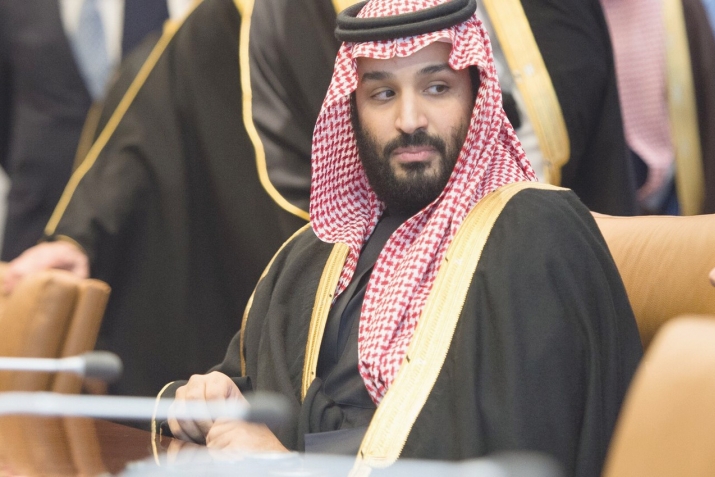
“Mohammed ibn Abdul Wahhab is not Saudi Arabia.” From an interview with Crown Prince Mohammed bin Salman in The Atlantic, March 3, 2022
In the spring of 2016, a significant event took place in Saudi Arabia: an ambitious program for modernizing the country, “Vision 2030,” was presented.
Few people understood then that the initiator of the reforms, Prince Mohammed bin Salman, who essentially ran the country, had something more in mind than just economic reforms. More than 80 years after the founding of the state, Saudi Arabia has actually changed its ideology. Wahhabism is over.
“We are returning to the true teachings of Islam, to the way of life of the Prophet ﷺ and the four rightly guided caliphs, to an open and peaceful society,” the prince declared in March 2022, commenting on the reforms being carried out in the country in an interview with The Atlantic magazine.
Reflecting on his country’s past, Mohammed bin Salman acknowledges the harm that the political decision to rely on Wahhabism has caused Saudi Arabia.
“We had a very difficult time in the 1950s to 1970s, we had a pan-Arab project, as well as other socialist and communist projects – along with other projects in the region. At that time, many extremist groups were given the opportunity to infiltrate the Kingdom of Saudi Arabia and gain access to various places in the economy and the administrative apparatus. This led to terrible consequences and we witnessed them,” he admitted in an interview with Saudi journalist Abdullah Al-Mudaifer (Al-Arabiya, 28.04.2021).
According to the prince, Saudi Arabia itself has become a victim of radicals and “the main target of extremist projects and terrorist attacks around the world”.
“If I were Osama bin Laden and wanted to spread my extremist thoughts around the world, especially among Muslims, where would I start? I would start with the state where the Muslim holy places are located, where all the pilgrims come and where all Muslims direct five times a day. Then my project would automatically spread throughout the world. Therefore, every extremist who thinks about where to start will think about Saudi Arabia,” Mohammed bin Salman answered journalists, openly admitting that “the writings of Ibn Abd al-Wahhab have been used by many extremists for their own purposes”. All this has caused terrible damage to the image of Saudi Arabia.
“Now we cannot grow, we cannot attract capital, we cannot have tourism, we cannot develop with extremist thinking. If you want to create millions of jobs, if you want unemployment to go down, if you want the economy to grow, if you want your income to go up, then you have to eradicate extremism for the sake of other interests. Not to mention that these people (terrorists and extremists) should not represent our religion or our divine principles in any way or form,” the heir to the Saudi throne categorically stated.
“Muhammad ibn Abd al-Wahhab is not Saudi Arabia. We have Sunnis and Shiites and everyone is so different. Well, yes, there was something a little extremist in Saudi history, but the Muslim Brotherhood, ISIS and other banned terrorist organizations are to blame for everything. And also, the Islamic Revolution in Iran and the US invasion of Iraq. And we are on the right track,” the prince stated in an interview with the American publication.
Almost ten years after the start of the reforms, it can be safely said that Mohammed bin Salman did not limit himself to giving interviews and loud statements. All these years, he has been systematically, step by step, putting his vision of the future of Saudi Arabia into practice.
Firstly, the country’s leadership abandoned the radical and narrow-minded Wahhabi vision of Islam. Of course, not everyone in the country liked this but the prince had enough political will and strength to explain to the Wahhabis: there were no tickets left for them on the train to the future of modern Saudi Arabia.
Those who did not want to accept the new reality in a good way were explained in a different, more understandable language. A number of Wahhabi preachers ended up in prison. And even Fauzan, well-known among Dagestani Wahhabis, managed to sit in prison, albeit not for long, but enough to stop giving lectures and interviews. His fans can only periodically play archived speeches, understanding Fauzan’s reluctance to repeat the already well-learned lesson of “Saudi democracy”.
Secondly, in his desire to distance himself from the Wahhabis, Mohammed bin Salman did not limit himself to modern times, but decided to untie the history of the foundation of the state of Saud from Wahhabism. In specialised literature, one often encounters the opinion that the state of Saud is a product of their alliance with the ideologist of Wahhabism, Muhammad ibn Abd al-Wahhab.
But since 2022, by decree of the Crown Prince, a new date has been celebrated for the founding of the First Saudi State by Muhammad ibn Saud, with its capital in Diriyah (a city in Najd) - 1727, 18 years before the Wahhabi ideologist Muhammad ibn Abd al-Wahhab arrived in this city.
Thus, the authorities of the kingdom are not only getting rid of the influence of modern ideologists of Wahhabism but are also gradually digging out ties with them from the history of their own country.
Thirdly, the kingdom has opened up to tourists and investors. Saudi Arabia presents itself as a country with a deep history and a promising economy. Now anyone can visit numerous monuments and sites of the country’s rich Islamic historical heritage, which was previously interpreted by Wahhabi ideologists practically as idolatry and polytheism.
Moreover, the desire for openness has gone beyond the limits that are completely incredible for the country. Today, Saudis are not surprised by rock concerts, performances by Hollywood actors, singers, or famous football players playing for local clubs that are little known to many.
For several years now, there have been discussions about the possibility of building churches in Saudi Arabia. In 2018, this issue became the subject of discussion at a meeting between Prince Mohammed bin Salman and representatives of evangelical Christians from the United States, among whom was preacher Johnny Moore, called in the English-language media “Donald Trump’s religious adviser” (Insider, 02/08/2021).
Finally, Crown Prince Mohammed bin Salman announced his vision of a new idea that would unite the citizens of the kingdom: “Our country is based on a set of views and beliefs based on Islam, tribal culture, Arab culture and the unique attributes of Saudi culture and beliefs...”
Thus, analysing the transformations that have taken place in the KSA over the past ten years, we can safely state:
– Saudi Arabia, which has long been associated with Wahhabism, is now officially abandoning this ideology. Prince Mohammed bin Salman openly states that Wahhabism is no longer the basis of state policy. Instead, the country seeks to return to the “true teachings of Islam”, which the prince describes as more open and peaceful;
– the prince admits that Wahhabism and its interpretations have been used by extremist groups and have become tools for the spread of terrorism, which has damaged the country’s image and became an obstacle to its development;
– the authorities are actively fighting radical preachers, arresting them and limiting their influence. This demonstrates the state’s readiness to harshly suppress any manifestations of extremism;
– Saudi Arabia is seeking to change its image by lifting restrictions for tourists, foreign investors, demonstrating a desire to build a more open society.
