

Mentor from Dubai
Every society or group needs a leader who will lead and guide them. To carry out such an important mission, communities select people who have dedicated themselves and their lives to the path of the Almighty. In Islam, this role is played by the imam, who occupies a significant place in the life of Muslims and is highly respected.
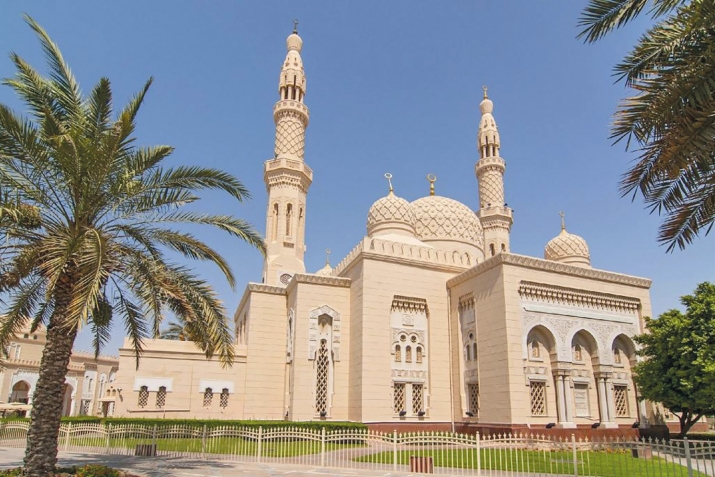
Here we would introduce you to the Abdullah al-Hussein, imam of one of the mosques in Dubai.
– Please tell us about yourself and your family.
– I grew up in a simple but faith-filled family. My father was a lover of knowledge and the Koran and my mother has always been a source of inspiration for everything good in my life. I am married and have children. I try to be a good example for them, as my father was for me. Being an imam is not just a job, it is a message that is entrusted to those who know how to carry it. Praise be to Allah ﷻ, He has given me this honour.
– What made you choose the profession of imam? How are imams appointed in the UAE?
– Praise be to Allah, from an early age I would go to the mosque with my father to pray, listen to the imam’s recitation with reverence and return home filled with peace. The mosque had a profound impact on my heart. Over time, my love for the Koran grew and I began to participate in the recitation of the Book of Allah ﷻ at events and in mosques until I felt that my place was the mihrab of the mosque, that I should be in the House of the Almighty not only as a worshiper but also as an imam, bearing this responsibility and conveying the message of religion to people with kindness and mercy. After many years of working as an imam, I was fortunate to have the opportunity to come to the United Arab Emirates. I applied to the Department of Islamic Affairs and Charity in Dubai. After passing through several official stages, with the blessing of Allah ﷻ I was accepted and assigned to a mosque in Dubai, where I have been working for twenty years now. I am part of a wonderful community of believers and try to be close to them not only in prayers but also in their lives and concerns.
– Where did you receive your education? Do you have any other education besides a religious one?
– I received my basic education in my homeland, Syria, where knowledge is highly respected and the Koran is revered. I began my studies at a young age in an Islamic school for children, Kuttab. Then I entered a formal educational institution and continued my studies at a college for the study of religious law, where I specialised in religious sciences. I received a master’s degree in hadith and its sciences, delving into the study of the Sunna of the Prophet ﷺ for further transmission and for the study of texts and methods of transmission from the Prophet ﷺ. I did not limit myself to academic pursuits but sought to develop in other areas as well. In particular, I became involved in the art of oratory and public speaking, to ensure that the word reaches people effectively and appropriately. In addition, I acquired communication and social influence skills through courses in personal development and family counseling. I also received training in the use of modern technology in da’wah and education, in order to meet the demands of this era.
– The profession of an imam is associated with certain difficulties. Which of them have you encountered?
– For me, being an imam is not just a job, but a life calling and an honour that cannot be compared to anything else. Despite the nobility and significance of this profession, it is not free from challenges. The imam is in a sensitive position between religious writings and the demands of reality, as well as between the differences in people’s thinking and the diversity of their characters. This in itself underlines the scale of the responsibility.
Here are some of the main challenges I have faced:
- Meeting the needs of the congregation: It can be difficult to please everyone. Some prefer long sermons, others short ones. Some like my voice, some do not.
- Complex social situations: Issues related to divorce, disputes between neighbors or inheritance matters often arise. Here the imam is required to be an expert in Islamic law, a peacemaker and a psychologist at the same time.
- Work-life balance: An imam is a person with a family and his own rights. However, he remains in the service of the people day and night, almost without a break.
– How is your work process organized? What questions do the congregation ask most often?
– The imam’s work includes observing the call to prayer and leading it five times a day, as well as preparing and composing sermons, especially for Friday prayers. In addition, I am engaged in preparing weekly lessons and study groups, organising administrative and social affairs and communicating with the congregation, answering their concerns. The work of an imam requires a balance between religious, administrative and social responsibilities.
The most common questions from the congregation include:
1) daily questions on Islamic law;
2) questions about personal relationships;
3) questions about money and transactions;
4) questions about faith and worship;
5) questions related to modern realities.
– Does your mosque provide education for children? What does this process look like?
– Yes, the mosque offers a variety of educational programmes for children, including memorisation of the Koran, learning the rules of recitation of the Koran (tajweed), moral education, the basics of Islamic law, the life of the Prophet ﷺ (sira), as well as supporting community celebrations and educational activities (especially during Muslim holidays). The learning process begins with parents filling out a registration form, which indicates the child’s age and level of knowledge. Then the children are divided into groups depending on their age. The programme is developed taking these factors into account. At the end of the course, there is a final test and a graduation ceremony with awards for outstanding children.
– What do you know about Russia and Russians? What facts or features impress you?
– Russia is a country with a rich history and cultural heritage. I am impressed by the diversity of its peoples and traditions. I also admire how traditions and customs are preserved in Russia. I know many Russians due to my work and I want to note their good manners, loyalty, respect and especially responsiveness in difficult times.
– Do you have a hobby? What do you like to do in your free time?
– When I have free time, I like to read books, especially on Islamic law and history. This helps to expand my knowledge and better understand the people around me. In addition, I enjoy walking in the fresh air, which allows me to relax and regain strength. In addition, I try to devote time to communicating with family and friends, because this is important for maintaining peace of mind.
– What would you like to wish for our readers?
– I would like to wish everyone health, happiness and peace of mind. Be tolerant of each other, strive for knowledge and understanding. Remember that each of us can make positive changes in society, starting with ourselves. Let your hearts be open to love and compassion and your actions be aimed at the benefit of others.
